• العربية
  • فارسی
BrandBrand
  • Iran Insight
  • Politics
  • Economy
  • Analysis
  • Special Report
  • Opinion
  • Podcast
  • Live TV
  • Iran Insight
  • Politics
  • Economy
  • Analysis
  • Special Report
  • Opinion
  • Podcast
  • Live TV
  • Theme
  • Language
    • العربية
    • فارسی
  • Iran Insight
  • Politics
  • Economy
  • Analysis
  • Special Report
  • Opinion
  • Podcast
  • Live TV
All rights reserved for Volant Media UK Limited
volant media logo

US warns ships receiving Iranian cargo at sea could face seizure

Nov 18, 2026, 16:43 GMT+0

The US military warned Wednesday that ships receiving cargo at sea from vessels loaded in Iran could be treated as evading Washington's naval blockade and face seizure or other enforcement action.

In an updated advisory, US Central Command (CENTCOM) said the blockade also applies to ships receiving Iranian cargo through ship-to-ship transfers, even if they have not entered Iranian waters or ports.

Such vessels could be “stopped, boarded, diverted, captured, or directed to proceed to the Iranian port where the cargo originated,” CENTCOM said.

The US blockade of Iranian oil exports was first imposed on April 13 and lifted in June following a draft understanding between Washington and Tehran. It was reimposed on July 14 after the agreement collapsed.

Despite the blockade, Iran has managed to export some liquefied petroleum gas and jet fuel since July, Reuters reported in October.

Iranian crude exports, however, have remained near a standstill for months, according to shipping sources.

Most Viewed

Iran’s dams may have been built to support missile bases - NYT
1

Iran’s dams may have been built to support missile bases - NYT

2

US Army seeks 17 bunkers in Israel, Saudi, Lebanon amid Iran threats - report

3

UK PM warns Iran against attacks on journalists and military bases

4

Iran’s daily hardships find a voice in IRGC-linked media

5

Iranian girl's suspected honor killing raises questions over school's role

Banner

Spotlight

  • How Iranians are turning grief into defiance
    OPINION

    How Iranians are turning grief into defiance

  • A cow's sit-in: why a comedy sketch struck a nerve in Iran

    A cow's sit-in: why a comedy sketch struck a nerve in Iran

  • Iran could launch dirty-bomb attack, but risks make it unlikely, experts say
    ANALYSIS

    Iran could launch dirty-bomb attack, but risks make it unlikely, experts say

  • Iran's wartime rallies turn against officials, fuel political feuds

    Iran's wartime rallies turn against officials, fuel political feuds

  • How Thai clerics in Iran were recruited to attack Israeli embassy in Bangkok
    EXCLUSIVE

    How Thai clerics in Iran were recruited to attack Israeli embassy in Bangkok

  • Iraq’s move on militia stronghold may do little to curb Iran’s influence
    ANALYSIS

    Iraq’s move on militia stronghold may do little to curb Iran’s influence

Banner
Banner
Banner
Banner
Banner
Banner
•
•
•

More Stories

A cow's sit-in: why a comedy sketch struck a nerve in Iran

Nov 18, 2026, 16:00 GMT+0
•
Behrouz Turani
100%
A man gestures toward a cow sitting in the middle of a Tehran street in a scene from the Iranian comedy series Taxi

A cow that has fled a slaughterhouse in Tehran sits in the middle of a busy street to protest the killing of her mate. What might otherwise pass for absurdist comedy has stirred controversy in Iran, where images of street protests carry painful memories.

The scene appears in an episode of the Iranian comedy series Taxi, written by well-known comedy writer and director Soroush Sehat.

Sehat and the series' other creators have faced accusations of ridiculing protesters, particularly those who have taken to the streets against the Islamic Republic in recent years.

The criticism comes as many Iranians are still living with the trauma of losing loved ones in the bloody crackdown on protests in January 2026.

The backlash gathered momentum after Khashayar Sepehri, an Iranian YouTuber and film critic, posted a video sharply criticizing the scene, arguing that it could be interpreted as insulting to protesters.

Bitter memories

At the center of the controversy is the cow's resemblance to a widely circulated photograph of a lone Iranian protester sitting in the road in front of security forces.

The photograph, taken during protests in Tehran, became a symbol of individual resistance, its composition recalling the iconic image of the Tank Man confronting Chinese tanks in Tiananmen Square in 1989.

In both images, a solitary figure occupies the middle of a street, refusing to move.

There is no established evidence that the filmmakers deliberately sought to belittle Iranian protesters. The episode's storyline, however, leaves the door open to that interpretation.

After the cow brings traffic to a standstill, an elderly woman approaches and offers her some vegetables, persuading her to get up and abandon her protest.

‘Sincere apology’

In a later scene, the woman appears on her balcony, seemingly satisfied with the outcome, while looking after the animal.

Critics argue that the cow's abandonment of her protest in exchange for a paltry reward diminishes the dignity of demonstrators and trivializes the sacrifices of those who have lost loved ones.

Writing in the film publication Bani Film, critic Jabbar Azin said he doubted that Sehat or producer Majid Salehi had deliberately set out to humiliate protesters, but criticized their poor judgment and lack of sensitivity to the public mood.

Even assuming the scene was not politically motivated, he wrote, a “sincere apology” from the creators was the least they could offer.

Some have defended Sehat by arguing that the sketches on which Taxi is based were written nearly two decades ago, long before January's protests.

Critics counter that Iran has a long history of anti-government demonstrations and that, regardless of when the sketch was written, its creators chose to bring it to the screen now, selecting it from dozens of others.

‘Worse than wrong’

Some defenders have also pointed to another scene in which a passenger in a taxi caught in the traffic jam asks why the cow took to the street when she knew she would eventually be slaughtered herself.

“Because she wanted to have an active part in choosing her destiny,” another passenger replies.

From that perspective, the scene could be understood as a portrayal of resistance, though the cow's eventual abandonment of her protest in exchange for food complicates that interpretation.

The filmmakers' intentions and the audience's interpretation often differ, even clash.

A solitary figure sitting in the road may be an ordinary comic device in one setting and a painful political reference in another.

But the setting here is Iran in 2026, months after a bloody crackdown on nationwide protests.

For critics, the suggestion that the creators failed to consider how the scene might be received amounts to what a Persian expression calls “an excuse worse than the wrong.”

Ayatollah's death at 105 sparks ridicule over clerics' longevity

Nov 18, 2026, 14:33 GMT+0
•
Hooman Abedi
100%
Hossein Vahid Khorasani, the senior Iranian Shiite cleric who died at 105.

The death of Iranian Shiite cleric Hossein Vahid Khorasani at 105 has drawn ridicule and anger on social media, with Iranians questioning the longevity of prominent religious authorities and criticizing perceived clerical privilege following his death on Tuesday.

Responses to Iran International's post on X ranged from jokes about the ayatollah's advanced age to criticism of the religious establishment, with some contrasting his long life with their own health and economic difficulties.

“How did this bastard live to be 105? I'm 23 and there isn't a healthy part left in my body. I feel like I won't make it past 30,” one person wrote, adding laughing emojis.

The frustration comes against a backdrop of economic hardship, with some Iranians offering their organs for sale to pay debts and cover basic living expenses.

A recent Iran International examination of more than 600 online organ-sale advertisements found that roughly one-third offered multiple organs or body tissues, including kidneys, liver tissue and bone marrow. Some prospective sellers described struggling to afford housing, support their children or repay debts.

  • Cash-strapped Iranians put multiple organs up for sale

    Cash-strapped Iranians put multiple organs up for sale

The longevity of senior clerics also stands in contrast to the lives of young Iranians killed during the Islamic Republic's January crackdown on nationwide protests. More than 36,500 people were killed by security forces on January 8 and 9, according to an Iran International

Vahid Khorasani died on November 17 after being hospitalized. Born in 1921, he spent decades teaching Islamic jurisprudence in the religious city of Qom.

Social media reactions target clerical privilege

Several comments portrayed Vahid Khorasani's long life as a reflection of the comfortable conditions associated with senior religious figures.

“From day one, all he did was live in idleness and comfort, without working, while benefiting from ordinary people's money,” one X account wrote.

Other responses used sarcasm to express resentment toward the clerical establishment.

“You finally managed it, Angel of Death! Congratulations!” read another post, accompanied by dancing emojis.

“The only useful thing the men of the seminary do is die, and they don't even do that on time,” another commenter wrote.

The announcement of a weeklong closure of the religious seminary also drew a celebratory response from one account, which welcomed both the cleric's death and the suspension of classes.

“Then why didn't your prayers to keep this mullah alive work?” another person asked.

One post joked that Vahid Khorasani had survived until the final moments of the Islamic Republic.

Why do some ayatollahs live so long?

Vahid Khorasani was among several prominent Shiite religious authorities who reached an advanced age.

Grand Ayatollah Lotfollah Safi Golpayegani died in 2022 at 102. Other senior Iranian clerics include Nasser Makarem Shirazi, 99, Hossein Nouri Hamedani, 101, and Ahmad Jannati, 99, who remains secretary of the Guardian Council, a powerful body that vets election candidates and reviews legislation.

  • 97-Year-Old Iranian Cleric To Serve 32nd Year In Key Office

    97-Year-Old Iranian Cleric To Serve 32nd Year In Key Office

Jannati, who has held the position since 1992, has become a frequent target of jokes about longevity in Iran. His advanced age and continued presence in power have repeatedly drawn ridicule on social media.

Iran's life expectancy at birth was approximately 78 years in 2024, according to World Bank figures. However, that figure does not represent the expected lifespan of people who have already reached old age.

While genetics and lifestyle can influence longevity, the advanced ages of prominent clerics have also drawn attention to their access to healthcare and relatively secure living conditions.

  • Inside Qom Seminary, Iran’s political and spiritual powerhouse

    Inside Qom Seminary, Iran’s political and spiritual powerhouse

Senior Shiite clerics often spend decades within established religious institutions, where they are not required to undertake conventional employment and their standing can provide financial stability and institutional support.

For Iranians reacting to Vahid Khorasani's death at 105, his longevity highlighted the contrast between the lives of senior clerics and the hardships facing ordinary people, fueling criticism of the religious establishment and its perceived privileges.

Killing of Iranian schoolgirl sparks calls for legal reform

Nov 18, 2026, 11:54 GMT+0
100%
Sogand Sayyadi, a 16-year-old girl from Kermanshah, western Iran, whose death has sparked calls for legal reform and greater protection for children facing domestic violence.

The killing of a 16-year-old Iranian girl, allegedly by her father, has prompted lawyers and women's rights activists to demand tougher penalties for child killings and greater accountability from schools and child protection agencies in the western city of Kermanshah.

Sogand Sayyadi's death has drawn widespread criticism after accounts emerged that she had warned school officials she might not survive if sent home.

“Who was supposed to protect her and failed to do so?” one user wrote on X.

Sayyadi's father was arrested on charges including assault and provisionally murder, while the school principal was detained on suspicion of negligence, Kermanshah prosecutor Hamidreza Karimi said on November 17.

Sayyadi died from multiple injuries caused by a fall from a height, including fractures to her limbs, skull and teeth, provincial forensic medicine chief Behtash Khaniabad said.

Lawyers demand tougher penalties

Several lawyers called for changes to laws exempting fathers and paternal grandfathers from qisas, or retributive execution, for intentionally killing their children.

“Being a father creates responsibilities and obligations, not the right to take a child's life,” lawyer Saba Shams told Rokna news agency.

  • Iranian women killed by relatives after seeking divorce or refusing marriage

    Iranian women killed by relatives after seeking divorce or refusing marriage

Shams urged amendments to Iran's Islamic Penal Code, calling for stronger penalties for fathers who intentionally kill their children.

Under existing provisions, fathers and paternal grandfathers are exempt from qisas and may face prison sentences of three to 10 years when legal conditions are met.

The punishment is neither appropriate nor sufficient, lawyer Saleh Noghrehkar told Ensaf News, arguing that impunity encourages further violence.

School officials also face questions over their handling of Sayyadi's reported warnings.

“What are school officials supposed to do in such situations? Have they not been trained?” lawyer Fereshteh Tabanian wrote, sharing a statement attributed to Sayyadi that she would not return alive if sent home.

  • Over a dozen Iranian women and girls killed in 30 days, many by male relatives

    Over a dozen Iranian women and girls killed in 30 days, many by male relatives

The legal organization Dadban said Iranian child protection laws require schools to identify students at risk and notify relevant authorities. Officials could face criminal liability if they knowingly failed to protect Sayyadi, it said.

No report concerning threats against Sayyadi reached social emergency services, and school officials never contacted the agency, Kermanshah welfare chief Majid Darvishi told local media.

Medical emergency services also received no call to transport Sayyadi, whose body was apparently taken to a medical facility in a private vehicle, emergency services spokesperson Mojtaba Lashgari said.

Women's rights activists condemn lack of protection

“The issue is not just one father or one family; it is a culture that defines a woman's body as family property, her love as a crime, her opposition as dishonor and her silence as a virtue,” journalist and women's rights activist Shiva Ganji wrote on Instagram.

“They are condemned not for what they have done, but for what they are,” singer Mehdi Yarrahi wrote on X.

  • Young Iranian girl murdered by father in honor killing

    Young Iranian girl murdered by father in honor killing

Some users compared Sayyadi's death with the killing of teenager Romina Ashrafi by her father.

“Yesterday Romina was killed, and today Sogand; yet for years there has been no progress on a bill to protect women,” one user wrote.

“Violence sometimes begins very quietly with the words, 'Her father knows best,'” another wrote, calling for better teacher training.

Sociologist Mohammad Bagher Tajeddin criticized failures across families, schools and society.

“Uninformed families, uninformed and irresponsible principals and teachers, and an indifferent and irresponsible society all contribute to the occurrence of such tragedies,” he wrote in Ham-Mihan newspaper.

Legislation intended to protect women against violence remains unapproved after more than 15 years of disputes between Iranian authorities.

  • Iran withdraws violence against women law after hardliner revisions

    Iran withdraws violence against women law after hardliner revisions

At least 84 women and girls were killed in Iran between late March and October 13, including 12 minors, the Emtedad website reported on November 16. Eight victims were killed by fathers, brothers or other blood relatives.

The figures, compiled from media reports, may not reflect the full number of victims.

Iran could launch dirty-bomb attack, but risks make it unlikely, experts say

Nov 18, 2026, 11:20 GMT+0
•
Negar Mojtahedi
100%
A US Capitol Police officer patrols the east front of the US Capitol in Washington, US September 15, 2021.

Iran could carry out a radiological or chemical-weapons attack in the United States, but operational hurdles and retaliation risks make it unlikely, experts told Iran International following reports of plots targeting senior US officials.

The assessments followed a CNN report citing seven US officials who said intelligence indicated Iran was developing plans to potentially target senior Trump administration officials in Washington with a dirty bomb or chemical weapon.

"Dirty bomb is not typically what you would use to assassinate someone," said David Albright, a physicist and president of the Institute for Science and International Security.

Farzin Nadimi, a senior fellow at the Washington Institute specializing in Iran's military affairs, assessed the likelihood of an attack as "low to very low," citing operational difficulties and the prospect of US retaliation.

Two sources cited by CNN said the planning included specific locations and targets, although there was no evidence that Iranian leaders had decided to proceed. Officials differed over whether personnel were already in place.

  • Iran developing unconventional warheads for ballistic missiles, sources say

    Iran developing unconventional warheads for ballistic missiles, sources say

The White House said there were "no credible threats to the homeland" at the time. President Donald Trump said Tuesday that Washington was investigating the information and taking the possibility seriously.

Iran denied the allegations, while Homeland Security Secretary Markwayne Mullin described the planning as "aspirational."

Iran's chemical-weapons history

Iran's history of acquiring and transferring unconventional weapons provides grounds for taking the warnings seriously, Behnam Ben Taleblu, senior director of the Foundation for Defense of Democracies' Iran Program, said.

"These are threats that do need to be taken seriously," Taleblu said. "Conversely, the intelligence leaks and the sources should also be scrutinized."

Taleblu cited Iran's past transfers of chemical weapons to Muammar Gaddafi's Libya.

US State Department compliance reports have identified Iran's failure to declare chemical-weapons transfers during the Libya-Chad war as a violation of the Chemical Weapons Convention.

  • Rights groups call for probe into alleged chemical use in Iran protests

    Rights groups call for probe into alleged chemical use in Iran protests

A 2019 report cited chemical-filled artillery projectiles and aerial bombs transferred to Libya, alongside chemical mortar rounds assessed to be of Iranian origin found in Iraq, as evidence supporting Washington's assessment that Iran had filled and possessed chemical weapons.

A subsequent report identified Iran's pursuit of pharmaceutical-based agents for offensive purposes as another compliance violation.

Despite that history, Taleblu did not regard the latest warnings as necessarily signaling a change in Iran's military doctrine.

"I think this is a lot more of the same," he said.

Would a dirty bomb be effective?

The alleged assassination objective raises questions about the choice of weapon, particularly whether a radiological device would be effective against individual targets.

A dirty bomb combines conventional explosives with radioactive material. The US Centers for Disease Control and Prevention says its primary immediate danger generally comes from the explosion, although radioactive contamination can create additional health risks.

Such a device could force evacuations and spread fear, but would be less suited to killing a particular individual, Albright said.

"In terms of an assassination method, I wouldn't consider it very effective," he said.

Chemical agents could be more effective for targeting individuals, Albright argued, citing research published by his institute in 2024 identifying evidence of Iranian work on delivering pharmaceutical-based agents using drones.

Whether that work produced an operational capability or was connected to a specific US attack plan remained unclear.

"I think it's also important to keep in mind that the story said there was no imminent threat," Albright added.

Operational obstacles and retaliation risks

Beyond the choice of weapon, carrying out an attack would require access to materials, reliable personnel and the ability to evade US security measures.

Iranian intelligence services could potentially construct a crude radiological device if they obtained the necessary material inside the United States, Nadimi assessed.

"The likelihood I believe is low to very low, given the risks associated with such an action and the high possibility of retaliation," he said.

Questions about operational readiness also concerned Mark Fowler, a former CIA operations officer with extensive experience involving Iran, who questioned who was discussing the alleged attack and how far preparations had advanced.

"It's not clear to me that they actually have that in hand at this point," Fowler said, referring to the required materials.

CNN reported that Iranian communications suggested bomb-making materials were already inside the United States. Officials disputed the credibility of that information, although some considered it likely that materials had been positioned in advance.

Nadimi considered domestic acquisition theoretically possible, while Albright emphasized US accounting and security measures that make obtaining radioactive material more difficult.

A 2021 National Academies study identified vulnerabilities involving some civilian radioactive sources and warned that even relatively small radioactive releases could have lasting socioeconomic consequences.

The warnings could also strain US security resources even without an attack, Mike Pregent, a former intelligence officer who has testified before Congress about Iran's overseas terrorism networks, said.

"They've already got everybody spinning up on it," Pregent said.

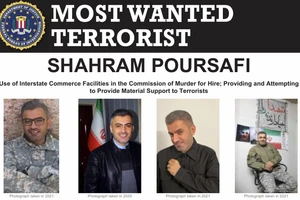
  • FBI adds IRGC member accused in Bolton plot to most wanted terrorists list

    FBI adds IRGC member accused in Bolton plot to most wanted terrorists list

Any radiological or chemical-weapons attack could also harden American public opinion against the Islamic Republic and provoke severe retaliation, Nadimi said.

The reported consideration of such an operation, however, "does not show a decision is made to act," he added.

Abdanan protests draw solidarity and fears of renewed crackdown

Nov 18, 2026, 10:36 GMT+0
100%
A crowd marches through a street in Abdanan, western Iran, during protests on November 17, 2026.

Protests following a deadly bus crash in Iran's western city of Abdanan have drawn messages of solidarity from Iranians across the country, with many praising demonstrators' defiance and expressing fears of renewed repression.

Residents of Abdanan in Ilam province took to the streets on Tuesday November 17 after 13 employees of a petro-refinery complex were killed when their bus overturned.

Demonstrators chanted slogans against the Islamic Republic, including "Death to the dictator," "This is the final battle, Pahlavi will return," and "Long live the Shah."

Messages sent to Iran International praised the protesters' courage, with many recalling demonstrations in January, when residents of Abdanan threw rice into the air in an act that became one of the defining images of that period's protests.

  • Don’t feed us, free us: Iranians hit back at Vance over 'hunger' remarks

    Don’t feed us, free us: Iranians hit back at Vance over 'hunger' remarks

Messages of solidarity and support for protesters

Several highlighted slogans supporting the Pahlavi dynasty and expressed hope that the demonstrations would spread to other cities.

A resident of Bandar Abbas praised the protesters' resistance to the Islamic Republic, citing their chant that Pahlavi would return.

"All of Iran stands behind you. This is not a slogan; it is the truth," a resident of Nasimshahr, near Tehran, wrote.

Demonstrators tore down a banner belonging to the Revolutionary Guards during Tuesday's protests, videos sent to Iran International showed.

A resident of Tabriz in northwestern Iran expressed support for the protesters until the Islamic Republic's overthrow, while another from Tehran described Abdanan and Nurabad Mamasani, a city in southern Iran, as pioneers of a revolution.

The demonstrations continued into Tuesday evening, with at least six people arrested.

From January's rice protests to renewed demonstrations

Many messages recalled Abdanan's role in January's protests, particularly an act of defiance that attracted widespread attention.

  • Out from the margins: how Ilam became the heart of Iran protests

    Out from the margins: how Ilam became the heart of Iran protests

On January 6, demonstrators opened sacks of rice and scattered their contents into the air, creating one of the most recognizable images of that period's unrest.

"After the epic rice-throwing protest, you have once again shown your courage. We will stand firm until the end," a resident of Rudsar in northern Iran wrote.

A resident of Mashhad in northeastern Iran said they first heard of Abdanan during January's protests and had admired the courage of its people ever since.

In February, reports and videos received by Iran International showed security forces surrounding mourners and opening fire during ceremonies marking the 40th day since the deaths of protesters in Abdanan.

A resident of Rasht in northern Iran wrote that the courage of Abdanan's people would be recorded in history books after the fall of the Islamic Republic.

Another viewer from Tabriz paid tribute to those killed during the protests, saying future generations would learn about the courage of Abdanan's women and men.

Hopes for wider protests and fears of renewed repression

The messages of support came alongside reports of riot police deployments in Abdanan and several other cities, as well as internet disruptions.

Some expressed concern that the authorities could repeat the deadly crackdown of January, particularly the violence of January 8 and 9.

"May you be safe from harm at the hands of the Islamic Republic," a resident of Malard, near Tehran, wrote.

Another expressed fears about protesters taking to the streets at night, recalling the events of January 8 and 9.

The person argued that demonstrations in daylight would make it easier for others to witness violence and assist protesters if they came under attack.

"You have once again lit the flame of hope in our hearts. Soon, people across Iran will join you," a resident of Maragheh in northwestern Iran wrote.

The Organizing Council of Oil Contract Workers' Protests also called for solidarity with Abdanan in a statement on November 18, describing the demonstrations as an expression of workers' and residents' opposition to poverty, rising prices and corruption.

  • Families across Iran defy pressure to honour January protest victims

    Families across Iran defy pressure to honour January protest victims

A Tehran resident said economic hardship and the struggle to meet basic needs could keep people preoccupied only for so long before discontent turned into protest.

The person described Abdanan as a "drop that can unleash a storm."

Another resident of Tehran, recalling the thousands killed during previous protests, expressed hope that the courage of Abdanan's residents would spread across Iran.

A message from Arak in central Iran linked the demonstrators to young protesters who had chanted "We will not bow our heads."

"You are shining stars, and light always triumphs over darkness," another message addressed to Abdanan's residents read.