LIVE
Summary
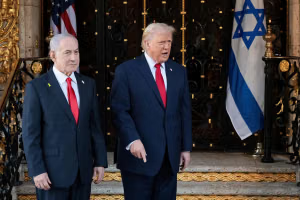
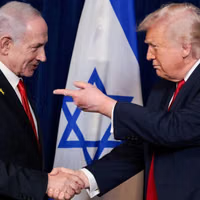
Israeli Prime Minister Benjamin Netanyahu rejected a report that US President Donald Trump had recently stopped Israel from carrying out a planned strike on Iran, calling it “an incorrect report.”
Summary
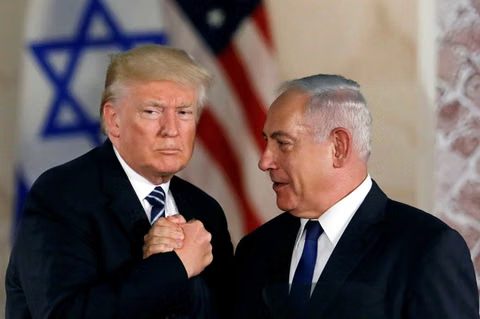
Israeli Prime Minister Benjamin Netanyahu rejected a report that US President Donald Trump had recently stopped Israel from carrying out a planned strike on Iran, calling it “an incorrect report.”
Operation Economic Outcast
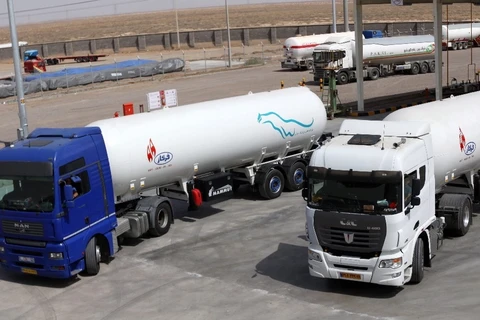
US blockade leaves Iran with millions of tons of surplus LPG
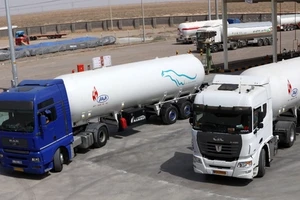
Iran's LPG exports have collapsed since the US naval blockade began in mid-July, leaving Tehran to find domestic uses for millions of tons of propane and butane that would normally be sold abroad.
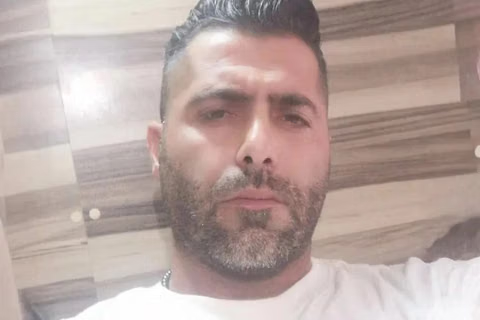
Iran upholds protester's death sentence over $56 property damage
Iran's Supreme Court has upheld the death sentence of a protester arrested during the 2022 Woman, Life, Freedom movement over an explosion that his lawyer says caused about $56 in property damage, the Emtedad news channel reported Wednesday.
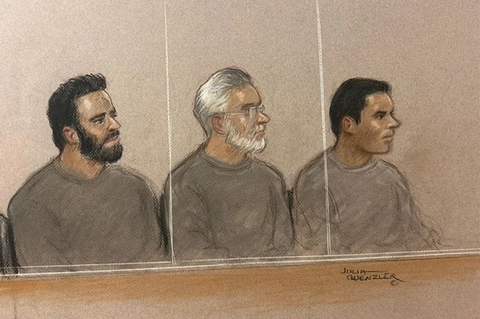
Iran plot suspect says he discussed journalists at London embassy
A man accused of plotting an attack on Iran International journalists told a London court Wednesday that he met an alleged Revolutionary Guards contact at the Iranian embassy while he was gathering information on the journalists.
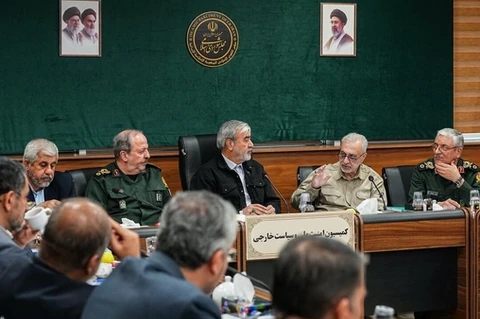
ANALYSIS
War warnings and talk of diplomacy compete in Tehran
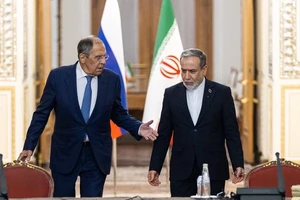
Iranian leaders raised the conditions for negotiations with the United States and issued fresh warnings of a wider military response on Wednesday, even as signs persisted that Tehran was leaving room for diplomacy.
Iraq plays down Iran border disruption as more closures reported
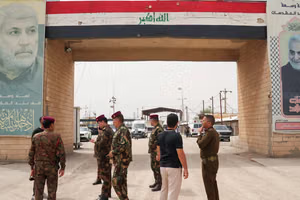
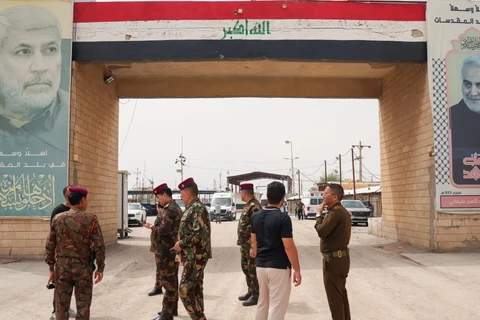
Conflicting accounts emerged Wednesday over Iraq's plans for its border with Iran, as Baghdad attributed the closure of one major crossing to technical shortcomings while reports said more could be shut amid US pressure to restrict trade routes with Tehran.
Israel bars United Airlines pilot over alleged Iran links - Ynet
Israel has barred a United Airlines pilot of Iranian descent from serving on flights to the country over unverified social media allegations that he supported Iran's government, the Revolutionary Guards and Hezbollah, Ynet reported Wednesday.

ANALYSIS
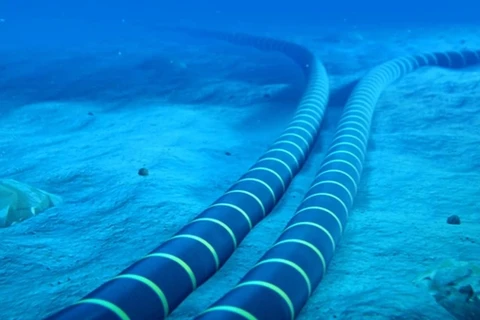
IRGC threatens undersea cables, but can it disrupt global internet?
The Revolutionary Guards' threat to target undersea internet cables in the Strait of Hormuz raises questions about its feasibility, as the waterway carries a fraction of global bandwidth and damaging its cables would not shut down the world's internet.
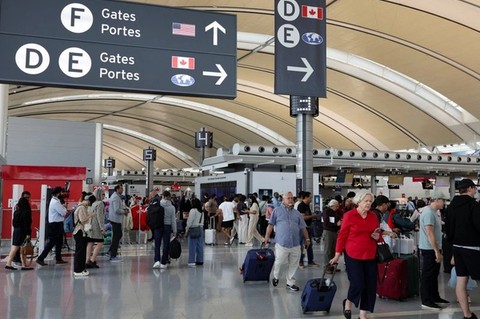
Canada orders Iranian man deported over role in sanctions evasion
Canada's Immigration and Refugee Board has ordered the deportation of an Iranian man living in Toronto over his role in a criminal network that helped Iran evade international sanctions, Global News reported Wednesday, citing a 36-page ruling.
INSIGHT
Iranian women killed by relatives after seeking divorce or refusing marriage
Asking for a divorce, refusing a marriage, speaking to a man she did not know: in Iran, each has preceded the killing of a woman or girl by her own family, according to a Shargh daily investigation that counted at least 38 dead in two months.

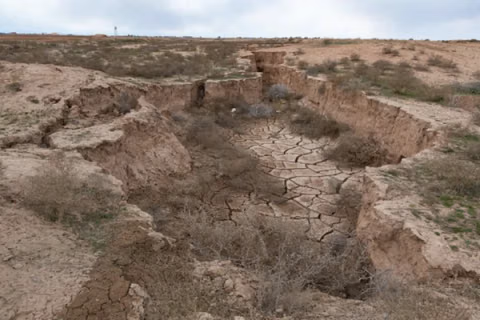
Land subsidence threatens villages and farms in southeast Iran
Land in parts of Iran’s southeastern Kerman province is sinking by as much as 40 centimeters a year, with ground fissures advancing toward villages, homes and orchards, according to data cited on Wednesday by the semi-official Mehr news agency.
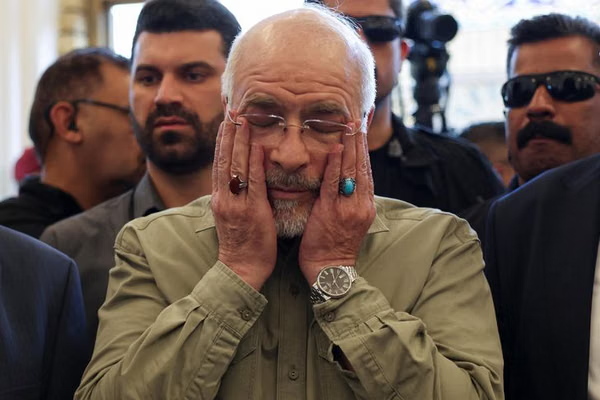
Ghalibaf allies seek an end to war without giving up leverage over US
A current within Iran’s conservative establishment associated with Parliament Speaker Mohammad Bagher Ghalibaf favors maintaining military and economic leverage while keeping open the possibility of a negotiated end to the war with the United States.
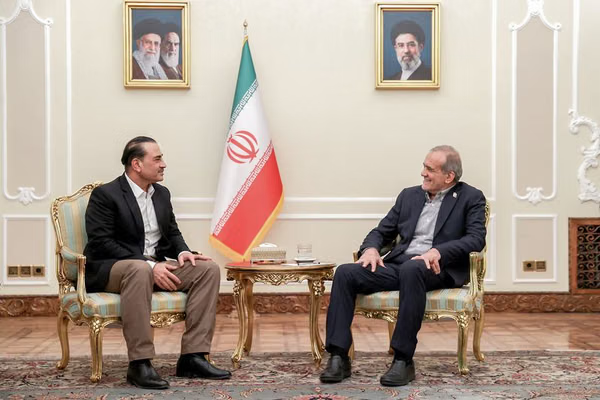
Iran hardliners split over role of mediators in US tensions
Renewed efforts to avert another war with the United States drew conflicting responses in Tehran, with hardliners questioning mediators’ motives while officials defended keeping diplomatic channels open.
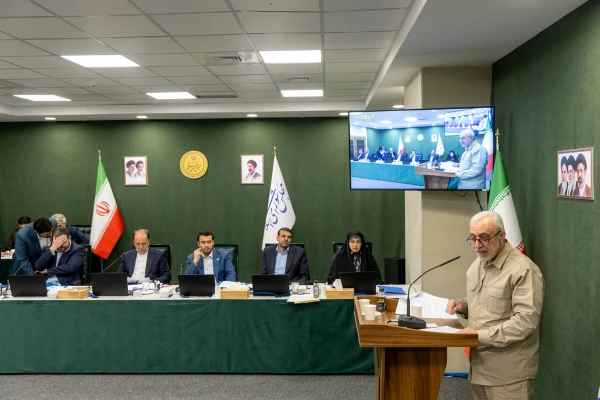
Iran’s threats ring out from parliament struggling to meet or connect
Iran’s new defense minister threatened the US and Israel during a parliamentary session held online over fears of attack, but even the virtual meeting faltered when poor internet connections prevented 25 lawmakers from voting on his appointment.
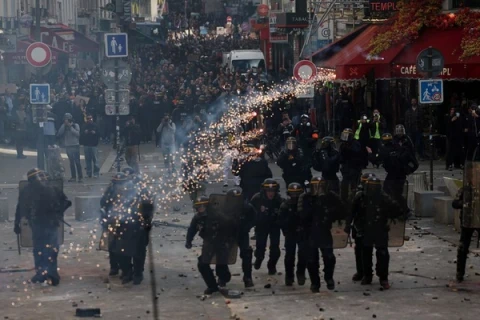
Iran accused of stoking French unrest through influence operations
Iran is seeking to amplify unrest in France through online influence campaigns and alleged links to hard-left groups, The Times reported on Tuesday, citing researchers who accused Tehran and Moscow of exploiting student protests to weaken Western democracies.
In Case You Missed It
Eye for Iran Podcast
Tehran Insider
They can erase you without arresting you
One morning your phone simply stops working. There is no warning, no explanation and often no piece of paper telling you what you have done. Welcome to the Islamic Republic of Iran v.3.1.

I stayed awake for them
I wrote what follows just after midnight, unable to sleep at the thought of more executions at dawn. It is now early morning. The news has hit hard. I can't rewrite these words now. They belong to the hours before that hope disappeared. I leave them as they are.