January protester sentenced to death in Mashhad, rights group says
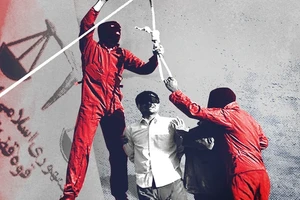
The US-based Human Rights Activists News Agency (HRANA) has identified Vahid Khodrikhah as one of three protesters previously reported to have been sentenced to death following their arrests during Iran's January 2026 protests in the northeastern city of Mashhad.
HRANA had previously identified another defendant in the same case as Matin Farnian.
The rights group said efforts were continuing to establish the identity of the third person sentenced to death.
A Revolutionary Court in Tehran has sentenced social media activist Amirhossein Mousavi to death on charges of "corruption on earth" over his activity on X, his lawyer said Wednesday.
In a post on X, Mousavi's lawyer, Reza Shafakhah, said his client had been sentenced over his online activity under the account name "James Bidin."
The sentence was issued by Branch 15 of Tehran's Revolutionary Court, presided over by Judge Abolghasem Salavati, who is under US, British and European Union sanctions over his role in human rights abuses.
Mousavi, 42, who has been detained since December 2024, was also sentenced to five years in prison for "insulting religious sanctities," his sister said on X.
His sister, Saeideh Mousavi, condemned the ruling and called for it to be overturned.
"We condemn this unjust sentence and demand its reversal and that Amirhossein's life be saved," she wrote.
She said her brother had used his online presence to amplify the voices of political prisoners and families of people killed during protests in Iran.
"His only crime was writing about and highlighting the suffering of people whose voices were rarely heard," she wrote, adding: "Writing about people's suffering is not a crime!"
The death sentence also prompted messages of support from other X users, some of whom echoed his sister's appeal.
"He was our voice for years. Now it's our turn to be his," one user wrote.
Another warned that the ruling could have wider implications for Iranians expressing their views online.
"Today, Amirhossein Mousavi was sentenced. Tomorrow, it could be you or me," the user wrote. "We must speak up for him before it's too late."
Mousavi had also received support from families of slain protesters before Wednesday's verdict.
Shabnam Eskandari, whose brother Mohammadreza Eskandari was killed during the 2022 Woman, Life, Freedom protests in Pakdasht, near Tehran, praised Mousavi for helping bereaved families keep the memories of their loved ones alive.
In an October 10 post on X, Eskandari recalled how Mousavi had repeatedly shared posts about her brother and other slain protesters.
"It was James Bidin who constantly shared posts from our families' accounts and repeatedly wrote the names of our loved ones," she wrote.
Solitary confinement, televised confession
Mousavi was arrested on December 18, 2024, at Tehran's Mehrabad Airport while preparing to travel to the southern Iranian island of Kish, according to HRANA.
His lawyer previously said security agencies had monitored Mousavi's X account for nearly six months before identifying him through his activity on the platform.
His prosecution has drawn attention over allegations of prolonged solitary confinement, physical abuse and a televised confession that Mousavi subsequently said had been obtained through threats and coercion.
On October 6, 2025, Iranian state television aired footage of Mousavi during its 20:30 news programme, presenting statements linking him to alleged intelligence activities involving Israel.
Mousavi later rejected the allegations in a letter from Evin Prison, saying interrogators had forced him to participate in the televised interview after months of physical and psychological pressure.
He said he had spent 148 days in solitary confinement, been subjected to beatings and faced threats involving his wife, who had also been arrested.
According to Mousavi, interrogators threatened to detain her again unless he agreed to the interview.
He said his statements had been made under pressure and at the prompting of interrogators, and that state television had selectively edited and distorted his remarks before broadcasting them.
Mousavi also denied supplying Israel with information about sensitive military facilities or maintaining contact with agents of Mossad, Israel's intelligence agency, saying he had never had access to classified information.
Iranian state television has a long history of broadcasting confessions by detainees accused of espionage, national security offences and involvement in anti-government protests.
Human rights organisations have repeatedly criticised the practice, warning that confessions obtained under duress have been used in criminal proceedings, including cases resulting in death sentences.
Hundreds under death sentence
Mousavi's sentence comes amid growing concern over Iran's use of capital punishment against political prisoners and people detained during nationwide anti-government protests in January 2026.
Although Mousavi was arrested before those demonstrations, his case comes as Iranian courts continue to issue death sentences against protesters and other defendants accused of political and national security offences.
An Iran International review of cases involving political charges indicates that approximately 220 prisoners are currently under sentence of death, up from around 194 recorded in early October.
Iran Human Rights, a Norway-based rights organisation, reported Tuesday that at least 691 people had been executed in Iran during the first 10 months of 2026.
Of those, 81 were executed on security-related charges, a category that includes political prisoners, protesters, people accused of espionage and other defendants.
The organisation said 36 protesters were among those executed during the period, including 34 arrested in connection with the January uprising and two associated with the 2022 Woman, Life, Freedom protests.
File photo: Iran's Bandar Imam petrochemical plant
Iran may be able to repair much of its war-damaged energy infrastructure without new Western technology. Whether it can rebuild a modern, reliable energy industry is another question.
Successive rounds of US and Israeli strikes have damaged oil storage facilities, gas-processing plants and petrochemical infrastructure.
Iranian engineers, supported by suppliers from China and Russia, may be able to restore substantial capacity.
But sanctions, limited investment, ageing equipment and the threat of further attacks complicate the prospects for lasting recovery.
Satellite analysis by the Conflict and Environment Observatory (CEOBS) following the June 14, 2025 attacks confirmed the destruction of four storage tanks at Tehran's Shahran depot.
The same analysis documented damage at South Pars Phase 14, where Iranian state media reported a temporary halt to 12 million cubic metres of daily gas production.
Further attacks in March 2026 damaged oil storage facilities at Shahran, Aqdasieh and Karaj, as well as the Tehran refinery site, according to CEOBS.
The International Energy Agency also identified damage to South Pars gas-processing facilities following strikes on Asaluyeh.
Petrochemical infrastructure suffered additional damage. Industry publication ICIS reported that April 4 strikes hit the Fajr 1 and Fajr 2 utility plants in Mahshahr, while the Bandar Imam complex sustained partial damage.
The Fajr facilities supply essential utilities to other industrial plants, meaning damage to them can disrupt production well beyond the immediate impact sites.
Challenges ahead
Some recovery has already been reported. On September 23, Reuters cited an Iranian official as saying that half the damaged South Pars capacity had been restored, although independent verification remained limited.
Iran has considerable domestic engineering expertise. Local contractors have continued developing oil and gas fields despite sanctions, while engineers at MAPNA have reported successful tests of upgraded heavy-duty turbines.
But repairing the physical damage caused by war is only one of the challenges facing an industry already struggling with years of underinvestment and restrictions on access to specialised technology.
As gas reservoirs mature, declining pressure can reduce production unless additional compression equipment is installed. Maintaining output therefore requires investment even at facilities that have escaped military attacks.
The problem is particularly acute at South Pars, the vast gas field shared with Qatar.
According to the US Energy Information Administration (EIA), the withdrawal of foreign partners disrupted plans for offshore compression at South Pars Phase 11.
The gap is even more pronounced in liquefied natural gas (LNG).
Iran has long sought to develop LNG exports, but sanctions-related technology restrictions have helped stall those ambitions, according to the EIA.
Restoring damaged gas-processing equipment could help recover domestic supplies. It would not, however, create a competitive LNG export industry, which requires specialised liquefaction technology, financing, shipping arrangements and long-term customers.
Moscow and Beijing to the rescue?
China and Russia offer potential alternatives to Western suppliers, but neither can be assumed to finance or rebuild Iran's energy industry on the scale required.
China is a major buyer of Iranian oil and could provide equipment, engineering services and project financing. Yet purchasing discounted crude does not necessarily translate into a willingness to undertake expensive, long-term infrastructure projects.
The EIA has documented the withdrawal of China's CNPC from South Pars Phase 11 after US sanctions were reimposed. Chinese companies considering new projects must still assess payment security, access to equipment and the returns available from investments elsewhere.
Russian assistance faces similar constraints.
A $40 billion memorandum of understanding signed between Gazprom and the National Iranian Oil Company in 2022 raised expectations of extensive Russian involvement. But the Congressional Research Service has questioned Russia's financial resources and commercial interest in expanding Iranian gas exports.
Reconstruction depends not on the value of memoranda but on financing secured, equipment delivered and facilities brought back into operation.
Damage, repair, repeat
Sanctions and restrictions on international payments limit Iran's access to foreign capital and imported equipment, while disruptions to oil exports further constrain the revenues available for reconstruction.
Even where Iran has the money and technical capacity to rebuild, the possibility of renewed military attacks creates another obstacle.
Although President Donald Trump has expressed skepticism about renewed strikes, US and Israeli planners have reportedly considered further attacks on Iranian petrochemical facilities.
The possibility of renewed strikes complicates long-term reconstruction. Companies may be reluctant to finance projects, supply specialised equipment or deploy personnel to facilities that could be attacked again.
This makes reconstruction priorities particularly important. Restoring gas treatment facilities and shared industrial utilities may bring multiple downstream operations back online, while repairing an isolated export facility may offer limited benefits if its supply connections remain disrupted.
Recovery timelines will also vary considerably. Some damaged units could restart within weeks or months if equipment is available, while major replacements and technological upgrades may take years.
Iran's engineers and its Chinese and Russian partners may be able to restore much of the damaged infrastructure.
But without sustained investment, specialised technology and protection against further attacks, Tehran risks becoming trapped in a cycle of destruction and repair rather than achieving lasting recovery.
A plastic skeleton appears from the sunroof of a vehicle parked in front of the Capitol Hill in Washington, DC, US, October 31, 2026.
The Democrats' victory in the US midterm elections has drawn mixed reactions from Iran International's audience, with some criticizing Donald Trump's prolonged indecision over Iran and others maintaining that Democratic control of Congress will not prevent military action.
Democrats regained control of both the House of Representatives and the Senate from Republicans in the November 3 elections, ending two years of Republican control.
The outcome does not change Trump's presidential powers during his remaining two years in the White House, but could influence his administration's decisions, including its approach toward the Islamic Republic.
"Don't celebrate too soon. An angry Trump is far more lethal to you than a happy Trump," one wrote, addressing Islamic Republic officials.
Islamic Republic warned against early celebrations
Officials and supporters of the Islamic Republic have sought to portray the election results as a victory for themselves and a defeat for Trump's policies.
However, comments shared with Iran International reflected different perspectives, including concerns about the consequences of the vote and warnings against premature celebrations by Iranian authorities.
Several people suggested that such celebrations reflected a misunderstanding of the US political system and the powers Trump retains as president.
"Islamic Republic officials are talking as if they don't realize Trump still has two years in office. Even that amount of time is enough to finish the job," one user wrote.
Another commenter pointed out that congressional elections would not necessarily prevent military action against the Islamic Republic, suggesting Trump could use his veto powers to counter congressional opposition.
The new Congress will take office on January 3, 2027.
Trump previously said that a Democratic victory could force him to use his presidential veto so frequently that he might become known as "Mr. Veto."
Democratic majorities could increase congressional oversight of the administration and impose budgetary restrictions on military operations. However, overriding a presidential veto requires a two-thirds majority of members present and voting in both chambers.
Trump's delays over Iran draw criticism
A substantial portion of the comments criticized Trump's handling of the confrontation with the Islamic Republic, particularly his shifting positions on negotiations, economic pressure and military action.
Some expressed frustration over the prolonged uncertainty, saying Trump's approach had prevented him from fulfilling his promises and cost him an opportunity to end the war and bring about political change in Iran.
"Trump prolonged this uncertainty for so long, talking about war one day and negotiations the next, that he missed the opportunity to overthrow the Islamic Republic and turned what could have been a victory into a defeat," one commenter wrote.
Another accused Trump of excessive accommodation, saying his approach had given the Islamic Republic time to delay negotiations, use diplomacy to avoid further confrontation and escape additional Israeli strikes.
Others described the administration's approach as a "cat-and-mouse game" or a strategy of pursuing contradictory policies.
Trump said on November 2, a day before the elections, that he was in no hurry to resume the war and preferred to continue economic pressure to persuade Iran to accept an agreement.
The US president also said military action would remain an option if negotiations failed.
S House Minority Leader Hakeem Jeffries (D-NY) walks down the House steps on Capitol Hill in Washington, DC, US, September 30, 2026.
One citizen questioned Trump's apparent expectation that economic hardship would drive Iranians into the streets, pointing to the armed repression protesters face alongside their worsening living conditions.
Another blamed Trump for missing an opportunity to continue military strikes following the killing of Ali Khamenei. A separate commenter accused the US president of halting the momentum toward overthrowing the Islamic Republic by preventing further Israeli operations.
Other comments cited continued executions, economic hardship and threats to Iran's critical infrastructure as evidence that Trump's approach had failed to produce meaningful results.
Can a Democratic Congress constrain Trump?
Other Iran International audience questioned whether Democratic control of Congress would significantly restrict Trump's ability to pursue military operations or increase pressure on the Islamic Republic.
Some cited historical examples of US military campaigns that continued or expanded despite opposition-party control of Congress.
One pointed to the continuation of the Vietnam War and its expansion into Cambodia under President Richard Nixon, the 1991 war under President George H.W. Bush, and military operations against ISIS and in Libya under President Barack Obama.
The wars in Afghanistan and Iraq under President George W. Bush were also cited.
Democrats controlled both chambers of Congress from 2007 until Bush left office in January 2009, but the two wars continued.
These examples were raised to challenge the assumption that a Democratic majority would automatically prevent Trump from pursuing military action against the Islamic Republic.
The reactions highlighted two competing concerns among Iran International's audience: frustration over Trump's reluctance to pursue further military action against the Islamic Republic and uncertainty over how far the Democratic victory could restrict his options during his remaining two years in office.
Iran executed at least 77 people in October, bringing the total recorded this year to 691, including 36 protesters, Norway-based Iran Human Rights (IHRNGO) said on Tuesday.
The group's latest report also documented three cases in which men were executed for deaths it said were caused or provoked by police violence, with evidence of misconduct allegedly ignored or concealed by authorities.
The findings come amid continued executions linked to Iran's December-January nationwide protests, including the hanging of two more men on Tuesday.
Protesters among those executed
According to IHRNGO, 39 people were executed for murder in October, 31 for drug-related offenses, six on national security charges and one for rape.
The six security-related executions included three protesters arrested in connection with January's demonstrations, two political prisoners affiliated with banned opposition groups and an Iraqi national convicted of espionage for Saudi Arabia.
The group said only 13 of October's 77 executions were publicly announced by Iranian authorities. It verified the remaining 64 through independent sources.
From January through October, IHRNGO recorded 691 executions, including 36 protesters, 15 political prisoners affiliated with banned opposition groups and 17 people accused of espionage or collaboration with foreign governments.
The total also included 23 women, 28 foreign nationals and three men who were under 18 at the time of their alleged offenses.
The organization said it had received reports of more than 500 additional executions that remained unverified and were therefore excluded from its figures.
Rights group alleges police violence was concealed
The report identified three men executed between September 30 and October 12 after being convicted of killing police officers, despite evidence that IHRNGO said pointed to police misconduct.
Jaber Khosravi, 43, was executed in Damghan Prison on September 30 following an incident in which a police officer was fatally shot.
According to IHRNGO, Khosravi was experiencing a severe psychiatric episode when officers assaulted him during an emergency hospital response. The group said he discharged a firearm unintentionally, killing an officer, but medical records documenting his condition were disregarded.
Danial Jahanian, 37, was hanged in Bandar Abbas on October 11 over the death of a police officer in a traffic collision.
IHRNGO said forensic evidence and court documents indicated that plainclothes officers shot Jahanian in both legs, causing him to lose consciousness before the collision. The organization also alleged that authorities concealed evidence suggesting another vehicle had fatally injured the officer.
Abolhassan Ranjbar, a 39-year-old Baluch man, was executed in Minab on October 12. The rights group disputed the authorities' account of a deliberate vehicular attack, saying the fatal collision followed a confrontation initiated by police.
"The Islamic Republic uses the death penalty not only to silence dissent, but also to cover up abuses by its own security forces," said Mahmood Amiry-Moghaddam, director of Iran Human Rights.
He accused Iranian authorities of systematically denying defendants fair trials and due process.
Two more men executed over January protests
The report coincided with the executions of Amirhossein Maleki and Amirhossein Ebrahimi, who were hanged on Tuesday in connection with January's protests in Isfahan.
Iran's judiciary-linked Mizan news agency alleged that the men had been armed and said the Supreme Court had upheld their death sentences.
They were among 12 defendants sentenced to death in a case stemming from protests at Alikhani Square on January 8, when authorities accused protesters of involvement in the deaths of four security personnel and other offenses.
Seven other defendants in the case had already been executed since July 19, according to Iran Human Rights.
A lawyer representing defendants has disputed the official account, saying none had been formally charged with murder and the alleged killings had not been tried.
The two executions announced Tuesday were not included in IHRNGO's October figures.
UN raises concerns over mass trials
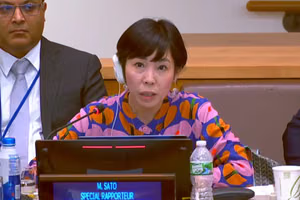
The latest findings follow warnings from UN Special Rapporteur on Iran Mai Sato, who told the UN General Assembly on October 28 that at least 34 people had been executed in connection with January's nationwide protests.
Sato described mass trials in which dozens of defendants faced proceedings lasting only days, raising concerns about whether individual criminal responsibility had been established.
In one case, she said, 34 defendants were tried over five days, with 12 sentenced to death.
The UN's Independent International Fact-Finding Mission concluded that the suppression of January's protests amounted to crimes against humanity.
Iran rejected the UN findings, describing the investigative mechanisms as politically motivated and illegitimate.
Rights groups have repeatedly raised concerns about Iran's use of broadly defined national security offenses, restricted access to lawyers and convictions based on alleged forced confessions.
IHRNGO warned that the true number of executions could be substantially higher than the cases it has independently verified.
The US Capitol looms in the distance as US President Donald Trump departs following his remarks ahead of the midterm elections at the National Mall in Washington, DC, US, November 2, 2026.
Democrats' victory in both chambers of Congress could strengthen oversight of Donald Trump's war with Iran, but some analysts say the electoral setback may encourage the US president to intensify military operations before the new Congress takes office in January.
The Democratic takeover gives opponents of the war greater influence over military spending, congressional investigations and legislation restricting presidential authority. Yet it also creates a nearly two-month period in which Trump can pursue military objectives before lawmakers assume their new positions on January 3.
The possibility that electoral defeat could encourage further military action emerged in assessments by foreign policy specialists and analysts interviewed by Iran International on Tuesday.
"We can expect Trump to carry out a major military operation, perhaps even more intense than what he would have undertaken had he retained control of Congress," international relations analyst Fereshteh Pezeshk told Iran International.
Pezeshk argued that Trump could seek to demonstrate his authority and influence the media narrative following Republican losses. She said the incoming Congress might delay military funding or create other obstacles, but would have limited power to restrain the president, who would remain commander-in-chief after January 3.
Trump acknowledged the economic impact of the Iran war after the Republican defeat but rejected the suggestion that voters opposed the military campaign itself.
"I don't think it's the war. I think it's a gasoline price. People agree with what I'm doing on Iran, but they really probably weren't willing to do the short-term consequence of paying more for gasoline," Trump told Fox News.
The president nevertheless defended his Iran policy.
"I am totally convinced that my decision on Iran for the long term good of our country and even the world was absolutely the correct one and it continues to be," Trump told Politico.
Could defeat encourage a bigger offensive?
The administration was preparing a major new offensive against Iran before the midterms, and the election result could strengthen Trump's incentive to proceed during the transition period, Barbara Slavin, a distinguished fellow at the Stimson Center, wrote on November 2.
Slavin identified reopening the Strait of Hormuz and securing Iran's stockpile of highly enriched uranium as possible objectives.
But she said that renewed attacks could expose American allies in the Persian Gulf to further Iranian retaliation, increase energy costs and cause extensive destruction without achieving Washington's goals.
A military escalation could also offer Trump a way to seek a decisive outcome before Democrats acquire greater oversight powers.
Trump's calculations differ from those of conventional presidents because he places considerable weight on his personal political achievements, journalist and political analyst Omid Memarian told Iran International.
A person walks near the US Capitol building during the US midterm elections, in Washington, DC, US, November 3, 2026.
"Trump is an unconventional president whose calculations of costs and benefits are very different from those of other politicians and former presidents," Memarian said.
He argued that the president could use the period before January to launch a concentrated military operation, weaken Iran's military or nuclear capabilities, declare victory and then seek negotiations or reduce American involvement.
"I think it may even have increased the likelihood of an attack," Memarian said.
A Democratic Congress would make managing the war more difficult through investigations, committee hearings and scrutiny of military decisions, Memarian said. That could increase Trump's incentive to seek a faster conclusion rather than simply abandon military options.
The possibility has a historical parallel. After Republicans lost the 2006 midterm elections, President George W. Bush increased US troop deployments to Iraq the following year despite mounting public opposition to the conflict.
That precedent does not establish what Trump will do, but it illustrates why an electoral defeat need not produce an immediate reduction in military operations.
How much power will Democrats have?
Control of Congress gives Democrats substantial legislative and budgetary authority, but the president remains commander-in-chief.
Congress can investigate the administration, restrict appropriations and pass legislation addressing military operations. Trump, however, can veto restrictive legislation, requiring two-thirds majorities in both chambers to override him.
"Even if Democrats hold a majority in both houses, their influence will be limited to the legislative and political tools of Congress," former national security adviser John Bolton told Deutsche Welle.
Democrats have already sought to use Congress's financial authority against the war.
Senator Tim Kaine, who has repeatedly challenged Trump's military operations without congressional authorization, pledged in August to continue efforts to cut off funding.
"I'm going to keep doing all that I can to cut off funding for what will go down in history as one of America's most foolish foreign policy catastrophes of all time," Kaine said in an official statement.
Other Democrats, including Senator Chris Coons, have distinguished between replenishing American military stockpiles and financing operations that would effectively extend the conflict.
Yet restricting funding may become politically harder if Trump orders a major offensive before January.
Democrats could inherit responsibility for decisions about supplying American troops already engaged in combat, political analyst Morad Veisi said. Opposing the war would not necessarily make lawmakers willing to withhold resources from deployed forces.
Could Trump pursue the Islamic Republic's downfall?
The possible objectives of further military action remain a major point of disagreement among analysts interviewed by Iran International.
Trump could regard the remainder of his presidency as an opportunity to secure a historic legacy, potentially including military action contributing to the Islamic Republic's downfall, Veisi said.
"I think Trump could leave behind a political legacy by helping bring about the downfall of the Islamic Republic. I'm not saying he will definitely do it, but it would be consistent with his character, and he has 60 days," Veisi said.
Veisi linked that possibility to what he described as Israel's increasingly explicit pursuit of the Islamic Republic's removal. He argued that Trump might support a broader campaign if he believed it could deliver a defining political achievement.
The analyst also suggested that an expanded conflict launched before January could leave incoming Democrats confronting military commitments they would find difficult to reverse.
Pezeshk offered a different assessment, distinguishing between forcing the Islamic Republic to submit to American demands and deliberately seeking its overthrow.
"We still do not see evidence that Trump is taking steps that would lead us to conclude he intends to overthrow the Islamic Republic rather than force it to submit," Pezeshk told Iran International.
She argued that Trump appeared more attracted to a Venezuela-style approach than an Iraq-style intervention involving prolonged American responsibility for political reconstruction.
She also questioned whether Washington had a clear plan for replacing Iran's governing institutions.
Could Tehran misread the election?
Iranian parliament speaker Mohammad Bagher Ghalibaf portrayed the election result as a rejection of the war and warned Washington against disregarding what he described as the will of American voters.
"Conscience or the cost of living, Americans said NO TO WAR, and we endorse this message," Ghalibaf wrote on X.
"If the US govt betrays their public will to serve international paymasters and blackmailers, it will learn our NO comes with a Nightmare," he added.
Ghalibaf's message combined his interpretation of the election with a warning of consequences if Washington continued its military campaign.
But the shift in congressional control does not necessarily signal a corresponding change in Washington's strategic objectives.
Iranian leaders should not mistake political divisions in Washington for a weakening of American power, Washington-based national security specialist Amir Hamidi told Iran International.
"President Trump may lose his congressional majority, but he has not lost his presidential authority. An electoral defeat for one party is not a defeat of America's national power," Hamidi said.
Hamidi added that the Islamic Republic could pay a heavy price for misreading the election result, arguing that the US president remains commander-in-chief and retains significant authority over diplomacy and crisis management.
Congressional oversight of military operations and war spending could increase under Democratic control, but that would not necessarily diminish US deterrence or its longstanding security commitments, Hamidi said.
A narrowing window before January
The Democratic victory may have changed the political timetable for the Iran war without changing who controls its immediate course.
Until the new Congress takes office on January 3, Trump retains the authority to make military decisions that could shape the conflict well beyond the transition period. A major offensive during those weeks could leave incoming lawmakers confronting decisions already made and military commitments difficult to reverse.
The election result also presents a question for the Islamic Republic: whether Washington's domestic political divisions will translate into restraint or whether an approaching deadline could encourage further military action.
The coming weeks may therefore matter more than the new balance of power in Congress. A vote intended to change the direction of American politics could precede a decisive turn in a war that the incoming lawmakers have yet to gain the power to influence.