The debate puts competing promises of security before voters whom analysts describe as exhausted by years of conflict, raising questions about what would constitute victory and how far Israel would go to achieve it.
“We must complete the elimination of the Iranian regime — that is the primary objective,” Netanyahu said Tuesday at Tel Hai University in Kiryat Shmona, near the Lebanese border.
Netanyahu has long welcomed the prospect of the Islamic Republic’s collapse. Now, with Israelis voting on October 27, he is placing the removal of Iran’s leadership at the forefront of his message.
Netanyahu argued that weakening Iran militarily would not guarantee Israel’s security. As long as the Islamic Republic remains in power, he said, it will attempt to rebuild its nuclear capabilities and regional network.
“Finishing the job means bringing down the terrorist regime in Iran,” Netanyahu said, describing Tehran as the head of a “poisonous octopus” whose removal, he argued, would also bring down Hezbollah in Lebanon.
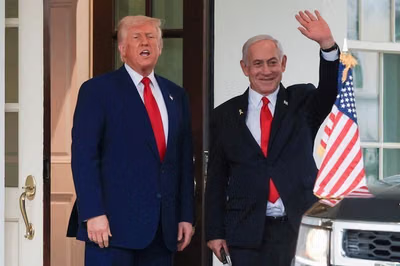
The declaration followed discussions with US President Donald Trump and an unannounced visit by US Defense Secretary Pete Hegseth. Washington, however, has not publicly committed to regime change, emphasizing instead the prevention of a nuclear-armed Iran.
Why emphasize regime change now?
Netanyahu’s declaration comes as he seeks another term following three years of war and repeated military confrontations with Iran and its regional allies.
Itai Reuveni, director of communications and outreach at NGO Monitor, said the prime minister was articulating what many Israelis had already understood to be the broader ambition behind military operations against Tehran.
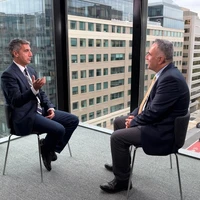
“I think he just summarized all the things that everyone meant,” Reuveni told Iran International.
Making regime change the declared objective raises questions about whether weakening Iran’s military and nuclear capabilities would be sufficient for Netanyahu to claim victory.
Yaakov Katz, former editor-in-chief of The Jerusalem Post and author of four books on Israel’s military, said repeated strikes alone cannot permanently eliminate the Iranian threat.
“You can bomb them, you can destroy facilities, you can set back nuclear programs, but they will rebuild,” Katz told Iran International.
Netanyahu is presenting regime change as the route to lasting Israeli security, a message delivered in Kiryat Shmona, a historically Likud-supporting community repeatedly targeted by Hezbollah.
Vivian Bercovici, Canada’s former ambassador to Israel and founder and editor-in-chief of State of Tel Aviv, said the location allowed Netanyahu to appeal directly to voters who have experienced the consequences of Iran’s regional influence.
But she questioned whether the declaration would persuade Israelis beyond his existing supporters.
“I really think that people have tuned him out,” she said.
A shared concern, a public tired of war
Those interviewed described opposition to the Islamic Republic as extending across much of Israel’s political spectrum, while drawing a distinction between agreement on the threat and enthusiasm for another military confrontation.
“It’s the one issue on which there’s no daylight in Israel,” Bercovici said.
Yet she described a public exhausted by years of fighting.
“I don’t think that Israel has any appetite for war,” she said. “We’ve had way too much war in the last three years.”
Reuveni described a similar tension. Many Israelis believe Iran’s immediate military threat has diminished following Israeli and American strikes, he said, complicating the case for further military action.
“People are tired from the war,” he said.
Katz said the election ultimately comes down to which leader Israelis trust to protect them, rather than any single declaration about Iran.
“What is important is the belief in which leader do Israelis think can keep them safe,” he said.
Does Netanyahu’s declaration set him apart?
Netanyahu’s explicit objective does not necessarily distinguish him from his political rivals, several of whom have advocated aggressive measures against Tehran and criticized his failure to eliminate the Iranian threat.
Former prime ministers Naftali Bennett and Yair Lapid are contesting the election together under the joint list Together (Beyachad).
Lapid has advocated striking Iran’s energy infrastructure, including Kharg Island, while Bennett has long promoted confronting Tehran directly rather than focusing on its regional proxies.
Gadi Eisenkot, the former military chief who leads the centrist Yashar party, has questioned whether regime change is achievable through military action, emphasizing the permanent dismantling of Iran’s nuclear capabilities.
Avigdor Lieberman, leader of Yisrael Beiteinu, has also advocated overthrowing the Islamic Republic and criticized previous Israeli efforts as insufficient.
Eric Mandel, founder and director of the Middle East Political and Information Network, said the broad agreement on Iran means a change of government in Israel would not necessarily produce a fundamental shift in policy.
“I think most Israelis know that it doesn’t matter who’s going to get elected, they’re going to have the same policy in Iran,” Mandel told Iran International.
But agreement on the threat is different from agreement on how to eliminate it.
Mandel said achieving regime change would require American involvement, underscoring the gap between Netanyahu’s declared ambition and Washington’s publicly stated objectives.
“Israel is a regional power, America is a superpower,” he said. “Israel could be very helpful, but Israel can’t do it on its own.”