• العربية
  • فارسی
Brand
  • Iran Insight
  • Politics
  • Economy
  • Analysis
  • Special Report
  • Opinion
  • Podcast
  • Live TV
  • Iran Insight
  • Politics
  • Economy
  • Analysis
  • Special Report
  • Opinion
  • Podcast
  • Live TV
  • Theme
  • Language
    • العربية
    • فارسی
  • Iran Insight
  • Politics
  • Economy
  • Analysis
  • Special Report
  • Opinion
  • Podcast
  • Live TV
All rights reserved for Volant Media UK Limited
volant media logo

Iran regime used Claude to expand surveillance of dissidents, Anthropic says

Sep 13, 2026, 04:34 GMT+1
Members of Iran’s Islamic Revolutionary Guard Corps (IRGC) operate at computer stations in an undated image (Photo: Screengrab)

Anthropic said Iranian paramilitary and security units used Claude to surveil thousands of Iranians and identify opposition and diaspora accounts, while a separate MEK-linked operation used the AI to impersonate an activist and profile people inside Iran.

The findings are detailed in Anthropic’s September threat report, published Thursday, which examines malicious uses of Claude disrupted between December 2025 and August 2026.

Anthropic said it identified and banned 16 Claude accounts operated by two linked units associated with Iranian paramilitary and domestic security agencies. One was a seven-department organization with offices across Iranian provinces that claimed to have surveilled and profiled 6,388 Iranians in a single year and maintained an identity-record database on Iranian nationals.

The group used Claude to help build a front end for what Anthropic assessed was likely a government-controlled surveillance case-management system and to analyze 155,216 tweets. A separate Qom-based unit used Claude as an engineering tool to develop domestic surveillance capabilities, including a malicious Firefox extension called “al-Najm al-thāqib” that was deployed to harvest user identities from major social media platforms.

Anthropic said both units fed information into a centralized system called “Arman.” Files on individuals included national ID numbers, beliefs, criminal records, social media accounts and an “action” tab. The company assessed with high confidence that the units were associated with Iranian paramilitary domestic security entities and said it found evidence they responded to taskings from senior government officials.

The tools built with Claude included a messenger de-anonymizer, a system linking phone numbers to identities, a national-ID phishing page, a Telegram mass-reporting bot and a Firefox identity harvester disguised as a prayer-times utility. One unit also ran a social-network analysis pipeline that identified 39 Iranian opposition and diaspora accounts.

Anthropic said a separate actor operating alongside one of the units used Claude’s custom-skills feature to clone the voices of three Iranian writers and prepare propaganda narratives in advance for the succession to Iran’s Supreme Leader.

MEK-linked influence operation

The report also detailed a separate influence operation Anthropic linked to the exiled opposition group People’s Mojahedin Organization of Iran, or MEK, and the National Council of Resistance of Iran, which is the group’s political front.

The network impersonated a real activist by cloning his personal Telegram account and directing Claude to read about 8,400 of his posts to reproduce his writing style. The AI-assisted account was then used to hold live political conversations with his contacts, who Anthropic said appeared unaware they were communicating with an AI-assisted impersonator.

Anthropic said at least four people running the campaign worked for official NCRI media outlets. The operation scraped more than 500 social media channels to build profiles of people inside Iran, grouping them by city, age, occupation, political alignment and arrest history. It also analyzed about 51,944 archived messages to create psychographic dossiers on dozens of individuals.

The network used AI-generated avatars with Persian audio to promote NCRI President Maryam Rajavi’s ten-point plan, presenting them as ordinary Iranians without disclosing that they were synthetic. Automated Instagram networks coordinated posts for different audiences, while early content deliberately avoided mentioning the Mojahedin so the material appeared to come from independent sources.

Anthropic said the campaign also targeted monarchist groups and the Pahlavi camp, including through a fabricated video attacking a member of the Pahlavi family and “Neither Shah Nor Sheikh” messaging intended to strengthen the MEK’s position within the Iranian opposition.

The company said the operation used a shared Claude-based agent platform called “Viktor,” with common doctrine, approved sources and instructions for avoiding detection. It banned the accounts involved, but said it could not independently determine how much genuine engagement the network attracted.

Anthropic’s report also detailed other Iran-linked uses of Claude, including state-aligned propaganda campaigns, efforts to track US naval forces, surveillance tools targeting Iranians and intelligence gathering on people in Israel and the Jewish diaspora.

The company said it banned accounts tied to the operations and shared some of its findings with government and industry partners.

Most Viewed

Heavy fighting spreads in southeastern Iran, with security force casualties reported
1

Heavy fighting spreads in southeastern Iran, with security force casualties reported

2
ANALYSIS

Russia may fill Iran gap if support for Yemen Houthis falters

3

Blogger sentenced to death in Iran on security-related charges

4

Saudi Arabia squeezed from Iraq and Yemen ahead of GCC talks with Iran

5

Fall of Hezbollah heights ignites blame game in Tehran

Banner
Banner
Banner

Spotlight

  • Rushed trials, public hangings: Iran courts race to crush dissent
    INSIGHT

    Rushed trials, public hangings: Iran courts race to crush dissent

  • Israeli envoy says no victory until Islamic Republic falls

    Israeli envoy says no victory until Islamic Republic falls

  • Russia may fill Iran gap if support for Yemen Houthis falters
    ANALYSIS

    Russia may fill Iran gap if support for Yemen Houthis falters

  • Bid to oust Pezeshkian exposes rift among Iran conservatives
    INSIGHT

    Bid to oust Pezeshkian exposes rift among Iran conservatives

  • Iran’s hardliners bet on escalation as options narrow
    ANALYSIS

    Iran’s hardliners bet on escalation as options narrow

•
•
•

More Stories

Rushed trials, public hangings: Iran courts race to crush dissent

Sep 12, 2026, 18:54 GMT+1
•
Negar Mojtahedi
100%
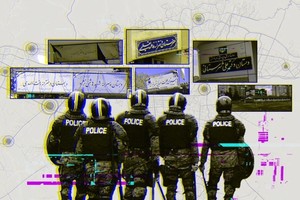
A graphics based on an actual image of a scaffolding with gallows erected for public hangings in Iran

Iran has executed at least 29 people arrested in connection with the widespread protests in January, more than half of whom were not accused of killing anyone, with some put to death in public in what rights groups describe as a campaign to deter further dissent.

The findings are contained in a new joint report by Human Rights Watch and the Abdorrahman Boroumand Center for Human Rights in Iran examining executions following the nationwide protests that erupted in late 2025 and January 2026.

Between March 18 and the end of August, Iranian authorities announced the executions of 29 people arrested in connection with the protests. Several were just 18 or 19 years old, and five were executed in public.

In 16 cases, authorities did not allege that the defendants had killed anyone. Instead, young protesters have been executed over allegations including setting fire to buildings or vehicles, possessing or using Molotov cocktails, entering or damaging government buildings, throwing stones and blocking streets.

The organizations say the speed with which some defendants have gone from arrest to execution has been extraordinary.

Saleh Mohammadi, a 19-year-old wrestling champion, was executed about five weeks after his arrest. Amir Hossein Hatami, 18, was executed 84 days after his arrest.

Sasan Azadvar Jonaqani, a 21-year-old karate champion, was arrested, convicted and executed in under four months. Authorities accused him of acts including breaking the windows of a police bus with stones and a baton.

‘War against God’

The executions mark a new phase in the crackdown that followed the January protests, when Iranian authorities killed thousands and detained tens of thousands as they sought to suppress the unrest.

Human Rights Watch and the Boroumand Center found that at least 59 men were executed during the same period on what they described as politically motivated and vaguely defined national security charges following grossly unfair trials.

At least three had reportedly been arrested in connection with the 2022 Woman, Life, Freedom protests.

Iranian courts have relied heavily on broadly defined capital offenses including “waging war against God” and “corruption on earth.”

Human Rights Watch and the Boroumand Center said those charges have allowed courts to impose death sentences without establishing that defendants were responsible for intentional killings.

‘Helping hostile states’

The report also points to Iran's 2025 Espionage Law as an increasingly important tool in protest-related prosecutions.

At least eight protesters executed following the recent demonstrations were convicted under the law, which expanded the range of conduct punishable as cooperation with “hostile states” and provides for expedited proceedings.

It can also impose lengthy prison terms for sending footage, images or information to foreign media, citizen journalists or foreign social media pages when authorities deem the activity contrary to national security.

‘Torture, forced confessions’

Human Rights Watch and the Boroumand Center documented defendants being denied independent lawyers of their choosing and courts relying on confessions allegedly extracted through torture, as well as unsubstantiated reports from security and intelligence agencies.

Detainees were allegedly beaten, subjected to electric shocks and mock executions, held for prolonged periods in solitary confinement and threatened with sexual violence against themselves or family members.

Some defendants later retracted their confessions in court and said they had been tortured. The report says authorities failed to investigate those allegations.

The organizations also documented the use of televised confessions before cases had concluded.

In one recording broadcast by state media, an interrogator told 18-year-old Shervin Bagherian that he was accused of “waging war against God.”

Bagherian appeared not to know what the charge meant. When the interrogator told him it meant execution, the teenager pleaded not to be put to death.

Public hangings

The report places particular emphasis on the return of public executions in protest-related cases, which the organizations say is intended to instill fear in the wider population.

On July 28, authorities executed Abolfazl Sepahi and Amir Hossein Safari in Alikhani Square in Isfahan, where four members of the security forces were reported killed during protests on January 8.

Three other men — Saleh Mohammadi, Saeed Davoudi and Mehdi Ghasemi — were executed in March “in the presence of a group of people in Qom,” according to the judiciary's Mizan news agency, language the report says indicated a public execution.

Scores could be next

Scores of protesters and political dissidents, including women and children, remain at risk of execution, according to the report.

Amnesty International said in July that it had identified 60 people, including three children, at risk of execution in connection with protests. Iran Human Rights has reported that more than 70 protesters were at risk in Isfahan Prison alone.

The actual number could be substantially higher.

Among those who could still be executed is 26-year-old mixed martial arts fighter and kickboxer Benyamin Naghdi.

A revolutionary court in Shiraz sentenced Naghdi to death for “corruption on earth” after accusing him of using a fire extinguisher as a makeshift flamethrower against security forces riding motorcycles during protests on January 3.

His lawyer, Mostafa Nili, said prosecutors initially accused Naghdi of attempted murder but later dropped charges related to bodily injury. Nili said no one was injured.

Nevertheless, the court concluded that the remaining allegations collectively amounted to “corruption on earth,” and Iran's Supreme Court upheld Naghdi's death sentence in July, according to the report.

Lawyers taking protest-related cases have also faced threats of arrest, while the Boroumand Center documented the arrests of at least 19 lawyers in the month following the January crackdown. Others have faced renewed prosecution or disbarment.

Human Rights Watch and the Boroumand Center describe the campaign as the “weaponization of the death penalty” in the aftermath of the January crackdown, intended to instill fear and deter further dissent.

Blogger sentenced to death in Iran on security-related charges

Sep 12, 2026, 13:42 GMT+1
100%

Marziyeh “Sevda” Ebrahimi Shamsabadi, a 33-year-old blogger from Bandar Abbas who has been detained since March, has been sentenced to death, according to information obtained by Iran International.

Branch 3 of the Bandar Abbas Revolutionary Court convicted her on charges including insulting Iran's supreme leader, media and propaganda activity against national security, intelligence and security activity on behalf of hostile governments, and taking and sending photographs to Persian-language media abroad, according to the information.

The court also sentenced her to between two and five years in prison, barred her from some government services and ordered the confiscation of property. Her lawyer was notified of the death sentence on August 23.

Ebrahimi Shamsabadi was held in solitary confinement for 20 days and faced severe pressure during interrogation, according to information obtained by Iran International. Her family was not told where she was being held or about her condition during that period.

The sentence was issued by Judge Khajeh-Hassani, who was previously praised by judiciary officials as an exemplary judge for, among other things, issuing a high number of rulings and what they described as diligence in his work.

  • Protester blinded in one eye sentenced to death after return to Iran

    Protester blinded in one eye sentenced to death after return to Iran

More political and protest-related death sentences

The case comes amid a series of death sentences against protesters and political detainees in Iran.

Earlier this month, US-based rights outlet HRANA reported that Ali Zarei Doozdarresi, a protester who lost sight in one eye after being shot during the 2022 Woman, Life, Freedom protests, had been sentenced to death after returning to Iran from Germany.

Iran International also reported in August that Leila Abolhassani, a 43-year-old mother of two detained during the January protests in Shahin Shahr, had been sentenced to death on charges of “waging war against God.” Her case was sent to the Supreme Court following an appeal.

  • Iran sentences woman detained during January protests to death

    Iran sentences woman detained during January protests to death

Rights groups warn of rising executions

Rights groups have accused Iranian authorities of increasingly using capital punishment against protesters and political dissidents.

Norway-based Iran Human Rights said last month that 29 people arrested in connection with the January 2026 protests had been executed since March 19, in addition to two protesters from the 2022 Woman, Life, Freedom movement.

The US-based Abdorrahman Boroumand Center said in August that it had documented 950 executions in Iran since the start of 2026, including at least 20 women and 30 protesters. The UN human rights chief has also accused Iran of using executions to “instill fear among the population and suppress dissent.”

Meat, cream, rice: Food becomes loot as prices soar in Iran

Sep 10, 2026, 16:53 GMT+1
•
Saman Rahmatian
100%

Soaring food prices in Iran are increasingly reflected in reports of theft, with groceries appearing in cases ranging from first-time shoplifting to warehouse raids and armed robbery.

A butcher in Karaj told Iran International that some customers now ask for their meat to be placed in black bags so it does not attract attention.

He described an elderly woman who had just bought meat when a man on a motorbike snatched the bag from her hand, causing her to fall and suffer injuries.

Police and judicial authorities do not publish detailed statistics on food theft, making it impossible to establish its scale or whether such crimes have increased. But basic groceries feature repeatedly in recent media reports of theft.

Some cases appear to involve people with no previous history of crime.

Meat, rice, cream

State news agency IRNA reported the case of a woman caught hiding two tubs of cream under her chador. When stopped by a security guard, she said her children were hungry. Her husband, described as a day labourer, reportedly knew nothing about the theft.

In a review of similar cases, IRNA said some of those accused, including housewives, had no criminal record and were facing theft charges for the first time. Cheese, yoghurt, cream and cooking oil were among the goods being stolen, it said.

The newspaper Jahan-e Sanat has separately reported thefts of cheese, butter and meat from shops.

The reports come as the cost of basic food has risen far faster than overall prices.

According to the Statistical Center of Iran, year-on-year inflation for food and drink reached 127.5 percent in the month to late August, meaning average prices in the category had more than doubled in a year.

Some staples rose considerably faster. Solid vegetable oil increased by more than 383 percent, eggs by nearly 294 percent, chicken by around 177 percent and red meat by 148 percent.

Iranian media reported last month that a kilogram of beef fillet cost around 42.7 million rials, about $19. At that price, one kilogram was equivalent to roughly seven and a half days of earnings at the minimum daily wage of 5.54 million rials, or about $2.50.

Armed robberies

But food is also appearing in crimes that have little apparent connection to immediate hunger, suggesting that sharply higher prices have made groceries more attractive to thieves.

In eastern Tehran, members of a gang who police said confessed to more than 10 house burglaries were stealing rice alongside gold, dollars and coins.

Police have also reported larger thefts, including around 1.5 tons of rice and other groceries from a storeroom in Tehran and approximately 15 tons of rice from a private warehouse in Rey.

Local media reported two armed robberies of shops in Iranshahr, in Sistan and Baluchistan province. In one, attackers took six sacks of rice, around 12 bottles of cooking oil, tinned food and pulses. In another, robbers fired shots before taking rice and cooking oil.

The cases cannot establish that food theft is increasing, nor do they point to a single motive. Shoplifting by someone struggling to feed a family is plainly different from a gang stealing rice alongside gold or raiding a warehouse.

What connects them is the changing value of food after years of inflation, particularly the steep price rises of recent months. Basic groceries have become increasingly difficult for many Iranians to afford — and valuable enough to steal.

Tehran governor seeks return of schools used by military forces

Sep 10, 2026, 13:25 GMT+1
100%
Images from Tehran’s Tehranpars neighborhood show special police unit vehicles and forces deployed in the courtyard of a boys’ primary school.

Tehran’s governor has called for schools used by other state bodies to be returned before students begin the new academic year, months after military and security forces deployed at schools during the US-Israeli war.

Mohammad-Sadegh Motamedian did not identify which institutions were using the schools or disclose how many educational facilities had yet to be returned to the Education Ministry.

“These educational spaces must be handed over to the Education Ministry before the start of the school year, and where there are challenges, the relevant institution should inform the province so alternative space can be provided and the issue resolved,” Motamedian said.

The Revolutionary Guards, Basij paramilitary force and police used schools to station personnel during and after the war.

Dozens of schools used during war

An Iran International investigation published in March found that security and military forces moved personnel, weapons and equipment into at least 70 civilian sites across 17 provinces during the US-Israeli strikes from March 2 to 14.

100%
A police vehicle is seen parked in the courtyard of a school in Iran during the US-Israeli war in March 2026.

Nearly half of the locations – 34 – were primary or secondary schools. Other sites included hospitals, stadiums, universities, mosques, parks and government offices.

Footage from several cities showed security vehicles, personnel or military equipment on school grounds.

‘Schools offered greater security’

Journalist Ali Hossein Ghazizadeh said schools offered forces large courtyards, numerous rooms and locations among residential buildings at a time when military bases were being targeted.

  • Iran’s military uses schools and civilian sites during US-Israeli war

    Iran’s military uses schools and civilian sites during US-Israeli war

“Being in schools provides greater security for them,” Ghazizadeh told.

Schools were particularly useful for relocating personnel after bases and other facilities were struck, and their location among civilian buildings provided additional protection, Ghazizadeh said.

The use of educational facilities did not necessarily end with the fighting, Ghazizadeh said, adding that Iran International had received information indicating that some institutions sought to retain schools for longer-term use.

Civilian protection concerns

Schools are generally protected as civilian objects under international humanitarian law but can lose that protection if their use makes them military objectives. Attacking forces remain bound by rules including distinction, proportionality and precautions to limit civilian harm.

100%

Iranian officials have denied using civilians as shields and accused Israel of targeting civilian infrastructure during the conflict.

The Israeli military confirmed to Iran International in March that it had identified Iranian forces deploying personnel and weapons at civilian sites, including schools, mosques and stadiums.

Iranian protester still unable to walk despite 23 operations for gunshot wound

Sep 10, 2026, 09:32 GMT+1
•
Farnoosh Faraji
100%
A building burns during protests in Iran in January 2026, as people gather nearby.

An Iranian protester shot in the leg during January’s demonstrations remains unable to walk after 23 operations, with further treatment ahead, medical bills mounting and concerns for his safety persisting months after the shooting.

“Despite all these surgeries, I am still confined to my home,” the protester, whose identity and place of residence are being withheld for security reasons, told Iran International. “I am married, and during this time we have faced many problems paying for my treatment.”

His family eventually sold their car to help cover his medical bills, the protester said. Doctors have told him that regaining the ability to walk could take at least another year.

The account reflects the prolonged physical and financial consequences facing some people wounded during the protests, with Iran International receiving multiple accounts of injured demonstrators struggling to obtain treatment and pay medical expenses months later.

23 operations and more treatment ahead

The gunshot caused extensive damage to the protester’s leg, requiring doctors to perform muscle and skin grafts during a series of operations.

100%
An injured Iranian protester’s leg during treatment following a gunshot wound. The protester told Iran International he has undergone 23 surgeries and remains unable to walk.

“About a month has passed since the skin graft, and the Ilizarov device that was fitted to my leg at the beginning of treatment is due to be put back on for about three months,” the protester said.

An Ilizarov apparatus is an external bone-fixation system using metal rings, rods and wires to gradually reposition sections of bone. It can be used to treat severe damage or the loss of part of a bone.

Doctors also attached a vacuum-assisted device to the wound for several months to promote new tissue growth, the protester said.

Infection, nerve damage and numbness later forced doctors to remove some of the repaired tissue and perform a muscle graft about six months after the shooting, according to the protester.

“I asked people who were able to help, but in the end, with great difficulty and even by selling our car, we tried to cover the costs,” he said.

Security fears complicate hospital treatment

Fear of arrest or identification at hospitals has complicated treatment for some protesters wounded during demonstrations, prompting some to seek medical care covertly or at home.

  • Iranian protester undergoes months of secret treatment to save wounded leg

    Iranian protester undergoes months of secret treatment to save wounded leg

“After one of the surgeries, because there were many security officers in the emergency department, the doctor helped me leave the hospital,” the protester said.

Hospital staff recorded the cause of his injuries as a traffic accident, and his doctor later helped take him to Tehran to continue undergoing surgery, the protester said.

“I really do not know how to thank the medical staff,” he added. “They cooperated extensively and tried to make sure nothing else happened to me.”

Protester recounts January 8 shooting

Security forces initially fired pellets toward demonstrators before a live round struck his leg at close range on the evening of January 8, the protester said.

“My whole body is covered with pellet marks. The bullet hit my leg from close range,” he said. “When I was shot, they dragged me along the ground while I was in a very bad condition. I will never forget that night.”

Security personnel insulted him and tried to remove his clothing after he was wounded, according to his account.

“I held tightly onto my trousers, and they struck my hands with their boots,” he said. “My entire body was bruised, and I even thought my ribs were broken.”

The officers then put him on a motorcycle, the protester said.

“One of them said, ‘Don’t hit him here, take him farther up,’” he said. “I thought they meant they were going to finish me off. I passed out from fear.”

100%
The injured Iranian protester undergoes treatment with an external fixation device after suffering a gunshot wound to the leg during demonstrations on January 8.

The protester said he regained consciousness alone in a dark alley, where an elderly couple found him and helped him reach a hospital.

“At first, I thought I was dead,” he said. “Then an elderly woman and man found me. They were like angels to me and helped me get to the hospital.”

The protester said he had joined the demonstrations knowing that doing so could put his life at risk.

  • Security forces seized Iran hospital, sent wounded protesters to morgue

    Security forces seized Iran hospital, sent wounded protesters to morgue

“That night, I went out like many others, and I knew I might lose my life, but for me it was about Iran,” he said.

Six months after the shooting, the protester remains unable to walk, with further procedures ahead and no certainty over when he will regain mobility.