• العربية
  • فارسی
Brand
  • Iran Insight
  • Politics
  • Economy
  • Analysis
  • Special Report
  • Opinion
  • Podcast
  • Live TV
  • Iran Insight
  • Politics
  • Economy
  • Analysis
  • Special Report
  • Opinion
  • Podcast
  • Live TV
  • Theme
  • Language
    • العربية
    • فارسی
  • Iran Insight
  • Politics
  • Economy
  • Analysis
  • Special Report
  • Opinion
  • Podcast
  • Live TV
All rights reserved for Volant Media UK Limited
volant media logo

Anthropic says Iran-linked accounts used Claude for propaganda, US naval targeting

Sep 11, 2026, 01:09 GMT+1
Anthropic’s Claude AI is shown in an illustration.

Anthropic said Thursday that Iranian state-aligned and Iran-linked accounts used Claude in separate operations involving propaganda, targeting US naval forces, domestic surveillance and profiling people in Israel and the Jewish diaspora.

The report covers malicious activity Anthropic said it disrupted between December 2025 and August 2026 across several areas, including cyber operations, influence campaigns and surveillance.

In one set of influence operations, Anthropic said it identified and removed three Iran state-aligned accounts linked to government propaganda institutions. The accounts used Claude to develop campaigns intended to shape opinion inside and outside Iran while disguising state-backed narratives as independent content.

The company linked the accounts to the Islamic Culture and Communications Organization under Iran’s Ministry of Culture and Islamic Guidance, the Islamic Propaganda Office of Khorasan Razavi and the Islamic Propaganda Organization’s Bina Cultural Observatory.

Anthropic reported that the accounts used Claude to produce campaign plans, doctrine manuals, persona systems and target databases and to turn official government intelligence bulletins into tailored material in Farsi, Arabic, Urdu, Malay, Spanish and English, with a broader plan covering 20 languages. The material was distributed through platforms including X, Instagram, Telegram, TikTok, YouTube, Eitaa, Bale and Rubika.

Some of the content was disseminated through channels sympathetic to IRGC narratives, with Anthropic saying it observed material appearing on IRGC-aligned channels on Iran’s Eitaa platform and elsewhere. The company assessed the operation as Category Three on its Breakout Scale, reflecting distribution across multiple platforms.

Anthropic also reported that an account linked to the Bina Cultural Observatory generated messaging in the official voice of an IRGC spokesperson. During the 2026 US-Israel-Iran war, the network attributed false claims to Western research institutions including CSIS, Brookings and RAND to make state-backed messaging appear more credible.

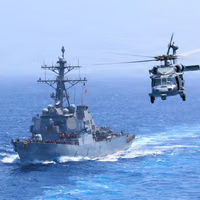
The report also detailed a separate Iran-linked account that Anthropic said used Claude to collect and analyze publicly available information to develop targeting recommendations against US naval forces in the region. The account used Claude to compile targeting handbooks and identify and track naval positions through open-source information.

According to Anthropic, the material included names of US personnel collected from captions on public military photographs, ship and aircraft transponder identifiers, commercial satellite-imagery query scripts and lists of public websites exposing US naval movements. The account also used Claude to research vulnerabilities in shipboard systems, including maritime satellite terminals, Cisco communications equipment and industrial control products.

Anthropic said the same account separately used Claude to develop components for an Iranian state domestic surveillance platform combining automatic license-plate recognition with interception of mobile-device identifiers. It also analyzed a same-day export from a private Telegram group with 244 members, including mapping social connections among its members.

In another case, Anthropic identified an Iran-linked account that used Claude to build an automated open-source intelligence tool for profiling hundreds of people in Israel and the Jewish diaspora. The account sought to produce intelligence on Israeli and US individuals. Separately, it used Claude to modify malware and build an obfuscation pipeline intended to make the malware harder to identify and analyze.

Anthropic also identified a separate Iranian operation that used free Claude accounts to develop malware, phishing infrastructure and delivery pages targeting people inside Iran. The pages were designed to deliver malicious material only to users connecting from Iranian IP addresses and included sites posing as censorship-circumvention tools and a fabricated Farsi news outlet.

The company said it banned accounts associated with the operations and, in the US naval reconnaissance case, shared threat intelligence with government authorities. It also said it shared indicators from the Iran state-aligned influence operations with industry and research partners.

Most Viewed

Iran routed up to $2.5 billion via China sanctions workaround in past year - Reuters
1

Iran routed up to $2.5 billion via China sanctions workaround in past year - Reuters

2

Meat, cream, rice: Food becomes loot as prices soar in Iran

3

Tehran governor seeks return of schools used by military forces

4

Iranian engineer detained after protests presents camera feature at Apple launch

5

Houthis seize key Red Sea city as US prepares for prolonged Iran war

Banner
Banner
Banner

Spotlight

  • Bid to oust Pezeshkian exposes rift among Iran conservatives
    INSIGHT

    Bid to oust Pezeshkian exposes rift among Iran conservatives

  • Iran’s hardliners bet on escalation as options narrow
    ANALYSIS

    Iran’s hardliners bet on escalation as options narrow

  • Iranian protester still unable to walk despite 23 operations for gunshot wound
    EXCLUSIVE

    Iranian protester still unable to walk despite 23 operations for gunshot wound

  • Behind Iran’s display of mercy, the gallows keep working
    INSIGHT

    Behind Iran’s display of mercy, the gallows keep working

  • How body bags came to symbolize Iran's January killings
    ANALYSIS

    How body bags came to symbolize Iran's January killings

•
•
•

More Stories

Iran’s hardliners bet on escalation as options narrow

Sep 10, 2026, 19:25 GMT+1
•
Behrouz Turani
100%
Crowds gather at a state-sponsored event in central Tehran under a large billboard promoting resistance, August 31, 2026

Hardliners in Tehran are pressing for further military and nuclear escalation despite mounting economic pressure and a widening confrontation with the United States. Is it a reckless gamble, or a realistic response to Iran’s dwindling options?

Calls for a tougher response have grown louder as fighting expands beyond the Strait of Hormuz and US pressure on Iranian oil exports intensifies.

In parliament, ultraconservative lawmaker Mohammad Taghi Naghdali has called for a stronger response to prevent further weakening of Lebanese Hezbollah, while Hassan Ghashghavi, spokesman for parliament’s National Security and Foreign Policy Committee, has argued for measures aimed at strengthening Iran’s deterrence.

Other hardline figures have gone further, renewing calls for Iran to withdraw from the Nuclear Non-Proliferation Treaty, end remaining international monitoring and adopt a more confrontational nuclear posture.

The Revolutionary Guards said Thursday its navy had targeted two US vessels, eight oil tankers and 10 other ships in the Persian Gulf and Strait of Hormuz in response to US attacks on five Iranian tankers.

The escalation is taking place against severe economic pressure at home. Food inflation reached 127.5 percent year-on-year in the month to late August, while the rial has fallen to record lows against the dollar.

For advocates of escalation, the calculation is that greater military pressure can produce strategic leverage before the economic and military costs become harder to sustain.

The International Atomic Energy Agency’s Board of Governors this week reported Iran to the UN Security Council over breaches of its nuclear non-proliferation obligations, the first such referral in 20 years.

Tehran rejected the decision, accusing Western governments of using disruption caused by US and Israeli attacks on its nuclear facilities as a pretext for further pressure.

Calls to leave the NPT or further restrict international monitoring could give Tehran another means of raising the stakes. They could also deepen its isolation and increase the risk of further military action at a time when diplomatic options are already limited.

But what are Iran’s alternatives?

Yet judging the hardliners’ strategy solely against Iran’s vulnerabilities misses the other side of the calculation.

President Donald Trump said this week that negotiations with Iran “could happen,” but added that talks were “not something we’re looking at” for now. US forces, meanwhile, have continued attacks on Iranian oil tankers and enforcement of Washington’s maritime blockade.

Trump also said he wants any eventual agreement to go beyond the nuclear issue, potentially making a negotiated settlement more difficult to reach.

Senior advisers have privately warned Trump that Iran could continue resisting US pressure and that the conflict could last through the remainder of his presidency, according to a Wall Street Journal report.

Iran’s latest attack on the US base in Jordan required American forces to fire roughly 30 Patriot interceptors, according to a US official, adding to concerns about the rate at which the war is consuming sophisticated air-defense missiles.

Precise stockpile figures are classified, but independent estimates and recent reporting have pointed to significant pressure on US inventories of Patriot and other high-end interceptors, which can take years to replenish.

The disparity in overall military and economic power remains considerable, while Iran is already contending with high inflation, disruption to its oil trade and the costs of sustained military operations.

But the calculation in Tehran appears to be that Iran can impose sufficient costs on the United States and its regional partners before its own vulnerabilities become overwhelming.

It is a strategy with considerable risks. But with no clear diplomatic off-ramp, the harder question is whether Tehran’s hardliners are ignoring the options available to Iran—or responding to how few remain.

US warplanes damaged in Iran strikes on Jordan base

Sep 10, 2026, 18:04 GMT+1
100%
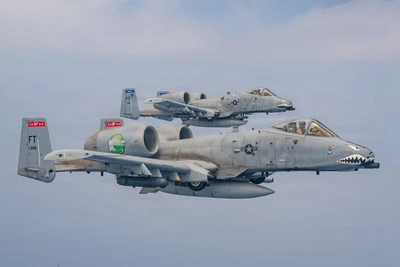
U.S. military personnel pass in front of a U.S. A-10 aircraft, one of a squadron that has arrived to step up the fight against the Taliban, at the Kandahar air base, Afghanistan January 23, 2018

Iranian missiles damaged several American military aircraft at a base in Jordan this week, a US official told Reuters, underscoring the continuing ability of Iranian strikes to penetrate US defenses after more than six months of war.

The attack on Muwaffaq Salti Air Base on Tuesday damaged an A-10 Thunderbolt II, commonly known as the Warthog, as well as about eight F-15 fighter jets, according to the official, who spoke on condition of anonymity.

The F-15s sustained light damage and were returned to service.

The exchange began after US forces destroyed five Iranian crude oil tankers.

Washington said the strikes were carried out after Iran’s Islamic Revolutionary Guard Corps twice targeted a US Navy warship with ballistic missiles over the previous two days.

Iran then launched ballistic missiles at the American base in Jordan, forcing US forces to fire roughly 30 Patriot interceptors, the official said.

That expenditure comes amid growing concern in Washington over the rate at which the war is consuming some of the US military’s most sophisticated missiles.

Precise stockpile figures are classified, but independent estimates and recent reporting suggest inventories of Patriot, THAAD and other high-end munitions have fallen sharply during the Iran war.

The Center for Strategic and International Studies estimated in July that the United States had expended about 65 percent of its prewar Patriot interceptor inventory, leaving between 759 and 827 missiles from an estimated 2,330 before the conflict.

The concern is less that the United States is about to run out of missiles for the Iran war than that rebuilding inventories could take years, potentially reducing Washington’s ability to respond to another major conflict.

CSIS has estimated that replenishing several key weapons, including Patriot, THAAD and Tomahawk missiles, will be a multiyear undertaking.

The aircraft damaged in Jordan add to mounting US equipment losses since the war began in February.

According to a May report from the Congressional Research Service, 42 US military aircraft had already been lost or damaged in the conflict. The losses included more than two dozen drones, fighter aircraft hit by Iranian strikes and aircraft lost in accidents.

Eighteen US service members have been killed and more than 800 injured since the war began.

Houthis seize key Red Sea city as US prepares for prolonged Iran war

Sep 10, 2026, 13:08 GMT+1
100%
Smoke rises following a strike during fighting between Houthis and Saudi-backed forces at a location given as Al Jawf, Yemen, in this still image taken from a handout video released September 9, 2026.

Yemen’s Iran-backed Houthis seized the Red Sea port city of Mocha on Thursday as the US-Iran conflict widened across the region, while senior White House advisers reportedly warned President Donald Trump that the war could continue beyond the end of his term in January 2029.

The Houthi advance, the prospect of a protracted US-Iran conflict and renewed international pressure over Tehran’s nuclear program emerged as the three most consequential developments of the day, pointing to a war expanding geographically, placing sustained pressure on US military resources and further threatening global energy supplies.

Three Yemeni government sources told Reuters that the Houthis had taken control of Mocha, a strategically located city on Yemen’s Red Sea coast near the Bab al-Mandab strait, one of the world’s most important shipping routes.

The capture marked a significant territorial advance by the group, which already controls Yemen’s capital, Sanaa, and some of the country’s populous north. It followed a new series of Houthi missile and drone attacks against Saudi Arabia, bringing another major US ally more directly into the conflict.

The Saudi-led coalition said the Houthis attacked Khamis Mushait, Abha and Jazan on Wednesday using ballistic missiles and drones. Saudi authorities issued an early warning in Khamis Mushait on Thursday morning before later announcing that the danger had passed.

Major General Turki al-Maliki, the coalition’s spokesperson, said the Houthis were continuing their attacks on Saudi “national assets and infrastructure.” He said the coalition would respond “responsibly” in defense of Saudi sovereignty, civilians and national resources.

The attacks have also tested the Mecca agreement signed last month by Saudi Arabia, Pakistan and Turkey. Pakistan’s Foreign Ministry described the accord on Thursday as a “defensive alliance” but said there were no plans to expand it.

“There is no such thing under discussion right now,” ministry spokesperson Sajjad Haider Khan said when asked how Islamabad would meet its obligations following the Houthi attacks. “When the time comes, we will act under the agreement.”

Tehran rejected US Secretary of State Marco Rubio’s assertion that Iran was behind the attacks. Iranian Foreign Ministry spokesperson Esmaeil Baghaei said the Houthis, formally known as Ansarallah, made their own decisions.

“Ansarallah is an independent Yemeni actor that makes its own decisions; it takes orders from no one and acts as nobody’s proxy,” Baghaei said.

Rubio had said that the Houthis were “in many ways agents and proxies of the Iranians” and that “behind some of this is clearly the Iranian hand.”

The developments in Yemen unfolded as top US officials privately considered the possibility that the war with Iran could last considerably longer than Trump has suggested publicly.

Vice President JD Vance, Rubio and other senior advisers have discussed with Trump the possibility that Tehran could continue resisting the US naval blockade, sanctions and military pressure through the end of his presidential term and potentially beyond January 2029, the Wall Street Journal reported, citing US officials.

Those assessments contrast sharply with Trump’s public insistence that Iran cannot withstand US pressure much longer. Trump said Wednesday that the war would end “immediately” after November’s congressional elections because Iran “can’t hold out any longer.”

At a Republican event in Dallas, Trump said Iran was “falling apart” and was no longer the dominant power it once was in the Middle East.

“They’ve been the bully of the Middle East for 51 years, and they’re not the bully anymore,” Trump said.

The Journal reported that a prolonged war would strain American military resources and extend disruption to global oil markets. Defense Secretary Pete Hegseth has already extended some US deployments in the Middle East into 2027, while some air-defense units are expected to remain in the region without a firm departure date, according to the report.

The military risks were underlined by reported damage to US aircraft at Muwaffaq Salti Air Base in Jordan following Iranian strikes overnight.

One A-10 Thunderbolt aircraft was left missing a wing and around eight F-15 fighter jets sustained light damage, CBS reported. The F-15s were subsequently returned to service. US forces defending the base launched more than 30 Patriot interceptor missiles during the Iranian attack, according to the report.

Iran said it attacked the base in Jordan as well as US vessels after the United States targeted Iranian oil tankers. US Central Command denied that any American warship had been struck, saying all attempted IRGC attacks against US naval vessels had failed.

  • Tehran widens maritime fight to spread cost of US blockade

    Tehran widens maritime fight to spread cost of US blockade

The intensifying attacks on military installations, tankers and shipping routes have heightened fears of a prolonged disruption to energy markets.

Only seven vessels passed through the Strait of Hormuz on Wednesday, down from 12 the previous day and half the recent daily average of 14, Reuters reported, citing preliminary ship-tracking data. Some vessels may have crossed with their transponders turned off and would not have appeared in the figures.

Meanwhile, Goldman Sachs warned that escalating attacks in the Persian Gulf and Red Sea could drive Brent crude above $120 a barrel, CBS reported.
Trump said oil prices would decline once the United States defeated Iran.

“Oil will be going down as soon as we win the war with Iran, which is taking place right now,” he said.

The third major source of pressure on Tehran came from the International Atomic Energy Agency’s Board of Governors, which reported Iran to the UN Security Council over breaches of its nuclear non-proliferation obligations -the first such action against the country since 2006.

  • IAEA reports Iran to UN Security Council for first time in 20 years

    IAEA reports Iran to UN Security Council for first time in 20 years

Iranian officials signaled that Tehran could respond by reducing its already limited cooperation with the UN nuclear watchdog.

Iran had the right to adopt “special measures” in response to the resolution and reserved the option of taking any action it deemed necessary, lawmaker Somayeh Rafiei said.

“It is natural for Iran to seek a review and reassessment of any further cooperation with the International Atomic Energy Agency or any other institution in the nuclear field,” said Rafiei, a member of parliament’s presiding board.

The confrontation over inspections comes amid renewed scrutiny of construction at Pickaxe Mountain, a deeply buried complex near Iran’s Natanz uranium-enrichment facility.

A satellite-imagery analysis by the Center for Strategic and International Studies found a sharp increase in activity at the site during 2026. The work included hardening tunnel entrances, paving internal roads, reinforcing access points and removing soil excavated from inside the mountain.

CSIS said the site appeared to have moved from large-scale excavation toward probable internal construction and further external reinforcement. Its analysts said open-source imagery could neither confirm nor disprove assessments that Iran had transferred centrifuges to the facility.

  • Construction surges at suspected Iran nuclear site – CSIS

    Construction surges at suspected Iran nuclear site – CSIS

As diplomatic and military pressure grew, Iran sought to project resilience and signal that it was replenishing its defensive capabilities.

Reuters reported that Tehran routed an estimated $2 billion to $2.5 billion through a China-based trade mechanism during the past year, using proceeds from oil sales to pay for Chinese goods without transferring money through the international banking system.

The barter-like arrangement was used to acquire medicine, vehicles and communications equipment and was also connected to contracts worth millions of dollars for Chinese air-defense equipment, Reuters reported, citing two senior Iranian sources and three other people familiar with the system.

  • Iran routed up to $2.5 billion via China sanctions workaround in past year - Reuters

    Iran routed up to $2.5 billion via China sanctions workaround in past year - Reuters

Iran’s Defense Ministry said on Thursday that the country’s military industry remained operational and was “stronger, smarter and more advanced than before.”

“You will soon see a glimpse of the tip of this iceberg,” the ministry said, without identifying the capabilities.

Iranian lawmakers and commanders issued similar warnings. Alireza Salimi, a member of parliament’s presiding board, said Iran possessed “many military surprises” known to the United States.

“If they continue their actions, we will make them regret it,” Salimi said.

The combination of expanding Houthi operations, preparations in Washington for a potentially multiyear conflict and mounting confrontation over Iran’s nuclear program suggested little immediate prospect of de-escalation.

With fighting spreading across the Red Sea, and the Persian Gulf, the risks increasingly extend beyond the direct confrontation between Washington and Tehran.

Iran cabinet opposes parliamentary report on controversial 'infiltration' bill

Sep 10, 2026, 12:17 GMT+1
100%

Iran's cabinet has opposed a report by parliament's National Security and Foreign Policy Committee concerning a controversial bill aimed at countering infiltration by foreign intelligence services, governments and organizations, state news agency IRNA reported on Thursday.

The published notice did not explain what the committee report contained or specify which parts of it the government opposed.

The cabinet took the decision at an August 23 meeting and it was formally communicated on September 8 by Iran's first vice president, IRNA said, citing the country's national database of laws and regulations.

The cabinet named the president's legal affairs office and the presidential office for science, technology and the knowledge-based economy as government representatives in the matter, IRNA said.

  • Iran’s ‘infiltration’ bill sparks backlash over sweeping reach

    Iran’s ‘infiltration’ bill sparks backlash over sweeping reach

Bill has drawn criticism over broad reach

Parliament approved the general principles of legislation on combating foreign infiltration in August by 183 votes to four, but lawmakers have yet to complete consideration of its individual provisions.

A publicly circulated draft would impose new restrictions on contacts with foreign media, universities, embassies and international organizations and give the Intelligence Ministry and the Revolutionary Guards' Intelligence Organization roles in identifying prohibited foreign links.

Some provisions would restrict sharing information with foreign institutions and certain forms of academic, cultural and civil-society cooperation.

Critics in Iran have warned that the broad wording could expose journalists, academics, researchers and other citizens to prosecution.

The notice did not say whether the cabinet opposed the legislation as a whole or only aspects of the parliamentary committee's report.

  • Pezeshkian admin says infiltration bill violates rights, could drive brain drain

    Pezeshkian admin says infiltration bill violates rights, could drive brain drain

Pezeshkian government had raised rights concerns

The decision follows earlier public opposition from President Masoud Pezeshkian's administration. Vice President for Legal Affairs Majid Ansari said in August that the proposal conflicted with constitutional protections for citizens' rights and individual freedoms and would sharply restrict academic contacts with institutions abroad.

"If every type of contact and communication faces restrictions and is criminalized by law, naturally they will prefer to migrate and carry out their scientific and research activities in a free environment," Ansari said, warning that the measure could drive more Iranian researchers, doctors and academics to leave the country.

Iranian engineer detained after protests presents camera feature at Apple launch

Sep 10, 2026, 09:25 GMT+1
100%
People look at the new Apple devices on display during Apple's event at the Steve Jobs Theater in Cupertino, California on September 9, 2026.

Maryam Azimi, who has written of being driven blindfolded to court in Mashhad in an intelligence vehicle, thinking those were the last minutes of her life, introduced the new iPhone's camera technology at Apple's global launch on Tuesday.

Azimi, identified in Apple's prerecorded presentation as an image-quality engineer, presented a feature called Apple Reference Image during the segment on the iPhone 18 Pro's camera, which the company described as its most advanced to date.

Her appearance drew notice among Iranians for two reasons: her role in developing imaging technology at one of the world's largest companies, and her public opposition to the Islamic Republic, including her account of her own detention.

In a post on January 9, as protests spread across Iran, Azimi shared footage from the Vakilabad area of Mashhad and described being driven along the same street years earlier, blindfolded, in the back of an intelligence vehicle on her way to court.

"At the time, I did not know where we were going and thought these were the final minutes of my life," she wrote.

As the vehicle approached Park Square, she said, an interrogator told her to remove the blindfold, hold her head up and behave naturally. It was the hour she should have been in class at a nearby university. Looking out of the window, she recognized a close friend driving past.

"It felt like a dream," she wrote. "She was going toward her home, the safest place in the world, and I was a prisoner of the demon, with death before my eyes every second."

In the same post she praised those confronting the authorities as people seeking to "take back their rights from the bloodthirsty Islamic government," wrote that "now Vakilabad, Mashhad, Khorasan and all of Iran smell of freedom," and closed with the words Woman, Life, Freedom, the slogan of the uprising that followed Mahsa Amini's death in morality police custody in September 2022.

In a separate post in English after the January killings, addressed to non-Iranian friends and colleagues, Azimi described "the grief, the anger, the helplessness, the not-knowing," listed five Iranian human rights organisations and asked readers to donate.

Azimi's University of British Columbia profile records a bachelor's degree in computer engineering from Ferdowsi University of Mashhad in 2009 and a master's in electrical and computer engineering from UBC in 2014.

The feature she presented on Tuesday captures digitally signed data from the camera sensor and produces an unalterable reference image against which a finished photograph can be checked, in the manner of a digital negative.

Apple said it was intended for photojournalists, photographers and anyone seeking to distinguish an authentic image from one edited or generated by artificial intelligence.