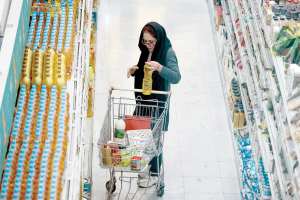
Iran, where eggs are a better bet than cash

Negar Mojtahedi
Iran International

When eggs can hold their value better than cash, an economy has entered dangerous territory. But that is exactly where Iran is.
Iran International
When eggs can hold their value better than cash, an economy has entered dangerous territory. But that is exactly where Iran is.
Rapidly rising prices are forcing families to think less about what they can afford next year or next month and more about what they should buy today before their money loses more value tomorrow.
“If you are an average Iranian, you know what you can buy today. You might not buy tomorrow — and by tomorrow, I mean 24 hours later,” economist Ali Dadpay told Iran International’s Eye for Iran podcast. .
“This is an economy that right now saving in eggs makes more sense … than saving in tomans,” he said.
An egg now costs roughly 25,000 tomans. But the story is not its dollar value. It is how quickly the purchasing power of the toman is eroding. Money put aside today may buy noticeably less within days.
“You have to tell people the frustration, the anger, the feeling of inability to provide for one’s family or afford healthcare services, pay for prescription drugs,” Dadpay said.
Average monthly income is below $200, by his estimate, while housing consumes an increasingly large share of household earnings.
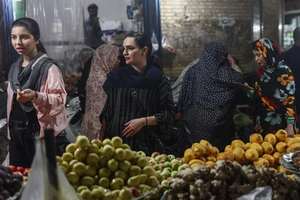
Meat and other proteins are disappearing from some families’ diets. Even damaged fruit, once bought by the poorest or given to the homeless, is increasingly becoming an option for ordinary households trying to stretch their money.
“We are not approaching an economic disaster,” Dadpay said. “We are in the middle of an economic disaster.”
Economic pain, political anger
The erosion of Iran’s middle class has been underway for years, but the pressure is accelerating. Saving itself has become less about building wealth than preserving purchasing power, with gold and foreign currency used to make sure today’s earnings can still pay for necessities weeks or months from now.
“This is an economy that has stopped to invest in its future,” Dadpay said.
The political question is what happens when years of impoverishment collide with shortages, unemployment and declining public services.
Iranian authorities appear increasingly concerned about that possibility. Officials have identified gasoline, unemployment and livelihoods as potential triggers for unrest.
Judiciary chief Gholam-Hossein Mohseni-Ejei has threatened a tougher response to renewed protests, while leaked Basij audio has exposed concerns about further unrest.
Strategic forecaster Kamran Bokhari cautioned against treating economic deterioration as evidence that political rupture is imminent. Economic misery alone does not bring down governments, particularly those with an extensive coercive apparatus.
“It’s a meltdown and we’re watching it in real time,” Bokhari said.
For now, people can still adapt. Stores open, supply chains continue to function and families cut spending, change what they eat and plan around what they can afford over the next few weeks rather than the next few years.
But adaptation has limits.
You cannot eat paper
Tehran can continue paying its forces, at least in nominal terms.
Iran is a large economy of roughly 90 million people, with extensive borders and black-market networks capable of keeping some goods moving. The government can prioritize spending and print more money.
What it cannot print is the food, medicine, fuel and other goods that money is supposed to buy.
“When there are not enough products in the society, when there is not enough bread and butter for people, then the money is not going to solve the problem,” Dadpay said. “It’s just paper. You cannot eat paper.”
That creates a problem for a government relying heavily on material benefits to maintain loyalty. A higher salary offers diminishing protection against discontent if inflation rapidly destroys its purchasing power or shortages mean there is less available to buy.
Gasoline captures the contradiction particularly well.
Iran possesses enormous oil and natural gas reserves, yet Iranians have faced fuel shortages and long lines at filling stations. Dadpay traces the problem partly to decades of cheap subsidized gasoline, inefficient domestic cars, fuel smuggling and limited competition.
For years, there was still enough wealth to keep that system functioning.
Dadpay compared it to dividing a cake. Different groups could continue receiving a piece even as the cake became smaller. Now, he said, “there is no cake.”
Few easy ways out
Even an easing of external pressure would not necessarily resolve the deeper problems.
Powerful economic networks tied to the IRGC have benefited from monopolies and restricted competition, while greater foreign investment and competition could threaten those interests.
For Bokhari, that helps explain why Iran’s crisis is about more than sanctions, war or access to money.
“The kind of reforms needed means that this regime will not be what it is today,” he said.
Neither economist nor forecaster is putting a date on political rupture. Economic deterioration can persist for years, and the Islamic Republic has repeatedly demonstrated its willingness to use force to contain unrest.
But the immediate crisis is less abstract. Families are getting poorer, shortages are adding to the strain and money itself is becoming increasingly unreliable as a store of value.
Dadpay’s measure of that decline is strikingly simple. “This is an economy that right now saving in eggs makes more sense … than saving in tomans.”








“There’s probably only about 30 million barrels of Iranian crude oil left that China hasn’t bought,” Bessent said. “So that will run out soon, and there will be no problem with China buying because they have no product.”
Bessent described the pressure campaign, dubbed “Operation Economic Outcast,” as the largest effort to isolate a country economically and said Washington intended to “asphyxiate” Iran’s ruling establishment.
“The blockade is working like nothing we’ve ever seen, and the combination - everyone says sanctions don’t work - but I can tell you, blockade and sanctions are one of the most powerful one-two punches in the history of economic isolation,” he said.
Asked about his prediction that the Strait of Hormuz would become irrelevant to the oil industry within two years, Bessent said oil-producing countries around the Persian Gulf were developing “alternative pipeline routes that will no longer entail oil going through the Strait of Hormuz.”
Bessent also rejected the suggestion that Iran controlled the waterway.
“The Iranian chokehold, to the extent they have one - and I can tell you, they do not have one - we are in control of the strait,” he said. “To the extent that they can threaten their neighbors, once we leave, that will not exist anymore.”
Iran’s Economy Ministry has established an “economic war” command center to coordinate and accelerate responses to economic problems caused by the conflict, deputy economy Minister Morteza Zamanian said on Sunday.
He acknowledged that higher energy prices caused by the conflict were affecting Americans but predicted that the shock would end and wage growth would continue.
“This war will end, and those will turn into real wage gains,” Bessent said.
He added that the administration expected the conflict to leave Iran unable to develop a nuclear weapon.
“I think we are going to get to the other side of this Iran conflict with a safer world, with an Iran that cannot have a nuclear weapon,” he said.
The United States imposed a naval blockade in July alongside expanded sanctions aimed at restricting Iran’s oil exports and cutting a key source of government revenue.
Iran’s Economy Ministry has, meanwhile, established an “economic war” command center to coordinate and accelerate responses to economic problems caused by the conflict, Deputy Economy Minister Morteza Zamanian said on Sunday.
The center will initially focus on problems affecting businesses, trade and financing within the ministry’s authority, while using government economic bodies to coordinate responses across agencies, he added.
The apartments are at 3a Palace Green, an exclusive development overlooking Kensington Palace and close to the official London residence of the Prince and Princess of Wales. Both properties include staff accommodation and private roof terraces, according to the report.
One is a five-bedroom duplex covering 3,944 square feet across the sixth and seventh floors. It was purchased for £19 million in 2016 but is now being offered for just under £12 million.
Knight Frank and Sotheby’s International Realty are jointly marketing the apartment. The listing describes it as “an exceptional duplex penthouse with staff accommodation and commanding unrivalled views across Kensington Gardens from one of London’s most prestigious addresses.”
The brochure does not identify its politically sensitive connections but notes: “Due to the property being in receivership, we do not have all of the material information for the property; therefore you should ensure you make all relevant inquiries,” the report said.
The second penthouse occupies the seventh and eighth floors of the same building. It was bought for £16.75 million in 2014 and has also entered receivership.
Land Registry documents show that financial advisory firm Teneo was appointed as its receiver, the report said, adding that the apartment does not appear to have been publicly listed, leaving its asking price unknown.
Several prospective buyers are believed to have viewed the properties amid significant interest, according to The Sunday Times.
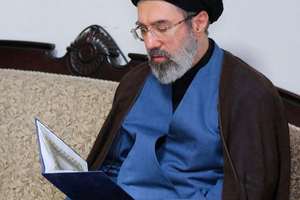
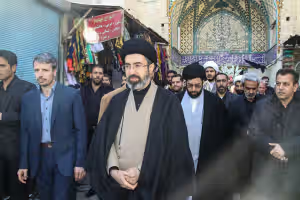
The registered owner of both apartments is Iranian banker Ali Ansari, whom the US Treasury sanctioned in July as a “key financier” for Khamenei. Washington said Ansari “oversees a sprawling global network of assets benefiting Iran’s leader, Mojtaba Khamenei, and other regime elites.”
Ansari was previously sanctioned by Britain over allegations that he financed the Islamic Revolutionary Guard Corps. His British assets were frozen, and he was barred from entering the country. He is understood to deny wrongdoing.
The British government is believed to have authorized the sale of the two apartments after Ansari defaulted on their mortgages, according to The Sunday Times. The private lenders that financed the purchases appointed receivers to recover their money, although the amount originally borrowed is not known.
Any proceeds remaining after the lenders are repaid are expected to be frozen while Ansari remains under sanctions.
Neither Khamenei nor Ansari has been seen by employees at the Palace Green development since the apartments were purchased, the newspaper reported.
Since his father was killed in US-Israeli airstrikes in February, Mojtaba Khamenei has not been seen or heard publicly, leaving his condition and circumstances unclear.
Sequences of Copernicus satellite images comparing the months before the war with the period under the blockade show a striking change at both ports.
At Shahid Rajaee near Bandar Abbas, pre-war images show vessels occupying multiple berths and denser use of the container terminal, while later images show far fewer ships and large sections of the port appearing largely inactive.


Copernicus satellite images from January 2, 2026 and September 4, 2026 show Shahid Rajaee Port near Bandar Abbas before the war and during the US blockade, with far fewer vessels visible at its berths in the later image.
Shahid Rajaee is Iran’s most important export port and, after Imam Khomeini Port, its second-largest gateway for imports. It is also the country’s largest container port, handling nearly 80% of Iran’s container loading and unloading, according to official figures.
A similar pattern is visible at Imam Khomeini Port in southwestern Iran, the country’s largest import gateway, where satellite imagery shows markedly reduced vessel presence and terminal activity compared with the period before the conflict.


Copernicus satellite images from February 25, 2026 and September 5, 2026 show Imam Khomeini Port in southwestern Iran before the war and during the US blockade, with a marked decline in visible vessel and terminal activity.
The images provide a visual measure of the disruption at ports that are critical to Iran’s economy. Shahid Rajaee handles more than 55% of Iran’s imports and exports and an estimated 85% to 90% of its container trade, according to Iranian port data.
Imam Khomeini Port plays a particularly important role in imports of food and other basic commodities. Iran’s Ports and Maritime Organization said the port handled more than 48 million tons of cargo in the year ending March 2025, including 19.2 million tons of imported goods.
The satellite evidence reinforces other indications that the blockade is increasingly biting. Video published from Shahid Rajaee in late August showed no ships docked and little apparent loading or unloading activity.
Iran International reported in July that activity at the port had been reduced to a minimum, with thousands of containers stranded and about half of its workforce laid off.
Iranian officials have also increasingly acknowledged the economic impact. President Masoud Pezeshkian said in late August that blocked routes were preventing goods, including gasoline, from entering the country.
Reuters reported this week that Iranian trade had fallen by as much as 35% amid the blockade and intensified sanctions, while gasoline supplies had tightened sharply.
The effect has been even more pronounced on Iran’s oil trade. Iranian crude loadings fell from around 2 million barrels per day before the war to roughly 220,000–255,000 bpd in August, according to shipping data cited by Reuters.
Washington says the blockade can be sustained indefinitely. As of Aug. 23, US Central Command said its forces had redirected 70 commercial vessels attempting to breach it, while three had been disabled and two boarded.
Iran’s foreign trade has contracted sharply since the conflict with the United States began, with non-oil exports and imports falling by around a quarter or more, according to customs data released after months of delay.
Iran exported about $15 billion worth of non-oil goods, including natural gas and LPG, through August 16, nearly five months into the Iranian calendar year that began on March 21. That was nearly 30% below the figure reported for the first five months of the previous year.
Imports fell to about $17 billion over the same near-five-month period, about a quarter below the full five-month figure reported a year earlier.
The figures show a sharp deterioration in Iran’s trade during a conflict that has disrupted key industries and shipping routes, adding to an economy already struggling under years of sanctions, declining oil revenues and chronic shortages of foreign currency.
Iranian manufacturers are being squeezed from both ends at once. The steel and plastics they build appliances from have multiplied in price since Israeli and US strikes hit the country's main industrial hubs in March, while the households they sell to have been priced out of the market entirely. Production of refrigerators, televisions and washing machines was already falling by a quarter to more than 40 percent a year before the war began.
What the industry cannot do is pass the costs on, because the arithmetic on the shop floor no longer works for anybody.
The price of a working kitchen
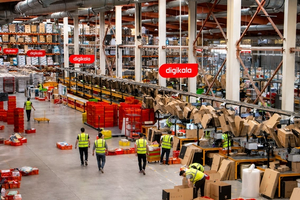
Iran's minimum monthly wage is about 166 million rials, roughly $75. Set against that, the price list on the country's largest online retailer reads as a catalogue of things a working household can no longer buy.
The cheapest mini refrigerator sells for 258 million rials, about $117, a month and a half of that wage. A basic 13-cubic-foot fridge-freezer costs 544 million rials, some $247, more than three months. A mid-sized model runs to 890 million rials, about $405. A washing machine, in the band where most models cluster, costs around 920 million rials, roughly $418, or five and a half months of a minimum wage, and a gas cooker starts at about 360 million rials, $164, rising to 638 million.
Televisions trace the same curve. The cheapest set on the site, a 24-inch model, costs 230 million rials, about $104. A 32-inch television runs to 270 million, and a 43-inch, among the best-selling sizes, to 490 million rials, roughly $223, or nearly three months of wages. A 65-inch set, also a strong seller, costs 1.06 billion rials, about $482, more than six months. At the top of the range, an 85-inch model is listed at 2.9 billion rials, some $1,318, or nearly a year and a half of a minimum wage.
The cheapest dishwasher listed costs 1.34 billion rials, some $609, eight months of wages, which is why dishwashers have moved out of the category of household appliance altogether and into the category of luxury.
At the very top of the market, an imported side-by-side refrigerator is advertised at 4.54 billion rials, about $2,065, or more than two years of a minimum wage.
Iranian media have been documenting what these numbers mean. In May, when conditions were still less severe than they are now, the newspaper Donya-e Eqtesad reported that field observations and consumer complaints showed the breakdown of a refrigerator or washing machine had become an economic and psychological crisis for many families.
Until a few years ago, the paper noted, many households could replace an appliance after saving for several months. Today, buying even a refrigerator, a washing machine or a basic vacuum cleaner has become a distant prospect for a growing number of them.
Repair was the fallback. Repair costs have risen too, and for many families that door is closing as well.
A sector that was already shrinking
The industry serving this market was contracting before the war began.
The Statistical Center of Iran's most recent figures, covering the winter that ran through to March, show refrigerator production down 25 percent year-on-year to 531,000 units. Television production fell 36 percent to 332,000, and washing machine production dropped 42 percent, to 270,000 units.
No comparable production data have been published for other major categories, and the government has released no comprehensive industrial production figures for the past six months.
What the Statistical Center has published is the price index: home appliances in August cost 117 percent more than a year earlier.
Bombed inputs
Then came the strikes. Israeli and US attacks in March hit Iran's two main steel hubs, Mobarakeh and Khuzestan, and its two main petrochemical hubs, Asalouyeh and Mahshahr. Together these complexes account for roughly 50 percent of Iran's steel capacity and 70 percent of its petrochemical capacity.
The effect on manufacturers' input costs has been severe. According to the Iranian Home Appliance Industries Association, the price of the steel used by the industry has risen roughly two and a half times since last summer. Petrochemical feedstocks, including ABS and polypropylene, have gone up three to fourfold.
Authorities have released no detailed figures on the damage or on the operational status of the affected complexes. What is visible is the response: the government has restricted or banned the export of a large share of steel and petrochemical products, while domestic prices for those products have risen sharply.
Protected, and still dependent
The industry these costs are crushing was built behind a wall.
Iran banned home appliance imports in 2016, and in 2021 imposed a particularly strict ban on appliances made by South Korean companies, which had previously held a significant share of the market. The policy shifted the market decisively toward domestic manufacturers, and it has drawn persistent criticism over the quality of what those manufacturers produce.
With foreign competitors largely excluded, domestic firms have faced far less pressure on price. The restrictions have also sustained a thriving trade in smuggled foreign appliances.
What protection has not produced is self-sufficiency. Iran has failed to fully localize production of even its four main categories: refrigerators, washing machines, televisions and dishwashers. According to Hakem Memkan, a member of parliament's economic commission, the country imports around $1.2 billion of components a year for those four categories alone.
So the strategy of substituting domestic production for imports has left manufacturers dependent on imported parts while their domestic input costs multiply.
Nowhere to go
Each of these pressures would be serious alone. Arriving at once, collapsing household purchasing power, multiplied raw material costs, import restrictions, input shortages and continued dependence on foreign components leave the industry with nothing to adjust.
It cannot raise prices without losing more of a market that has already stopped buying. It cannot cut costs without inputs it cannot obtain. And it cannot look abroad, because the wall built to protect it also encloses it.
Most families will simply keep the fridge they have, for as long as it runs.