• العربية
  • فارسی
Brand
  • Iran Insight
  • Politics
  • Economy
  • Analysis
  • Special Report
  • Opinion
  • Podcast
  • Live TV
  • Iran Insight
  • Politics
  • Economy
  • Analysis
  • Special Report
  • Opinion
  • Podcast
  • Live TV
  • Theme
  • Language
    • العربية
    • فارسی
  • Iran Insight
  • Politics
  • Economy
  • Analysis
  • Special Report
  • Opinion
  • Podcast
  • Live TV
All rights reserved for Volant Media UK Limited
volant media logo

US Energy Secretary says Hormuz oil flows averaging over 9 million bpd

Sep 6, 2026, 16:00 GMT+1

US Energy Secretary Chris Wright said oil flows through the Strait of Hormuz were averaging more than 9 million barrels per day, with additional pipeline capacity bringing total flows to around two-thirds or more of pre-conflict levels.

“Our transits through the Strait are averaging over 9 million barrels a day now, and with the access pipelines that go around the Strait, we’re probably two thirds or more of pre-conflict flows,” Wright told CNN.

“So Iranians are still causing trouble, but the United States Navy is winning that battle,” he added.

Most Viewed

Alamolhoda seeking presidency of Iran’s Assembly of Experts - report
1

Alamolhoda seeking presidency of Iran’s Assembly of Experts - report

2
EXCLUSIVE

Satellite images show Iran’s key ports falling quiet under US blockade

3
INSIGHT

What is Pickaxe Mountain, and why does Trump keep saying he will bomb it?

4
INSIGHT

Iran's appliance industry is collapsing, and so is the market it was built for

5
ANALYSIS

Debate grows over whether Iran is burning its strongest card in Hormuz

Banner
Banner

Spotlight

  • Satellite images show Iran’s key ports falling quiet under US blockade
    EXCLUSIVE

    Satellite images show Iran’s key ports falling quiet under US blockade

  • Iran's appliance industry is collapsing, and so is the market it was built for
    INSIGHT

    Iran's appliance industry is collapsing, and so is the market it was built for

  • In Hormuz, Iran only needs to keep ships guessing
    PODCAST

    In Hormuz, Iran only needs to keep ships guessing

  • If Britain backs US plan, Iran's London bank shuts down on October 22
    ANALYSIS

    If Britain backs US plan, Iran's London bank shuts down on October 22

  • 'If I'm not happy, they'll execute me': Iran's new grammar of dissent
    ANALYSIS

    'If I'm not happy, they'll execute me': Iran's new grammar of dissent

  • Debate grows over whether Iran is burning its strongest card in Hormuz
    ANALYSIS

    Debate grows over whether Iran is burning its strongest card in Hormuz

Banner
•
•
•

More Stories

Iran has only 30 million barrels of oil left for China, Bessent says

Sep 6, 2026, 10:15 GMT+1
100%
US Treasury Secretary Scott Bessent speaks during a press conference in North Carolina on September 1, 2026.

Iran has about 30 million barrels of crude oil remaining that China has not already purchased, and US sanctions and a naval blockade will soon prevent Tehran from supplying more, Treasury Secretary Scott Bessent said in an interview with Fox News.

“There’s probably only about 30 million barrels of Iranian crude oil left that China hasn’t bought,” Bessent said. “So that will run out soon, and there will be no problem with China buying because they have no product.”

Bessent described the pressure campaign, dubbed “Operation Economic Outcast,” as the largest effort to isolate a country economically and said Washington intended to “asphyxiate” Iran’s ruling establishment.

“The blockade is working like nothing we’ve ever seen, and the combination - everyone says sanctions don’t work - but I can tell you, blockade and sanctions are one of the most powerful one-two punches in the history of economic isolation,” he said.

Asked about his prediction that the Strait of Hormuz would become irrelevant to the oil industry within two years, Bessent said oil-producing countries around the Persian Gulf were developing “alternative pipeline routes that will no longer entail oil going through the Strait of Hormuz.”

  • US tanker attacks near Iran's shores widen from Jask to its oil heartland

    US tanker attacks near Iran's shores widen from Jask to its oil heartland

Bessent also rejected the suggestion that Iran controlled the waterway.

“The Iranian chokehold, to the extent they have one - and I can tell you, they do not have one - we are in control of the strait,” he said. “To the extent that they can threaten their neighbors, once we leave, that will not exist anymore.”

Iran’s Economy Ministry has established an “economic war” command center to coordinate and accelerate responses to economic problems caused by the conflict, deputy economy Minister Morteza Zamanian said on Sunday.

He acknowledged that higher energy prices caused by the conflict were affecting Americans but predicted that the shock would end and wage growth would continue.

“This war will end, and those will turn into real wage gains,” Bessent said.

He added that the administration expected the conflict to leave Iran unable to develop a nuclear weapon.

“I think we are going to get to the other side of this Iran conflict with a safer world, with an Iran that cannot have a nuclear weapon,” he said.

The United States imposed a naval blockade in July alongside expanded sanctions aimed at restricting Iran’s oil exports and cutting a key source of government revenue.

Iran’s Economy Ministry has, meanwhile, established an “economic war” command center to coordinate and accelerate responses to economic problems caused by the conflict, Deputy Economy Minister Morteza Zamanian said on Sunday.

The center will initially focus on problems affecting businesses, trade and financing within the ministry’s authority, while using government economic bodies to coordinate responses across agencies, he added.

London penthouses linked to Iran’s Supreme Leader put up for sale – Sunday Times

Sep 6, 2026, 07:36 GMT+1
100%
A man holds a portrait of Iran’s Supreme Leader Mojtaba Khamenei during a gathering in Tehran on June 8, 2026.

Two luxury London penthouses linked to Iran’s Supreme Leader Mojtaba Khamenei, bought for a combined £36 million, have been put up for sale, The Sunday Times reported.

The apartments are at 3a Palace Green, an exclusive development overlooking Kensington Palace and close to the official London residence of the Prince and Princess of Wales. Both properties include staff accommodation and private roof terraces, according to the report.

One is a five-bedroom duplex covering 3,944 square feet across the sixth and seventh floors. It was purchased for £19 million in 2016 but is now being offered for just under £12 million.

Knight Frank and Sotheby’s International Realty are jointly marketing the apartment. The listing describes it as “an exceptional duplex penthouse with staff accommodation and commanding unrivalled views across Kensington Gardens from one of London’s most prestigious addresses.”

The brochure does not identify its politically sensitive connections but notes: “Due to the property being in receivership, we do not have all of the material information for the property; therefore you should ensure you make all relevant inquiries,” the report said.

  • Khamenei's son built secret overseas property empire - Bloomberg

    Khamenei's son built secret overseas property empire - Bloomberg

The second penthouse occupies the seventh and eighth floors of the same building. It was bought for £16.75 million in 2014 and has also entered receivership.

Land Registry documents show that financial advisory firm Teneo was appointed as its receiver, the report said, adding that the apartment does not appear to have been publicly listed, leaving its asking price unknown.

Several prospective buyers are believed to have viewed the properties amid significant interest, according to The Sunday Times.

The registered owner of both apartments is Iranian banker Ali Ansari, whom the US Treasury sanctioned in July as a “key financier” for Khamenei. Washington said Ansari “oversees a sprawling global network of assets benefiting Iran’s leader, Mojtaba Khamenei, and other regime elites.”

  • US probes Iran’s Supreme Leader's money flows through Wall Street banks

    US probes Iran’s Supreme Leader's money flows through Wall Street banks

Ansari was previously sanctioned by Britain over allegations that he financed the Islamic Revolutionary Guard Corps. His British assets were frozen, and he was barred from entering the country. He is understood to deny wrongdoing.

The British government is believed to have authorized the sale of the two apartments after Ansari defaulted on their mortgages, according to The Sunday Times. The private lenders that financed the purchases appointed receivers to recover their money, although the amount originally borrowed is not known.

Any proceeds remaining after the lenders are repaid are expected to be frozen while Ansari remains under sanctions.

Neither Khamenei nor Ansari has been seen by employees at the Palace Green development since the apartments were purchased, the newspaper reported.

Since his father was killed in US-Israeli airstrikes in February, Mojtaba Khamenei has not been seen or heard publicly, leaving his condition and circumstances unclear.

Satellite images show Iran’s key ports falling quiet under US blockade

Sep 5, 2026, 21:25 GMT+1
•
Fardad Farahzad
100%
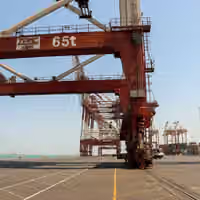
File photo shows container cranes and cargo facilities at Shahid Rajaee Port near Bandar Abbas, southern Iran, in 2025. Photo by ISNA

Satellite imagery reviewed by Iran International shows a sharp fall in visible shipping activity at Shahid Rajaee and Imam Khomeini ports since the US naval blockade was reimposed in mid-July, underscoring the growing squeeze on Iran’s imports and exports.

Sequences of Copernicus satellite images comparing the months before the war with the period under the blockade show a striking change at both ports.

At Shahid Rajaee near Bandar Abbas, pre-war images show vessels occupying multiple berths and denser use of the container terminal, while later images show far fewer ships and large sections of the port appearing largely inactive.

AfterAfter
BeforeBefore
Drag the handle left or right to compare

Copernicus satellite images from January 2, 2026 and September 4, 2026 show Shahid Rajaee Port near Bandar Abbas before the war and during the US blockade, with far fewer vessels visible at its berths in the later image.

Shahid Rajaee is Iran’s most important export port and, after Imam Khomeini Port, its second-largest gateway for imports. It is also the country’s largest container port, handling nearly 80% of Iran’s container loading and unloading, according to official figures.

A similar pattern is visible at Imam Khomeini Port in southwestern Iran, the country’s largest import gateway, where satellite imagery shows markedly reduced vessel presence and terminal activity compared with the period before the conflict.

AfterAfter
BeforeBefore
Drag the handle left or right to compare

Copernicus satellite images from February 25, 2026 and September 5, 2026 show Imam Khomeini Port in southwestern Iran before the war and during the US blockade, with a marked decline in visible vessel and terminal activity.

The images provide a visual measure of the disruption at ports that are critical to Iran’s economy. Shahid Rajaee handles more than 55% of Iran’s imports and exports and an estimated 85% to 90% of its container trade, according to Iranian port data.

Imam Khomeini Port plays a particularly important role in imports of food and other basic commodities. Iran’s Ports and Maritime Organization said the port handled more than 48 million tons of cargo in the year ending March 2025, including 19.2 million tons of imported goods.

The satellite evidence reinforces other indications that the blockade is increasingly biting. Video published from Shahid Rajaee in late August showed no ships docked and little apparent loading or unloading activity.

Iran International reported in July that activity at the port had been reduced to a minimum, with thousands of containers stranded and about half of its workforce laid off.

Iranian officials have also increasingly acknowledged the economic impact. President Masoud Pezeshkian said in late August that blocked routes were preventing goods, including gasoline, from entering the country.

Reuters reported this week that Iranian trade had fallen by as much as 35% amid the blockade and intensified sanctions, while gasoline supplies had tightened sharply.

The effect has been even more pronounced on Iran’s oil trade. Iranian crude loadings fell from around 2 million barrels per day before the war to roughly 220,000–255,000 bpd in August, according to shipping data cited by Reuters.

Washington says the blockade can be sustained indefinitely. As of Aug. 23, US Central Command said its forces had redirected 70 commercial vessels attempting to breach it, while three had been disabled and two boarded.

Iran’s foreign trade has contracted sharply since the conflict with the United States began, with non-oil exports and imports falling by around a quarter or more, according to customs data released after months of delay.

  • Iran loses ground on trade as war hits oil and non-oil exports

    Iran loses ground on trade as war hits oil and non-oil exports

Iran exported about $15 billion worth of non-oil goods, including natural gas and LPG, through August 16, nearly five months into the Iranian calendar year that began on March 21. That was nearly 30% below the figure reported for the first five months of the previous year.

Imports fell to about $17 billion over the same near-five-month period, about a quarter below the full five-month figure reported a year earlier.

The figures show a sharp deterioration in Iran’s trade during a conflict that has disrupted key industries and shipping routes, adding to an economy already struggling under years of sanctions, declining oil revenues and chronic shortages of foreign currency.

US tanker attacks near Iran's shores widen from Jask to its oil heartland

Sep 5, 2026, 16:40 GMT+1
100%
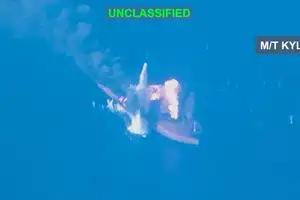
Fire and smoke rise during what U.S. Central Command (CENTCOM) says are strikes on Iranian oil carriers, at an unknown location in this screengrab taken from a handout video released on September 5, 2026.

US forces struck three Iranian oil tankers on Saturday, including two near Iran’s coast and one off Kharg Island deep in the western Persian Gulf, roughly 300 miles northwest of Hormuz, a few days after similar attacks on two NITC tankers off Jask.

US Central Command said it “permanently disabled” the M/T Downy off Kharg Island and M/T Stark 1 near Jask after the Islamic Revolutionary Guard Corps launched ballistic missiles toward a US aircraft carrier and guided-missile destroyer. The American warships evaded the attacks and no US personnel were harmed, CENTCOM said.

A third tanker, the unladen M/T Kylo, also known as Noxen, was destroyed in the Gulf of Oman after its crew was directed to abandon ship, the CENTCOM statement said.

Tasnim, a news agency affiliated with the IRGC, reported that an Iranian oil tanker was struck by the US military near Kharg Island on Saturday morning, saying there were no casualties.

Citing an Iranian state television reporter in Jask, Tasnim also reported US attacks on two tankers in waters near the city and said one of them was carrying oil.

Iran’s Foreign Ministry condemned US attacks on Iranian oil tankers in the Persian Gulf and Gulf of Oman as illegal and a “war crime,” warning that Washington and its allies would bear responsibility for the consequences of any continued attacks.

The statement came after US Defense Secretary Pete Hegseth threatened to destroy and sink Iranian oil tankers if Tehran continues attacking US Navy vessels.

The Saturday strikes extended a pattern that appears to have moved increasingly close to Iran’s shoreline.

TankerTrackers.com said Saturday that National Iranian Tanker Company vessels Sinopa and Hawk had also been struck “a few days ago” off Jask in the Gulf of Oman. CENTCOM has not publicly identified those vessels as targets.

TankerTrackers said Sinopa and Hawk appeared to contain some oil cargo when they were struck off Jask.

Iran’s oil heartland

Saturday’s attack on Downy pushed that activity much farther west.

Kharg Island lies about 16 miles off Iran’s coast in the northern Persian Gulf and roughly 300 miles northwest of the Strait of Hormuz. Before the war, around 90% of Iranian crude exports passed through the island, making it the country’s principal oil-export hub.

The proximity to Kharg is particularly notable after months of US threats involving the island.

American forces previously struck military targets there while leaving its oil facilities untouched, and President Donald Trump has repeatedly raised the possibility of seizing Kharg or attacking its infrastructure. Days before Saturday’s strike, Trump posted an AI-generated video depicting explosions at the island’s oil facilities. No such attack had occurred at the time.

Saturday’s strike targeted a tanker rather than Kharg’s terminals, storage tanks or pipelines, but brought US military action into waters immediately surrounding the oil hub.

'You have 3 minutes to clear the crew'

Near Jask, an exclusive video obtained by Iran International captured warnings issued by the US military to Stark 1 shortly before it was hit.

The footage, filmed aboard a nearby vessel, records three messages over VHF radio.

“Motor Tanker STARK 1, this is the United States military aircraft. I am preparing to fire at your stern. You have 3 minutes to clear the crew from the stern of your ship. Over,” an American voice says in the first warning.

A second warning reduces the deadline to one minute. In the final message, the aircraft says: “This was your final warning... get into your lifeboats and abandon the ship immediately.”

Between the transmissions, crew members can be heard speaking in Persian and Urdu. One asks whether the captain and his deputy are at their posts and is told the captain is still asleep.

TankerTrackers said Stark 1 was struck off Kooh Mobarak near Jask after loading crude at the Jask Oil & Gas Terminal a few days earlier.

CENTCOM portrayed Saturday’s operation as direct retaliation rather than routine enforcement of the US maritime blockade.

“Let the message to the IRGC be clear: If you shoot at two of our ships, we will impose an even higher economic cost — taking out three of yours,” CENTCOM commander Adm. Brad Cooper said.

“We will not hesitate to defend American forces, and if necessary, destroy Iran’s limited and exposed oil fleet.”

Alamolhoda seeking presidency of Iran’s Assembly of Experts - report

Sep 5, 2026, 14:39 GMT+1
100%
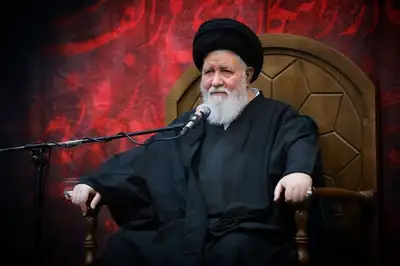
Ahmad Alamolhoda

Senior hardline cleric Ahmad Alamolhoda is seeking support to become president of Iran’s Assembly of Experts, an 88-member clerical body responsible for selecting and overseeing the supreme leader, a Tehran-based outlet reported citing informed sources.

Entekhab reported that maneuvering over the assembly’s leadership has intensified ahead of its next session because of concerns about the health of its current president, Mohammad-Ali Movahedi-Kermani.

Alamolhoda, who represents Razavi Khorasan province in the assembly and serves as Friday prayer leader in Mashhad, is seeking to secure enough votes to take the presidency, according to the report.

His main rival is said to be Alireza Arafi, the assembly’s second deputy president, a member of the Guardian Council and head of Iran’s Islamic seminaries.

Another potential contender is Mahmoud Rajabi, who succeeded Mohammad-Taqi Mesbah-Yazdi at the Imam Khomeini Educational and Research Institute. Entekhab quoted an informed source as saying that Rajabi believes he has a stronger chance of securing the post.

Alamolhoda is one of the Islamic Republic’s most prominent hardline clerics and has for years used his influential Friday prayer platform in Mashhad to advocate some of the establishment’s most uncompromising positions on social and political issues.

He is also the father-in-law of late President Ebrahim Raisi, who died in a helicopter crash in May 2024.

Alamolhoda’s positions have included fierce opposition to challenges to compulsory hijab. In 2024, he likened defiance of the Islamic dress code to collaboration with Iran’s enemies, and the previous year suggested that religious hardliners might need to intervene themselves as women increasingly rejected mandatory hijab.

The European Union sanctioned Alamolhoda in March 2023 over serious human rights violations linked to the suppression of protests. The EU cited speeches in which it said he propagated hostility toward women, protesters and religious minorities.

Alamolhoda has remained an outspoken supporter of the Islamic Republic’s leadership following the death of Ali Khamenei.

In June, he said no agreement or commitment by Iran would be acceptable without Supreme Leader Mojtaba Khamenei’s approval and described hostility toward the United States as a fundamental principle of the Islamic Republic.

The contest would put Alamolhoda at the head of a body that played a central role in the succession earlier this year. The Assembly of Experts selected Mojtaba Khamenei following his father’s death, although Iran International reported divisions among members over the process and the choice of the former supreme leader’s son.

The assembly normally elects its leadership for two-year terms. Movahedi-Kermani was elected president in May 2024 with 55 votes, succeeding Ahmad Jannati, while Hashem Hosseini-Bushehri and Arafi serve as first and second deputies respectively.