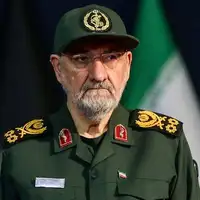
Supreme Leader Mojtaba Khamenei appointed Rezaei as his representative on the Supreme National Security Council (SNSC), after which President Masoud Pezeshkian named him secretary of the body at the center of Iran’s security and foreign policy decision-making.
Rezaei replaces Mohammad Bagher Zolghadr after only about five months in the job, an unusually short tenure for a position whose previous occupants typically served for years.
Opponents of negotiations have welcomed the change and sought to link Zolghadr’s departure to disagreements surrounding the ceasefire, negotiations with Washington and the Islamabad memorandum.
Reformist and government-aligned voices have cautioned against concluding that the harder-line camp has prevailed.
A battle over Zolghadr’s departure
Raja News, an outlet associated with the ultra-hardline Paydari camp, said Zolghadr’s replacement showed that, contrary to claims by supporters of negotiations, “not everything was coordinated with the Supreme Leader.”
Amir-Hossein Sabeti, a hardline member of parliament and prominent critic of negotiations, went further, accusing Pezeshkian of resisting the Supreme Leader’s wishes over replacing Zolghadr with Rezaei.
He warned the president that unless he changed course and followed the leader’s direction, “the people will replace him.”
Accounts circulating among hardliners have claimed that Pezeshkian initially resisted appointing Rezaei as SNSC secretary and did so only after Khamenei named Rezaei as his representative on the council.
No official explanation has been given for Zolghadr’s departure, and the claims do not establish that disagreements over negotiations caused his removal.
The reformist-leaning Rouydad24 website said opponents of negotiations were seeking to build a political narrative around the reshuffle: that divisions had emerged during the ceasefire and negotiations and that the balance had now shifted toward the harder-line faction.
Nour News, which is considered close to the SNSC, also said Rezaei’s appointment could signal “the beginning of a new approach to the country’s strategic governance,” but rejected attempts to portray it as evidence of a confrontation between Pezeshkian’s government and the leadership.
Rezaei’s record fuels hardline hopes
Rezaei’s own previous statements have added to speculation over what his appointment could mean for negotiations.
Ultra-hardliners have recirculated comments in which he interpreted an earlier message from Mojtaba Khamenei saying that “in principle, I had a different view” of the path taken by the SNSC.
Rezaei said the phrase meant “the path he had in mind was better than the path taken by the Supreme National Security Council,” remarks critics of the Islamabad memorandum have cited as evidence that Khamenei had reservations about the council’s approach.
But Rezaei has not opposed negotiations outright.
In an earlier interview with the Iranian Labour News Agency (ILNA), he said talks should take place but argued against maintaining a ceasefire while they continued, saying a pause in fighting would give the enemy an opportunity to rebuild its forces.
The distinction suggests the emerging argument may be less about whether to negotiate than about the conditions under which talks take place and the role of military pressure alongside diplomacy.
What comes next
The conservative Farhikhtegan newspaper similarly argued against reducing the choice to either concessions or continued war.
It criticized those who believe the conflict could be turned into peace through concessions, including handing over management of the Strait of Hormuz, but also those who view the conflict solely through a military lens and see war as the only solution.
Hesamoddin Ashena, a former adviser to President Hassan Rouhani, meanwhile appeared to caution against the risks of miscalculation at the SNSC without explicitly naming Rezaei.
“Because you are not allowed even one analytical mistake, you must be very careful,” he wrote on X. “Because a nation will pay the cost of your mistake, you must be very careful.”
For now, Rezaei’s appointment has become a proxy for the larger argument over Iran’s direction.
Ultra-hardliners see Zolghadr’s departure as evidence that the political ground has shifted toward them, but Rezaei’s own record points to a more complicated position: support for negotiations combined with a greater emphasis on maintaining military pressure while they take place.