• العربية
  • فارسی
Brand
  • Iran Insight
  • Politics
  • Economy
  • Analysis
  • Special Report
  • Opinion
  • Podcast
  • Iran Insight
  • Politics
  • Economy
  • Analysis
  • Special Report
  • Opinion
  • Podcast
  • Theme
  • Language
    • العربية
    • فارسی
  • Iran Insight
  • Politics
  • Economy
  • Analysis
  • Special Report
  • Opinion
  • Podcast
All rights reserved for Volant Media UK Limited
volant media logo
INSIGHT

Did China quietly defuse Iran's oil weapon? Pro-Ghalibaf paper asks out loud

Behrouz Turani
Behrouz Turani

Iran International

Jul 29, 2026, 12:24 GMT+1
A worker walks past oil pipes at a refinery in Wuhan, Hubei province March 23, 2012.

A newspaper close to Mohammad Bagher Ghalibaf, Iran's chief negotiator with Washington, is asking whether China quietly neutralized Tehran's most feared economic weapon: the oil shock through the Strait of Hormuz that never came.

Khorasan Daily, published in Tehran and Mashhad for nearly a century, asked this week whether China's sharp cut in crude purchases "ruined Iran's Strait of Hormuz strategy" or was simply a commercial response to a war zone.

The question would be unremarkable in a Western think tank. In a paper aligned with the man running Iran's negotiations, it reads as something else: the talks camp auditing, in public, the war camp's central weapon.

The shock that never came

For decades, Iranian crisis planning has rested on one assumption: disrupt the Strait of Hormuz, through which a fifth of the world's oil normally flows, and crude rockets past $200 a barrel, forcing the world to restrain Washington. During the current war, the strait has indeed been closed to Iranian exports and contested for weeks. The spike never arrived.

Khorasan's explanation is the buyer, not the seller. China purchases heavily discounted Iranian crude in calm periods, then pivots to Strategic Petroleum Reserve (SPR) drawdowns and Russian pipeline oil the moment escalation begins, draining the drama out of the market. Western and regional reporting describes the same pattern as a deliberate "shock absorber" policy designed to neutralize Persian Gulf risk.

The paper offered two readings of Beijing's behavior. In the darker one, "real market power shifted from the producer to the largest consumer, and Iran's game was effectively neutralized by its biggest customer."

In the gentler one, China simply stepped back from a market where war-risk premiums would have bankrupted its refiners, "rather than entering intense price bidding with other global buyers."

A question from the talks camp

Where the analysis comes from matters as much as what it says. Khorasan sits in the orbit of Ghalibaf, who is not only Tehran's lead negotiator with the United States but also officially holds the China portfolio in Iran's foreign relations.

A paper in his camp questioning whether the Hormuz card still works is, in effect, an argument for his own project: if the economic weapon no longer detonates, negotiation is not weakness but arithmetic.

That may also explain the analysis's careful landing. Khorasan concluded that Beijing's buffers, reserve drawdowns and reduced refinery runs, are temporary and unsustainable without causing domestic inflation and fuel shortages.

"China did not necessarily act within a framework of ruining Iran's game," the paper wrote. Beijing's retreat "changed the traditional formula from a rapid oil shock to a gradual attrition, but it did not eliminate the core impact of the conflict on the market." The conclusion spares the partner its patron cannot afford to alienate.

Reformist and centrist outlets took the argument further. Shargh noted that while China and Russia provide diplomatic protection and veto cover at the UN Security Council, neither has any intention of entering a military or financial confrontation with Washington on Iran's behalf.

Khabar Online asked whether the two powers are helping Iran withstand Western pressure or using the confrontation as leverage in their own dealings with Washington.

Etemad and Donya-ye Eqtesad went at the doctrine itself: an energy-shock strategy assumes the customer has no alternatives, a premise they argue no longer holds.

The war camp pushes back

The other side of Iran's establishment read the same data and refused the conclusion. Tasnim, Javan and Kayhan, the outlets closest to the camp that favors fighting on, rejected the notion that Beijing "ruined Iran's strategy," reframing the story around Western supply strain and the slow grind of market friction, the "gradual attrition" that Khorasan itself conceded is still working on the world economy.

The dispute is not really about China. It is about which lever Iran has left. The war camp needs the Hormuz card to be live, because it is the argument for endurance. The talks camp needs it to be spent, because that is the argument for a deal.

What Khorasan put in print is that Iran's biggest customer may have already settled the question, and that the answer favors the men at the table.

Most Viewed

Ukraine strike on Iranian ship divides Tehran over risks of retaliation
1
INSIGHT

Ukraine strike on Iranian ship divides Tehran over risks of retaliation

2

Iran rejects Oman’s 50-50 Hormuz shipping plan, proposes new route

3

Iran executes two protesters amid heavy security in Isfahan

4

New scaffold in Isfahan fuels fears of imminent protester executions

5

Iranian protesters’ executions stir grief and harden resolve across Iran

Banner
Banner
Banner

Spotlight

  • A teenage girl’s last act of defiance against Iran’s regime

    A teenage girl’s last act of defiance against Iran’s regime

  • Ukraine strike on Iranian ship divides Tehran over risks of retaliation
    INSIGHT

    Ukraine strike on Iranian ship divides Tehran over risks of retaliation

  • I stayed awake for them
    TEHRAN INSIDER

    I stayed awake for them

  • Iran factions vie to shape narrative of military lull
    INSIGHT

    Iran factions vie to shape narrative of military lull

  • US strikes pause. What comes next for Iran?
    PODCAST

    US strikes pause. What comes next for Iran?

•
•
•

More Stories

Iran rejects Oman’s 50-50 Hormuz shipping plan, proposes new route

Jul 28, 2026, 22:07 GMT+1
100%
An Iranian patrol boat sails near a commercial tanker in the Strait of Hormuz

Iran says it is negotiating with Oman over an interim shipping arrangement for the Strait of Hormuz but insists it must exercise effective oversight over key parts of both shipping lanes, even if lasting peace is restored.

Deputy Foreign Minister Kazem Gharibabadi told Iranian state television Tuesday Oman had proposed a 50-50 arrangement under which the inbound route would be on one country’s side and the outbound route on the other’s.

Tehran rejected that formula, he said, because it would not adequately address Iran’s national security concerns.

Instead, Gharibabadi said Tehran proposed placing one shipping lane entirely within Iranian territorial waters and part of the other within Iranian waters, citing national security concerns.

“Our proposal is for one route to lie entirely within the territorial waters of the Islamic Republic of Iran, with part of the other route also passing through Iranian territorial waters, so that Iran can effectively exercise oversight over both inbound and outbound traffic.”

Reuters reported Tuesday that Oman had proposed a joint regional mechanism to manage shipping through the strategic waterway and collect voluntary fees.

The proposal has regional backing and would prevent Iran from exercising sole control over the strait, the report said citing a source from a Persian Gulf country.

The future of shipping through Hormuz was also part of Iran’s wider regional discussions. Iranian Foreign Minister Abbas Araghchi said Tuesday that he had held separate phone calls with his Omani and Saudi counterparts the previous evening.

He said the conversations covered regional developments, diplomatic efforts to restore stability and insecurity in the Strait of Hormuz.

Parallel US-Iran contacts

The negotiations over Hormuz were unfolding alongside contacts between Tehran and Washington over the broader conflict.

Gharibabadi said Iran had not requested negotiations with Washington over the past 15 days, adding that it was the United States that sought talks and conveyed through Oman that it would not carry out military action against Iran.

Trump, however, said Tuesday that Washington was holding “good talks” with Iran and had a chance of reaching an agreement. He added that the United States held a “very strong position” with Tehran and that he would prefer to avoid attacks on Iranian power plants and bridges.

Trump later hosted Israeli Prime Minister Benjamin Netanyahu at the White House, where the two leaders agreed that Iran must not obtain a nuclear weapon, an Israeli source familiar with the talks told Iran International.

The source described the meeting as a “major moment of coordination,” saying Washington and Jerusalem agreed on their objective but could differ over how to achieve it.

The diplomatic activity unfolded as more than 20 US Navy warships operated across the Middle East in support of military missions, including enforcement of what the US military called a “steel wall blockade” against Iran.

CENTCOM said Tuesday in a post on X that, as of July 28, it had redirected 18 commercial vessels, disabled two and boarded two while enforcing the blockade.

Ukraine strike on Iranian ship divides Tehran over risks of retaliation

Jul 28, 2026, 20:50 GMT+1
•
Maryam Sinaiee
100%
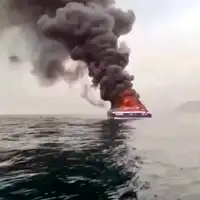
Screenshot from a video showing the Iranian-owned cargo ship Ana ablaze after it was reportedly targeted by Ukraine in the Caspian Sea on July 25, 2026.

Ukraine's attack on an Iranian merchant ship has sparked a debate in Tehran over whether retaliation would restore deterrence or draw Iran into a broader confrontation involving Europe and NATO.

One sailor was killed and three others wounded when the vessel was struck on Saturday near Russia’s Astrakhan port in the Volga Delta.

While Iranian officials condemned the strike as an act of aggression and vowed it “will not go unanswered,” commentators remain divided over how Tehran should respond and whether opening a new front would strengthen or further strain Iran’s position.

Conservative newspapers portrayed the attack as part of a coordinated Western and Israeli effort to widen the conflict and divert Iran’s attention from the Strait of Hormuz.

The hardline daily Kayhan described the strike as a “strategic warning,” arguing that its purpose was to draw Iran into a new northern front.

“It is not impossible that Ukraine’s serious entry into this arena could ignite another world war, because all the signs of a global war are visible,” the newspaper warned.

Farhikhtegan argued that Zelensky would not have authorized the operation without European backing.

“Tehran knows Kyiv is not the principal actor but Europe’s and NATO’s proxy for testing the battlefield,” the conservative newspaper wrote, adding that the attack could not have taken place without Washington’s knowledge.

Military analyst Nima Akbarkhani went further, arguing that Tehran should retaliate against Ukraine’s European supporters rather than Kyiv itself.

“The strategic and precise response is to target European interests, not an emotional action,” he told state broadcaster IRIB. “The only people who can restrain Zelensky are those financing his war.”

Tehran-based journalist Afifeh Abedi also called for a “proportionate response,” describing the strike as an attempt to expand both the geography and nature of the Russia-Ukraine war.

She suggested Ukraine may be acting under Israeli pressure to bring European and US positions closer together and “merge the two wars” against Iran and Russia.

“Ukraine’s action against Iran was entirely deliberate and intended to raise tensions,” she told ISNA.

Warnings against a new northern front

Other Iranian commentators warned that retaliation could bring far greater risks than benefits.

Conservative political activist Ali Gholhaki, who is close to Parliament Speaker Mohammad-Bagher Ghalibaf, cautioned that direct action against Ukraine could mobilize European governments alongside the United States.

“Iran must ensure that any response to Ukraine does not mobilize all of Europe alongside America against Iran,” he said.

Former diplomat Kourosh Ahmadi warned that the emergence of a northern front could force Iran to redeploy military assets toward the Caspian region, creating new vulnerabilities elsewhere.

He also questioned how the United States, Europe, Turkey and Russia would react if Iran attacked targets in the Black Sea region or inside Ukraine.

Military analyst Mohsen Reyhani highlighted the practical obstacles facing Tehran. In a post on X, he said drone strikes on Odesa from the Caspian would require Russian cooperation, while missiles launched from northwestern Iran could have to cross Turkish airspace, risking NATO involvement.

He said strikes on cities such as Kyiv would require missiles with ranges of about 1,700 to 2,500 kilometers.

Political analyst Maziar Aghazadeh argued that missile or drone attacks on Ukraine would offer little deterrent value while exposing Iran to a prolonged conflict.

Such retaliation, he wrote in Asr-e Iran, could open “a futile and exhausting new front” in which Iran would bear far greater costs than Ukraine.

Diplomats try to de-escalate

The Iranian and Ukrainian foreign ministers spoke on Tuesday in an effort to contain tensions. Abbas Araghchi said Andrii Sybiha had assured him the strike was unintentional and that Kyiv did not seek escalation.

Araghchi said Iran also sought to avoid escalation but demanded restitution for the loss of life and damage.

Sybiha said in a post on X that Ukraine had not intended to target civilians or civilian vessels and urged Tehran to refrain from escalating and end its support for Russia’s war.

Hostile ties shaped by the Russia war

Relations between Tehran and Kyiv were already deeply strained before the ship attack.

The Revolutionary Guards’ downing of a Ukrainian passenger jet over Tehran in 2020 caused a lasting rupture. Tensions later deepened over Iran’s transfer of Shahed drones and production technology to Russia.

Kyiv considers Tehran a direct contributor to Moscow’s war effort. Zelensky has argued that Iran effectively entered the conflict by supplying drones, transferring technology and enabling their production inside Russia.

Tehran denies being a formal military ally of Moscow, although Iranian officials have acknowledged earlier drone transfers and technology cooperation. The two countries’ comprehensive strategic partnership, signed in January 2025, does not include a mutual defense clause.

The relationship deteriorated further after Ukraine offered to help counter Iranian drones during Iran’s confrontation with Israel and the United States, reinforcing Tehran’s perception that Kyiv had aligned itself with Iran’s regional adversaries.

Russia, meanwhile, strongly backed Tehran after the ship strike.

Foreign Ministry spokeswoman Maria Zakharova said the incident demonstrated “the clear threat Ukraine poses to the regional security of Caspian littoral states,” while Kremlin spokesman Dmitry Peskov said an attack on the Iranian vessel was “like an attack on Iran itself.”

The debate in Tehran now centers less on whether the attack requires a response than on what form that response could take without pulling Iran into an expanding conflict stretching from the Persian Gulf to the Black Sea.

Iran factions vie to shape narrative of military lull

Jul 28, 2026, 02:09 GMT+1
•
Behrouz Turani
100%
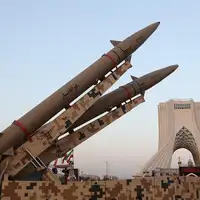
Iran displays Zolfaghar ballistic missiles during a state-organised event at Tehran's Azadi Square, July 25, 2026

The pause in US airstrikes has opened a new debate in Tehran over whether the military lull should be used to revive diplomacy or intensify pressure on Washington before another round of fighting begins.

Hardline commentators argue the United States paused its campaign because military pressure and disruptions to regional energy supplies have exposed American vulnerabilities.

Moderate and pragmatist voices, meanwhile, see a narrow window to pursue indirect diplomacy before renewed fighting further weakens Iran's economy.

The debate comes as indirect diplomacy appears to be regaining momentum after three nights without direct US or Iranian attacks.

President Donald Trump told supporters in Michigan on Monday that "very friendly negotiations" with Tehran were underway, while warning that "you got to beat them, and we'll beat the hell out of them" if diplomacy failed.

Tehran, however, has continued to portray the lull as temporary. Iran's joint military command said the US naval blockade amounted to an expansion of the conflict, accusing Washington of threatening Iranian commercial vessels and oil tankers in Iran's territorial waters over the past three days.

Outside political circles, public reactions have been more cautious than optimistic. Many Iranians reportedly interpret the sudden quiet as evidence of behind-the-scenes diplomacy rather than a genuine breakthrough, with some saying they remained unable to sleep despite the absence of airstrikes.

Official statements have also avoided describing the lull as a "ceasefire," instead referring to it as a "pause" or "hold," reflecting Tehran's continued distrust of US intentions.

For hardliners, that makes negotiations even more dangerous.

The conservative newspaper Kayhan urged the Foreign Ministry to "formally declare the end of all indirect diplomatic communications and backchannel negotiations," arguing that nearly three weeks of fighting had shown Washington only moderates its military pressure when global energy supplies come under threat.

The paper argued the pause reflected dwindling US precision-guided munitions rather than any diplomatic opening.

"The brief pause in nighttime airstrikes is not a signal of American goodwill or diplomatic flexibility—it is a tactical breathing space meant to allow the enemy to replenish depleted precision munitions and distract Tehran from exercising its strategic leverage."

The IRGC-linked newspaper Javan advanced a similar argument, saying US offensive capabilities were showing signs of "structural fatigue" and warning that any hesitation would allow Washington to rebuild regional air-defence networks and supply lines.

It also called for a forceful response to what it described as attempts to expand pressure into the Caspian Sea through recent attacks on Iranian shipping.

Moderate outlets drew almost the opposite conclusion.

Government-aligned Etemad argued that every night without airstrikes represented a crucial opportunity to prevent further deterioration in municipal services, inflation and currency markets, urging officials to make full use of regional mediation efforts, particularly those led by Oman.

Economic daily Donya-ye-Eghtesad likewise described the lull as an opportunity for indirect de-escalation that could help stabilise foreign exchange and gold markets.

Moderate Shargh, meanwhile, warned against opening a new maritime front following the reported attack on Iranian shipping in the Caspian Sea, arguing that escalating the confrontation northwards would only deepen Iran's economic isolation and threaten critical trade corridors.

Perhaps the mood was best captured by Etemad, whose front-page headline distilled both the opportunity and the uncertainty confronting Iran's leadership: "Diplomacy in the enclosure of distrust."

War pause lays bare Tehran split over US talks

Jul 27, 2026, 21:39 GMT+1
•
Maryam Sinaiee
100%
Pedestrians walk beneath a state-sponsored billboard depicting Donald Trump in a coffin in downtown Tehran, Iran, July 23, 2026

The suspension of US and Iranian attacks has revived hopes for diplomacy, but in Tehran the military lull has exposed a widening divide over whether the Islamic Republic should negotiate with Washington or press what hardliners see as a battlefield advantage.

Deputy Parliament Speaker Hamidreza Haji Babai made that resistance explicit on Monday, telling lawmakers that Iran would "never reach an understanding with the United States."

"We should not allow America to wage war whenever it wants and declare a ceasefire whenever it wants," he said during a virtual parliamentary session.

Former vice president Mohsen Mansouri, who served under the late President Ebrahim Raisi, voiced similar opposition in a social media post, arguing that Iran was discussing negotiations precisely when its military position had strengthened.

"We struck several ships, closed the strait and fought even harder than before. An arrow set Aramco ablaze, oil prices rose, and Iran's power became more evident than ever," he wrote.

"Why is it that just when our position is stronger and the enemy is more desperate, some immediately begin talking about negotiations, a ceasefire and reopening the strait?"

He added: "Do not restart this flawed cycle. The path to peace does not pass through negotiations and agreements. Struggle, jihad, vengeance and resistance are the road to peace."

The hardline pushback comes despite mounting signs that indirect diplomacy has resumed.

President Donald Trump said Monday that Washington was engaged in "very serious negotiations" with Iran while warning the United States would resume "very powerful military action" if diplomacy failed.

According to Turkey's Anadolu Agency, citing Pakistani sources, Pakistan and Qatar have intensified exchanges between Washington and Tehran.

The report said the mediators had proposed restoring the status quo that existed before July 9 through a two-week ceasefire, reopening maritime routes and resuming negotiations.

Iranian Foreign Ministry spokesman Esmaeil Baghaei confirmed in an interview with Austria's ORF television that Iran and the United States were exchanging messages through intermediaries.

At his weekly press briefing on Monday, however, he denied that Tehran had requested negotiations, insisting Iran had only been discussing shipping arrangements in the Strait of Hormuz with Oman.

Baghaei also rejected reports of a proposed ceasefire, saying Iran "has never allowed, and will never allow, the United States to determine the timing of war and peace."

Not everyone inside Iran shares the hardliners' view.

The reformist newspaper Etemad argued Monday that recent developments marked a turning point, with military confrontation giving way to deterrence and renewed diplomacy.

Former diplomat Abdolreza Faraji Rad wrote in Arman Emrooz that several developments—including the suspension of US attacks and Trump's latest remarks—suggested behind-the-scenes negotiations had either already produced results or were close to doing so.

He argued both sides still appeared to regard their earlier memorandum of understanding as valid.

Others dismissed that assessment.

Fada-Hossein Maleki, a member of parliament's National Security and Foreign Policy Committee, told the Iranian Labour News Agency (ILNA) that the reduction in US military operations reflected the impact of Iranian attacks on American logistical and operational infrastructure rather than diplomatic contacts.

"Iran has entered the offensive phase," he said. "In the offensive phase, there is certainly no discussion of negotiations."

The United States halted its nightly strikes on Friday after nearly two weeks of attacks, while Iran has not launched further strikes on US bases in the region since shortly after Washington's final operation.

Whether the lull develops into renewed diplomacy or merely precedes another round of fighting remains uncertain.

What has become increasingly clear, however, is that the military pause has opened a new political battle inside Tehran over whether Iran should negotiate from what some see as a position of strength or continue pressing its advantage on the battlefield.

Trump faces growing Capitol backlash over Iran war

Jul 27, 2026, 04:16 GMT+1
100%
U.S. President Donald Trump delivers remarks at the White House Correspondents' Association (WHCA) Dinner, July 24, 2026

Voices against the United States' military campaign against Iran grew louder over the weekend as Republican and Democratic lawmakers argued it was leaving Americans to bear mounting military, economic and human costs.

Leading the Republican criticism was Representative Thomas Massie of Kentucky, one of the few Republicans to openly challenge President Donald Trump's handling of the conflict.

"The U.S. has been significantly weakened by the war with Iran," Massie wrote on X.

"This administration depleted our missile defenses, drained our oil reserves, sacrificed our men & women, inflated the price of consumer goods, increased our debt, and neglected our domestic needs... all for Israel."

The Wall Street Journal and CBS News reported this week that senior military officials had warned the White House about declining inventories of air defence interceptors and precision-guided munitions, raising fresh questions about the campaign's longer-term cost.

Trump rejected those reports.

"We have far more munitions than anyone in the world, and far more than we need," he told The Wall Street Journal on Sunday.

Democrats, meanwhile, sharpened their own attacks, portraying the campaign as both illegal and increasingly costly for American taxpayers.

Representative Becca Balint of Vermont criticised House Republicans' latest budget bill, saying it allocated more than $70 billion for what she described as Trump's "illegal war of choice in Iran."

"Does it do anything to lower your costs? Nope!" she wrote.

Representative Nanette Barragán of California argued that Americans should not have to "foot the bill for Trump's war on Iran or billionaires' tax cuts."

The United States and Iran have now gone three consecutive nights without direct strikes against one another, while diplomatic efforts involving regional mediators have gathered momentum.

Few officials, however, appear convinced the lull will prove durable. Trump has repeatedly said the United States remains prepared to resume military operations if negotiations fail, while Tehran has continued to warn of retaliation should attacks restart.

Representative Frank Pallone of New Jersey linked the conflict to rising fuel prices and growing pressure on US military resources.

"Gas is at $4 a gallon, our military resources are depleted, and none of Trump's stated goals have been achieved," Pallone wrote after voting in favour of a War Powers Resolution seeking to end the conflict.

"Our vote sent Trump a clear message: the American people are FED UP with this illegal war."