• العربية
  • فارسی
Brand
  • Iran Insight
  • Politics
  • Economy
  • Analysis
  • Special Report
  • Opinion
  • Podcast
  • Iran Insight
  • Politics
  • Economy
  • Analysis
  • Special Report
  • Opinion
  • Podcast
  • Theme
  • Language
    • العربية
    • فارسی
  • Iran Insight
  • Politics
  • Economy
  • Analysis
  • Special Report
  • Opinion
  • Podcast
All rights reserved for Volant Media UK Limited
volant media logo

Trump weighs major Iran strikes as more regional states enter the war

Jul 24, 2026, 22:03 GMT+1

US President Donald Trump said Washington was in talks with Iran and had not yet decided whether to launch major new strikes, even as fighting spread across the region and reports emerged that Bahrain and Kuwait had directly attacked Iranian military sites for the first time.

“We’re talking to them right now,” Trump said Friday when asked whether Americans should expect major strikes. He said the United States could continue attacking Iran “piece by piece” or intensify the campaign “in a more rapid fashion,” while describing a negotiated agreement as the smarter option.

Trump said Iran appeared increasingly serious about reaching a deal but warned that negotiations could still fail. Any agreement, he said, must prevent Tehran from obtaining a nuclear weapon.

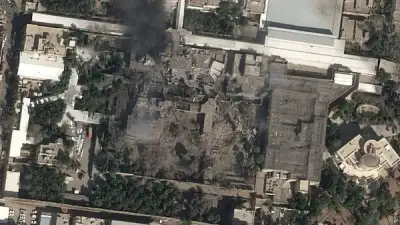
His comments came after The New York Times reported that he had met senior advisers to consider intensifying US military operations against Iran. The discussions followed US Central Command’s announcement Thursday that it had completed a 13th consecutive night of strikes on Iranian military and maritime targets.

Persian Gulf states enter the fight

The Wall Street Journal reported that Bahrain and Kuwait secretly sent warplanes to strike drone- and missile-storage facilities and other military sites inside Iran in early July, marking their first direct retaliation against Tehran.

The United Arab Emirates provided intelligence and defensive air cover, according to the report. Bahrain and Kuwait both host US military bases and have repeatedly come under Iranian missile and drone attack.

Kuwait’s military said Friday that its air defenses were confronting “hostile” drones launched from Iran, while Bahrain said it had intercepted and destroyed several Iranian aerial attacks.

Iran also stepped up its warnings to countries supporting US military operations.

Deputy Foreign Minister Kazem Gharibabadi said countries that allowed the United States to use their bases or territory for attacks would place themselves “among the aggressors.”

Mediation channels

Pakistan and Oman were working to keep channels open between Washington and Tehran as fighting continued.

Pakistan was exploring a possible route to restart stalled US-Iran talks after a diplomatic push by China, three Pakistani sources told Reuters. They said major obstacles remained, including Iranian attacks on Saudi Arabia and other regional states.

Iranian Foreign Minister Abbas Araghchi, meanwhile, accused Washington of a “breach of commitments” and “excessive demands” during a meeting with his Pakistani counterpart in Kyrgyzstan.

The Iranian and Omani foreign ministers also spoke by phone as an Omani delegation arrived in Tehran for talks on managing shipping through the Strait of Hormuz, the state-run IRNA news agency reported.

Maritime conflict spreads

Maritime tensions intensified across two of the region’s most important shipping routes.

The United States and Britain were planning a high-level meeting in London on forming an international coalition to protect commercial shipping in the Strait of Hormuz. Washington was seeking allied contributions including de-mining vessels, naval ships and drones.

In the Red Sea, the Saudi vessel NCC Masa suffered minor hull damage in an attack but continued to its destination after checks confirmed that the ship and crew were safe. The incident came four days after the Iran-backed Houthis announced an immediate naval blockade on Saudi-linked shipping through the Bab al-Mandeb Strait.

As fighting continued across the region, rhetoric from Tehran also pointed toward further escalation.

Major General Ali Abdollahi, commander of Iran’s Khatam al-Anbiya Central Headquarters, said Iran would kill one American service member for every Iranian citizen killed in US attacks.

“For every proud citizen of the Islamic Republic of Iran who is martyred, one American force will be sent to hell,” Abdollahi was quoted as saying by IRGC-affiliated Tasnim News.

He added that Iran had prepared “free, direct tickets to hell” for US troops.

Most Viewed

Ali Khamenei was killed at meeting on protest crackdown - security-linked outlet
1

Ali Khamenei was killed at meeting on protest crackdown - security-linked outlet

2
ANALYSIS

Iran bears biggest economic cost of Hormuz closure

3
INSIGHT

Trump threat to hit Pickaxe renews calls in Iran for nuclear bomb, NPT exit

4

Hormuz traffic falls to one as US-Iran fighting escalates

5

Rubio says Trump’s Iran policy is ‘a head for an eye’

Banner
Banner
Banner

Spotlight

  • Tehran braces for possible new phase of war
    INSIGHT

    Tehran braces for possible new phase of war

  • Cafés close, tolerance ends: Iran’s post-war shift on compulsory hijab
    INSIGHT

    Cafés close, tolerance ends: Iran’s post-war shift on compulsory hijab

  • Iran bears biggest economic cost of Hormuz closure
    ANALYSIS

    Iran bears biggest economic cost of Hormuz closure

  • Iran-US rhetoric shifts from ships to infrastructure

    Iran-US rhetoric shifts from ships to infrastructure

  • Russia’s gasoline imports add pressure to Iran’s strained fuel market
    ANALYSIS

    Russia’s gasoline imports add pressure to Iran’s strained fuel market

  • Raid on Tehran's cafés was a show of contempt
    TEHRAN INSIDER

    Raid on Tehran's cafés was a show of contempt

•
•
•

More Stories

Trump's Iran escalation fuels Senate clash over war powers

Jul 24, 2026, 18:48 GMT+1
•
Marzia Hussaini
100%
A member of the U.S. Capitol police patrols following a vote in the U.S. House of Representatives on a bipartisan war powers resolution aiming to stop the military campaign against Iran, on Capitol Hill, in Washington, D.C., U.S., March 5, 2026

President Donald Trump's hint at a larger military operation against Iran has intensified debate in Washington, with Republican allies rallying behind the president while Democrats accuse him of violating the Constitution and seek to curb his war powers.

The debate has grown louder as speculation mounts over whether the conflict could eventually require American ground forces, despite repeated White House assurances that no such deployment is planned.

Speaking to Iran International, Senator Ted Cruz called Trump's military campaign "the most consequential decision of his presidency" but said he did not expect a prolonged deployment of US ground troops.

"I do not believe there is any possibility that the president will send boots on the ground for any sustained involvement," he said. "There might be ... a limited involvement."

Republican Senator Tommy Tuberville likewise argued that decisions over troop deployments should rest entirely with Trump.

"We've got a commander in chief. He got 80 million votes," Tuberville told Iran International. "He should be able to do what's right for the country."

Asked whether he would support sending troops into Iran, Tuberville said the decision was "up to him."

Democrats challenge legality

Democratic Senator Tim Kaine argued that the administration had already exceeded its constitutional authority.

"The president is in the middle of an illegal war," Kaine told Iran International. "He violated the Constitution by starting war without Congress."

Kaine also said Trump had violated the War Powers Resolution by continuing military operations beyond the statutory deadline without congressional authorization.

"He is triply violating the law," Kaine said, adding that "Congress needs to stop this war."

The exchange highlighted a widening divide on Capitol Hill, where Republicans argue the campaign is necessary to restore deterrence and Democrats counter that any deployment of US ground troops requires explicit congressional authorization.

The Senate this week voted narrowly against advancing legislation that would have required congressional authorization for continued hostilities, leaving Trump with broad operational freedom even as the political debate over the next phase of the conflict intensifies.

The debate has sharpened as the conflict enters a more dangerous phase.

Trump said this week he was considering a "massive attack" against Iran larger than previous operations while insisting no final decision had been made. The White House has continued to maintain that it has no plans to deploy US ground troops.

Iran has responded with threats of its own.

On Friday, Major General Abdolrahim Abdollahi, commander of Iran's Khatam al-Anbiya Central Headquarters, declared that Iran would kill one American service member for every Iranian citizen killed in US attacks.

"The rule ... is now a definitive and officially declared equation of the battlefield," he said.

Iran bears biggest economic cost of Hormuz closure

Jul 24, 2026, 08:42 GMT+1
•
Dalga Khatinoglu
100%
A shopkeeper sits in darkness at a laptop store in Dezful, southern Iran, during a power outage affecting local businesses, July 14, 2026

Iran's closure of the Strait of Hormuz appears to have dealt far greater damage to its own trade with China than to Beijing's commerce with the rest of the Persian Gulf, according to newly released Chinese customs data.

Between March and June 2026, Iran's non-oil trade with China totaled just $830 million, down from $3.3 billion during the same period last year—a decline of roughly 75%.

Kpler shipping data reviewed by Iran International also point to a sharp decline in Iranian oil exports to China.

Average daily unloadings at Chinese ports fell from 1.74 million barrels per day in April to around 550,000 barrels per day in the first half of July.

Together, the figures suggest the Strait of Hormuz closure has dealt a severe blow to Iran's economic ties with its largest trading partner.

China remains the only major buyer of sanctioned Iranian crude and was by far Iran's most important commercial partner in 2025.

The disruption has also sharply increased transportation costs. According to the head of logistics at Iran's Trade Promotion Organization, shipping a container from China to Iran now costs $8,000–$9,000, up from $2,500–$3,500before the conflict.

Transporting goods through Central Asian rail corridors has become even more expensive.

Iran hit harder than regional rivals

Although trade between China and other Persian Gulf states also declined after the Strait closure, the contraction was far less severe than in Iran's case.

Chinese customs data show Bahrain, Iraq, Kuwait, Qatar, Saudi Arabia and the United Arab Emirates recorded a combined $109 billion in bilateral trade with China during the first half of 2026, a 29% decline from a year earlier.

By contrast, total trade between Iran and China during the same six-month period fell 59%.

Trade between China and Oman proved even more resilient, remaining virtually unchanged at around $16 billion during the first half of the year.

The figures indicate that Iran has borne a disproportionately large share of the commercial costs associated with disrupting one of the world's most important shipping lanes.

Broader trade slowdown

The impact extends well beyond China.

Last year, Iran’s Arab neighbours accounted for roughly 51% of Iran's total non-oil trade. Since March, trade between Iran and all of those countries except Iraq has effectively come to a halt.

Iran itself has stopped publishing monthly foreign trade statistics since the regional war began, leaving customs data from trading partners among the few remaining indicators of the country's external commerce.

Data from other major economies point in the same direction.

According to Eurostat, trade between Iran and the European Union fell by more than half during the first three months of the conflict, dropping below €430 million.

India offered one notable exception. A one-month US sanctions waiver allowed Indian refiners to receive two cargoes of Iranian crude in May, lifting India's imports from Iran by more than 340% to about $950 million during the first five months of the year.

Even so, India's exports to Iran fell 17% to $470 million, reflecting weaker non-oil trade.

Official Turkish data painted a steadier picture. Despite a doubling of Iranian natural gas exports, overall trade between Iran and Turkey remained broadly unchanged at around $1.9 billion during the first half of the year.

The Chinese customs figures, shipping data and trade statistics from Europe suggest that while the Strait of Hormuz crisis has disrupted commerce across the region, Iran has so far paid a markedly higher commercial price than many of the countries it sought to pressure.

Hormuz traffic falls to one as US-Iran fighting escalates

Jul 24, 2026, 04:59 GMT+1
100%
A vessel at the Strait of Hormuz, as seen from Musandam, Oman, July 17, 2026.

Just one vessel transited the Strait of Hormuz on Thursday, the lowest daily traffic since May 7, as the United States and Iran escalated military and economic threats while commercial shipping continued to avoid one of the world's most important energy chokepoints.

Kpler ship-tracking data showed only one vessel exited the strait on July 23, down from three the previous day, while no ships entered.

The sole crossing was the New Giant, a very large crude carrier carrying 2 million barrels of Iraqi Basrah crude bound for China's Rizhao port.

The sharp decline came as US strikes on Iran entered a 13th consecutive night and oil prices climbed back above $100 a barrel.

US President Donald Trump on Thursday expanded the confrontation beyond the battlefield, warning that Iranian funds under US control would be used to compensate victims of attacks on commercial shipping.

"Any and all damages done to Ships, Cargo, or anything related thereto, will be paid for by Iranian Money that the United States has in its possession, and controls," Trump wrote on Truth Social.

Iranian Foreign Minister Abbas Araghchi condemned the proposal, warning that once governments normalize confiscating another state's assets, "no one's assets are safe."

Calling the idea an "incendiary precedent," he said seizing another country's assets to pay for unrelated future claims would create international instability and that the resulting chaos would not be "pretty or peaceful."

Iranian leaders meanwhile continued to frame disruption to Persian Gulf shipping as part of their broader deterrence strategy.

"The equation of this war is clear: either everyone or no one," Parliament Speaker Mohammad-Bagher Ghalibaf wrote on X this week. "In a region where we cannot sell oil, no one will sell oil."

The disruption is increasingly reshaping regional shipping patterns.

The clean tanker Torm Innovation, carrying around 500,000 barrels of naphtha bound for Asia, altered course toward the Suez Canal instead of taking its usual route through the Bab el-Mandeb Strait, according to Kpler and LSEG ship-tracking data.

Regional trading sources said routing vessels to Asia via the Suez Canal rather than the Bab el-Mandeb could make voyages nearly three times longer, adding substantially to transport costs.

Saudi Aramco has also begun offering additional crude cargoes loading from Egypt's Mediterranean port of Sidi Kerir as an alternative to its Red Sea export terminals, reflecting growing efforts by producers and shippers to adapt to the disruption.

Traffic through the Bab el-Mandeb Strait nevertheless increased on Thursday.

Kpler recorded 32 commodity tanker crossings, up from 26 a day earlier. Fourteen vessels entered the Red Sea and 18 exited into the Gulf of Aden, including nine crude carriers—two of them Chinese supertankers bound for China.

Trump raises the stakes as Iran talks stall and conflict widens

Jul 24, 2026, 03:15 GMT+1
100%
U.S. President Donald Trump arrives at Dobbins Air Reserve Base in Marietta, Georgia, U.S., July 22, 2026.

President Donald Trump moved closer on Thursday to expanding the US campaign against Iran, threatening both a major new military operation and financial punishment as diplomacy faltered.

Trump told Israel’s Channel 12 that he was considering a “massive attack” larger than Operation Epic Fury, though he stressed that no final decision had been made and no new military orders had been issued.

“I am close to making a decision. We are fully prepared for it,” Trump said, adding that the United States could act alone but Israel would join “within two minutes” if asked.

Trump also said Iran would ultimately bear the financial cost of attacks on commercial shipping.

In a post on Truth Social, he said that “any and all damages” to ships, cargo and related property would be paid from Iranian funds under US control.

“These damages may be very substantial but, nevertheless, this is the fair and equitable thing to do,” he wrote.

Iran has nearly $100 billion in assets frozen abroad and beyond Tehran’s control, though only part of that sum is directly held by the United States or clearly within its legal reach.

The threat added an economic dimension to Washington’s military pressure as mediation efforts showed fresh signs of collapse.

Axios, citing two regional sources involved in the talks, reported that Iran had rejected the latest proposal delivered through intermediaries. One source said Tehran was “not cooperating.”

Trump struck a similar tone at the White House, telling reporters that Iran wanted an agreement but was not prepared to accept Washington’s terms.

Iranian Foreign Minister Abbas Araghchi responded by accusing figures in the US administration of ignoring “realities on the ground” and focusing instead on the 2028 presidential election.

The diplomatic impasse unfolded alongside a widening regional confrontation.

Kuwaiti authorities said hostile drones struck the Abdali border crossing with Iraq, causing material damage but no casualties. The military later reported intercepting additional drones.

The IRGC-affiliated Tasnim News Agency attributed two attacks near the crossing to Iran-allied armed groups, saying a border terminal and command building were targeted in retaliation for a reported US strike near Iran’s Shalamcheh crossing.

Iran also sharpened its dispute with neighboring states. Foreign Ministry spokesman Esmail Baghaei said Persian Gulf countries and Jordan must formally deny a US Central Command claim that they had assisted American operations against Iran.

Baghaei argued that Tehran was entitled to strike US bases and assets on their territory in self-defense if they had participated in the campaign.

Israel, meanwhile, prepared for the possibility that a broader US operation could draw it directly back into the conflict.

Defense Minister Israel Katz said the country was ready “for every scenario” and warned that Iran would face a “crushing blow” if it attacked Israel.

In Washington, the Senate voted 49-47 against advancing a resolution that would have required congressional authorization for continued hostilities against Iran, blocking an effort to limit Trump’s war powers as he considers expanding the campaign.

Oil rally hardens Tehran's stance on US talks

Jul 24, 2026, 01:38 GMT+1
•
Maryam Sinaiee
100%
Iranian lawmakers raise fists and wave red “revenge” flags during a parliamentary session in Tehran, beneath a portrait of slain Supreme Leader Ali Khamenei, July 14, 2026

The surge in oil prices appears to be hardening Tehran's resolve against renewed negotiations with Washington, giving ammunition to those who argue that a prolonged conflict puts more pressure on the United States than on Iran.

The shift comes as Brent crude climbed above $100 a barrel for the first time in two months after Iran-aligned Houthi attacks expanded maritime tensions from the Strait of Hormuz to the Bab al-Mandab Strait, raising fears of broader disruption to Middle Eastern energy exports.

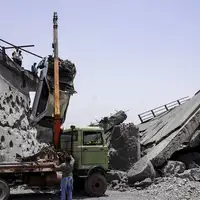
US President Donald Trump this week warned that the United States would destroy Iranian bridges or power plants in response to attacks on shipping in the Strait of Hormuz.

He later blamed Tehran for Houthi attacks on commercial vessels in the Red Sea, saying any further assaults would trigger an "extremely severe" US response against both the Houthis and Iran.

Amid the escalating threats, Brent crude surged 6% on Thursday, climbing back above $100 a barrel for the first time in two months.

Tehran sees leverage

Iranian officials increasingly portrayed the price rally as evidence that insecurity around the Strait of Hormuz and the Bab al-Mandab had strengthened Tehran's negotiating position.

"The equation of this war is clear: either everyone or no one," Parliament Speaker and Iran's chief negotiator Mohammad-Bagher Ghalibaf wrote on X. "In a region where we cannot sell oil, no one will sell oil. If our security is not guaranteed, no infrastructure will remain safe."

He later added: "They wanted to punish Iran. Punished themselves with triple-digit oil instead."

Mohammad Mokhber, an adviser to Supreme Leader Mojtaba Khamenei, argued that the latest rally reflected disruptions to transportation rather than production, implying prices could climb much higher if energy infrastructure itself came under attack.

"Oil at $100 is, so far, merely the result of disruptions in transportation, not production. The fire the United States is igniting in the region's oil and gas fields will eventually engulf the entire world."

Ali Akbar Velayati, another senior adviser to Mojtaba Khamenei, likewise warned that "the illusion of striking Iran at low cost" could have consequences extending well beyond the battlefield to global energy markets.

Talks lose momentum

The more confident tone in Tehran coincided with signs that diplomacy was stalling.

According to Axios, citing two regional sources familiar with mediation efforts, Iran's leadership rejected the latest proposal presented through intermediaries.

"We're trying, but the Iranians are not cooperating," one source told the outlet.

Trump also acknowledged that negotiations had made little progress, saying Tehran wanted to negotiate but had not "suffered enough yet."

Conservative Iranian media and hardline commentators argued that soaring oil prices had renewed Washington's interest in diplomacy and urged Tehran to resist returning to the negotiating table while economic pressure on the United States and its partners continued to build.

Following its announcement of attacks on US facilities in Kuwait, the Islamic Revolutionary Guard Corps (IRGC) declared that Washington "must pay the price for breaking its commitments" and vowed not to allow the United States to use "deceptive ceasefires" to replenish military supplies and strategic reserves before resuming hostilities.

The statement accused Washington of seeking negotiations only after being "defeated on the battlefield."

Hardline commentator Hamid Moghaddam similarly argued that renewed American interest in diplomacy reflected the surge in oil prices and urged Iranian negotiators to hold their position.

Another hardline commentator wrote that unless households in the West began to feel the economic consequences of the conflict, the United States and Israel "would have no hesitation in turning Iran into another Libya or Gaza."

Former Israeli intelligence officer Danny Citrinowicz questioned whether Trump's increasingly forceful warnings would alter Tehran's calculations.

"The Houthis are not going to stop attacking, just as Iran is not going to stop supporting them," he said.

"These threats are unlikely to change behavior in either Sana'a or Tehran. If anything, repeated ultimatums that are not enforced risk highlighting the limits of American deterrence."