'Final revenge' for slain leader rests with Imam of Time, Iranian cleric says

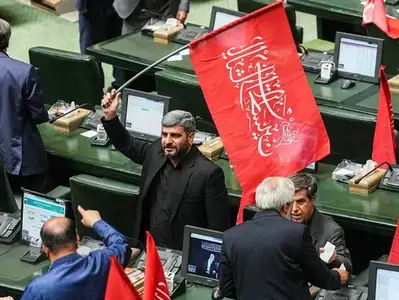
A senior Iranian cleric said avenging Iran's slain supreme leader, Ali Khamenei, would unfold in three stages, culminating in what he described as "final revenge" by the Imam of Time.
"Punishing the killers, confronting the American system of domination, and achieving final revenge at the hands of the Imam of Time are the three stages of this vengeance," Ahmad Alamolhoda, Friday prayer Imam in Mashhad, said in a sermon. "Its continuation will only be possible through the resistance of the people and officials."
The Imam of Time is a title used by Twelver Shiite Muslims for the Mahdi, a messianic figure they believe will return to establish justice.



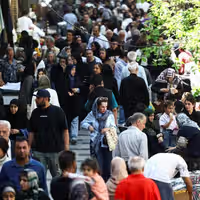


The previous record was 1,900,000 rials, registered on May 4. Other foreign currencies also rose. The British pound reached 2,576,500 rials, while the euro climbed above 2,190,000 rials.#
At Friday’s open-market rate, Iran’s official monthly minimum wage of 166,255,500 rials is worth about $87.
The new low follows a sharp deterioration in Iran’s economic outlook. The International Monetary Fund expects the economy to contract by 6.1% in 2026, after previously forecasting modest growth.
Average inflation is projected to reach 68.9%, leaving households with fewer opportunities to earn money while the value of their income falls rapidly.
The IMF linked the downturn to damage to energy and transport infrastructure, lower production and exports, and disruption around the Strait of Hormuz.
The rial’s decline increases the cost of imported goods, raw materials and medicine, while feeding broader price rises in an economy already struggling with sanctions, war damage and years of economic mismanagement.
Iran operates several official and semi-official exchange rates, but the open-market rate is the price most closely watched by households and businesses seeking foreign currency.
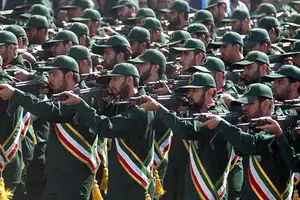
The IRGC was designated alongside the Iran-linked Islamic Movement of Companions of the Right and Russia’s GRU Volunteer Corps, the first organizations placed under powers created by the National Security (State Threats) Act 2026.
The designations took effect on July 17 after Parliament approved an order submitted by Home Secretary Shabana Mahmood four days earlier.
Under the new law, it is now a criminal offence to express support for the groups, including by glorifying or encouraging activity that threatens the safety of the United Kingdom.
Providing assistance or accepting money or another material benefit from a designated organization can also lead to prosecution. Those convicted could face prison sentences of up to 14 years.
People who commit sabotage, arson or other hostile acts on behalf of the groups could be charged separately under the National Security Act 2023 and face life imprisonment.
The designation is distinct from banning an organization under Britain’s terrorism legislation. It is designed specifically to address hostile activity linked to foreign governments, including espionage, political interference, intimidation, sabotage and physical attacks.
The government says the new framework will make it easier to prosecute people working for foreign organizations because prosecutors will not always have to establish a direct connection between an individual act and a foreign government.
Outgoing Prime Minister Keir Starmer said when the measures were announced that Britain would not be allowed to become “a playground for states who want to spread fear, division and violence on our streets.”
“We have already taken tough action against the Iranian regime and those linked to it, and against Russian operatives and networks targeting our country,” he said. “These new powers will make it easier to prosecute and lock up anyone carrying out their dirty work here in Britain.”
The IRGC is one of the Islamic Republic’s most powerful military and political institutions. Its overseas Quds Force oversees Tehran’s relationships with allied armed groups and has been accused by British authorities of directing operations against dissidents, journalists and Jewish or Israeli-linked targets in Europe.
The British government said the Islamic Movement of Companions of the Right had claimed responsibility for seven attacks this year against Persian-language media and locations linked to Jewish and Israeli communities in Britain.
Those incidents included an antisemitic arson attack that damaged four ambulances belonging to the Jewish emergency service Hatzola in Golders Green, north London, on March 23.
British authorities said Quds Force members were behind the organization and had “almost certainly” directed its attacks across Europe. The allegations have not been tested in court.
The government has also cited at least 20 potentially lethal Iranian-backed plots identified by the domestic intelligence agency MI5 over a one-year period.
“Iran and Russia are using proxies and thugs to do their dirty work on our shores,” Mahmood said when she announced the intended designations. “We will find you, and we will lock you up.”
The third designated organization, the GRU Volunteer Corps, is described by Britain as a network controlled by Russian military intelligence that recruits people online to carry out arson, sabotage, harassment and other hostile activity.
Foreign Secretary Yvette Cooper said the use of proxies by Iran and Russia to conduct operations on British soil was “reprehensible.”
The designation marks a significant escalation in Britain’s response to the IRGC. Rather than banning the organization as a terrorist group, the government has created a separate route to prosecute support, recruitment, financing and operational assistance linked to hostile foreign-state activity.