• العربية
  • فارسی
Brand
  • Iran Insight
  • Politics
  • Economy
  • Analysis
  • Special Report
  • Opinion
  • Podcast
  • Iran Insight
  • Politics
  • Economy
  • Analysis
  • Special Report
  • Opinion
  • Podcast
  • Theme
  • Language
    • العربية
    • فارسی
  • Iran Insight
  • Politics
  • Economy
  • Analysis
  • Special Report
  • Opinion
  • Podcast
All rights reserved for Volant Media UK Limited
volant media logo

Ghalibaf says Iran won war against US and Israel

Jun 17, 2026, 20:54 GMT+1

Iran won the war against the United States and Israel, Mohammad-Bagher Ghalibaf, head of Iran’s negotiating delegation and the country's parliament speaker told state television on Wednesday.

“The recent war was a war between the front of truth and falsehood,” Ghalibaf said.

“We did not allow the United States and Israel to achieve the nine goals they set out from the start of the war,” he added.

“When I talk about negotiation and diplomacy, I mean diplomacy of power,” Ghalibaf said, adding that he supported negotiations that were themselves “a form of struggle.”

Ghalibaf said he was the person who distrusted the United States the most and had told US Vice President JD Vance that he had “not the slightest trust” in him.

Most Viewed

Text of US-Iran memorandum released
1

Text of US-Iran memorandum released

2

Toronto shooting probe uncovers trail leading to Tehran

3

US says Iran won't get funds upfront under MoU

4
INSIGHT

Can Iranians cheer Team Melli without cheering the state?

5
INSIGHT

Hope, anger and distrust: Iranians debate Iran-US memorandum online

Banner
Banner
Banner

Spotlight

  • Why some think a weakened Iran could emerge stronger
    ANALYSIS

    Why some think a weakened Iran could emerge stronger

  • Iran markets rally on US deal hopes, but economists warn relief is no cure

    Iran markets rally on US deal hopes, but economists warn relief is no cure

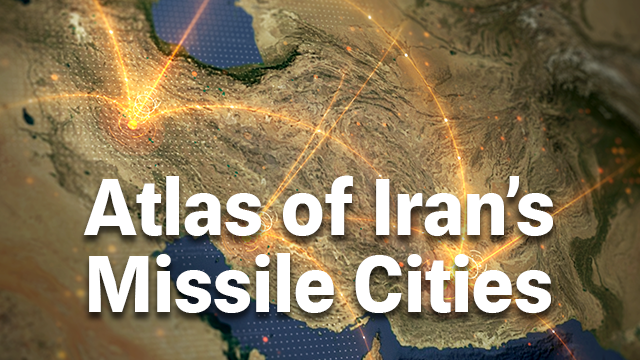
  • Atlas of Iran missile cities: The hidden network behind Tehran’s missile power
    SPECIAL REPORT

    Atlas of Iran missile cities: The hidden network behind Tehran’s missile power

  • Hope meets caution as Tehran weighs economic impact of US deal
    INSIGHT

    Hope meets caution as Tehran weighs economic impact of US deal

  • Toronto shooting probe uncovers trail leading to Tehran

    Toronto shooting probe uncovers trail leading to Tehran

•
•
•

More Stories

Graham says he backs US-Iran MoU after lengthy discussion with Witkoff

Jun 17, 2026, 20:40 GMT+1

Republican Senator Lindsey Graham said on Wednesday that after speaking to US special envoy Steve Witkoff, he believed signing the memorandum of understanding with Iran would benefit the United States by helping open the Strait of Hormuz and ending hostilities with Tehran.

“Whether or not the United States can reach an acceptable, verifiable deal with Iran regarding its nuclear program and other issues is yet to be determined, but I see little downside to trying,” Graham said in a post on X.

He said the economic stability created by opening the strait and ending hostilities could create “a pathway to peace well beyond the Iranian conflict.”

Graham added that expanding the Abraham Accords and normalizing relations between Saudi Arabia and Israel remained his and President Donald Trump’s ultimate goal, saying the signing of the MoU was an essential step toward that aim.

Trump says 60-day deadline for final Iran deal is not fixed

Jun 17, 2026, 20:18 GMT+1

US President Donald Trump on Wednesday told reporters that the 60-day period for reaching a final agreement with Iran was not a hard deadline, and that the memorandum of understanding with Tehran would be signed within the next 48 hours.

Trump also said the United States would leave its military in the Persian Gulf “for a while.”

Text of US-Iran memorandum released

Jun 17, 2026, 20:17 GMT+1
Text of US-Iran memorandum released
100%

A senior US official on Wednesday read out a 14-point memorandum of understanding between the United States and Iran that outlines a high-level understanding to halt the war in Iran and open the Strait of Hormuz.

The agreement defers many of the most difficult issues, including how to wind down Iran's nuclear program, until a final deal is reached, and paves the way for a broader 60-day negotiation period due to begin in Switzerland on Friday.

The document, titled "Islamabad Memorandum of Understanding between the United States of America and the Islamic Republic of Iran," was read out to reporters by the US official as follows:

1. The United States of America and the ​Islamic Republic of Iran and their ⁠allies in the current war, by signing this MoU (Memorandum of Understanding), declare the immediate and permanent termination of military operations on ‌all fronts, including in Lebanon, and undertake from now on not to initiate any war or any military operation against each other, and to refrain from the threat or use of force against each other, and ensuring the territorial integrity and sovereignty of Lebanon. The final deal will confirm the permanent termination of the war on all fronts, including in Lebanon, and other provisions of this paragraph.

2. The United States of America and the Islamic Republic of Iran undertake to respect each other's sovereignty and territorial integrity, ​and to refrain from interfering in each other's internal affairs.

3. The United States of America and the Islamic Republic of Iran commit to negotiating and achieving the final deal ‌in maximum 60 days extendable with mutual consent.

4. Immediately upon the signing of this MoU, the United States of America will begin the removal of its naval blockade and any disturbances or impediments against the Islamic Republic of Iran, and will fully end the naval blockade within 30 days. During this period, the traffic of vessels will be in proportion to the numbers of pre-war traffic being restored by the Islamic Republic of Iran. The United States of America further undertakes to remove ‌its forces from the proximity of the Islamic Republic of Iran within 30 days after the final deal.

5. Upon the signing of this MoU, the Islamic Republic of Iran will make arrangements using its best efforts for the safe passage of commercial vessels with no charge for 60 days only from the Persian Gulf to the Sea of Oman and vice versa. The traffic of commercial vessels will immediately start ⁠and, considering the need for removing the technical and military obstacles and de-mining by the Islamic Republic of Iran, will be instated within 30 days. The Islamic Republic of Iran will conduct dialog with the Sultanate of Oman to define the future administration and maritime services in the Strait of Hormuz, in discussion with other Persian Gulf littoral states in line with ‌the applicable international law and ​the sovereign rights of coastal states of the Strait of Hormuz.

6. The United States of America undertakes with regional partners to develop a definitive, mutually agreed plan with at least USD 300 billion for the reconstruction and economic development of the Islamic Republic of ​Iran. The mechanism for the implementation of this plan will be finalized as part of final deal within 60 days. All required licenses, waivers, and permissions needed for the relevant financial transactions will be granted by the ⁠United States of America.

7. The United States of America undertakes to terminate all types of sanctions against the Islamic Republic of Iran, including the United Nations Security Council resolutions, ‌i.e. IAEA Board of Governors resolutions, and all unilateral US sanctions, primary and secondary, in an agreed upon schedule as part ​of the final deal. The Islamic Republic of Iran and the United States of America acknowledge the critical importance of the sanctions termination issue above mentioned and express their intentions to immediately address these issues in the negotiations in order to achieve mutual agreement on them.

8. The Islamic Republic of Iran reaffirms that it shall not procure or develop nuclear weapons. The United States of America and the Islamic Republic of Iran have agreed to resolve the disposition of stockpiled enriched material pursuant to ‌a mechanism that will be mutually agreed upon, in accordance with the schedule mentioned in paragraph seven with the minimum methodology to be down blending on site under the supervision of the ​IAEA. The two parties also agreed to discuss the issue of enrichment and other mutually agreed matters related to the Islamic Republic of Iran's nuclear needs, based on a satisfactory framework being agreed upon in the final deal. The final deal will confirm the provisions of this paragraph. The United States of America and the Islamic Republic of Iran acknowledge the critical importance of the nuclear issues above mentioned and express their intention to immediately address these issues in the negotiations in order to achieve mutual agreement on them.

9. Pending the final deal, the United States of America ​and the Islamic Republic of Iran agree to maintain the status quo. The Islamic Republic of Iran will maintain the current status quo of its nuclear program and the United States of America will not impose any new sanctions and will not deploy additional forces in the region.

10. The United States of America undertakes that immediately upon the signing of this MoU and until the termination of sanctions, US Department of Treasury will issue waivers for the export of Iranian crude oil, petroleum products, and derivatives, and all associated services, including banking transactions, insurances, transportation, etc.

11. The United States of America undertakes to make fully available for use the frozen or restricted funds and assets of the Islamic Republic of Iran. Upon the implementation of this MoU, the United States of America and the Islamic Republic of Iran will mutually agree on the procedures related to the release of these funds during the negotiation. Such funds, whether retained in the original account or transferred, shall be made fully usable for payment to any ultimate beneficiary designated by the Central Bank of the Islamic Republic of Iran. The United States of America undertakes to issue all necessary licenses and authorizations accordingly.

12. The United States of America and the Islamic Republic of Iran agree that an executive mechanism will be ⁠established to monitor the successful implementation of this MoU and the future compliance of the final deal.

13. After signing this MoU, and subject to the beginning of the ⁠implementation of paragraphs 1,4,5,10 and 11 of this MoU, and ​the continuing implementation of these measures, the United States of America and the Islamic Republic of Iran will start negotiations regarding the final deal exclusively on the other paragraphs.

14. The final deal will be endorsed by a binding UNSC resolution.

Toronto shooting probe uncovers trail leading to Tehran

Jun 17, 2026, 20:12 GMT+1
•
Mahsa Mortazavi
Toronto shooting probe uncovers trail leading to Tehran
100%
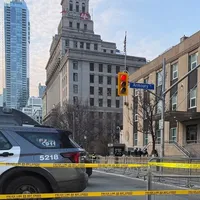
Law enforcement personnel survey the scene outside the U.S. Consulate after shots were fired, in Toronto, Ontario, Canada, March 10, 2026. Picture taken with a mobile phone.

A Toronto police operation targeting suspects linked to the March attack on the US Consulate has uncovered what investigators believe is a far-reaching network connecting a series of shootings across the Greater Toronto Area to actors operating beyond Canada's borders.

According to confidential information obtained by Iran International from police sources, investigators have identified a traceable logistics, supply and equipment pipeline linking suspects in the Toronto shootings to individuals and networks originating in Tehran.

The findings have raised concerns among investigators that criminal groups in Canada may have been used to facilitate operations tied to broader geopolitical objectives.

The revelation comes as Toronto police continue to investigate a network allegedly responsible for dozens of shootings across the GTA.

The investigation intensified following an early-morning raid in which Constable Marc Pinizzotto was killed during an exchange of gunfire. Ballistic testing later linked firearms recovered at the scene to 27 separate shootings, according to Toronto Police.

Police Chief Myron Demkiw said investigators uncovered a recurring pattern in which teenagers and low-level gang members were allegedly recruited through encrypted messaging applications such as Telegram, WhatsApp and Signal to carry out attacks for payment.

In some cases, the recruits were allegedly instructed to film the shootings as proof that the assignments had been completed.

Among those charged is 18-year-old Sheldon Tracy-Stewart, who was wounded and arrested during the raid. Another suspect, 19-year-old Zara Jabbi, remains at large.

The Toronto investigation has unfolded alongside a separate U.S. terrorism case involving Mohammad Baqer Saad Dawood al-Saadi, an Iraqi national charged in New York.

According to U.S. court documents, prosecutors allege that al-Saadi played a role in coordinating attacks linked to Iranian interests abroad.

Federal investigators say he acknowledged in a recorded conversation that associates connected to his network carried out the shooting at the US Consulate in Toronto, allegedly in retaliation for US actions against the Islamic Republic.

The allegations have not been tested in court.

The emerging picture has also renewed attention on an armed attack targeting Iranian-Canadian activist Salar Gholami in Toronto earlier this year.

In the early hours of March 1, gunmen fired at a sports club owned by Gholami, a prominent opposition activist whose facility has served as a gathering place for anti-government events and demonstrations. At least 17 rounds struck the building.

Gholami believes the attack should be examined alongside the broader network now under investigation. Security footage, he said, showed a young masked gunman whose profile resembled the recruits allegedly used in other GTA shootings.

Authorities have not publicly linked the attack on Gholami's club to the wider investigation. But members of Canada's Iranian community argue that threats against dissidents deserve closer scrutiny as investigators work to determine the full extent of the network's operations.

Tehran says presidents signing US-Iran MoU under consideration

Jun 17, 2026, 19:13 GMT+1

Iranian Foreign Ministry spokesman Esmail Baghaei said one of the options under consideration for signing the memorandum of understanding between Tehran and Washington is for the presidents of the two countries to do so themselves.

“One of the ideas being considered is for it to be carried out by the presidents of the two countries,” Baghaei said, according to IRNA.

His remarks suggest that discussions over the format of the signing ceremony remain ongoing, despite expectations that the memorandum will be formally signed on Friday.

The text of the agreement has not yet been officially released, and officials on both sides have at times offered differing accounts of its contents and implementation.