• العربية
  • فارسی
Brand
  • Iran Insight
  • Politics
  • Economy
  • Analysis
  • Special Report
  • Opinion
  • Podcast
  • Iran Insight
  • Politics
  • Economy
  • Analysis
  • Special Report
  • Opinion
  • Podcast
  • Theme
  • Language
    • العربية
    • فارسی
  • Iran Insight
  • Politics
  • Economy
  • Analysis
  • Special Report
  • Opinion
  • Podcast
All rights reserved for Volant Media UK Limited
volant media logo
ANALYSIS

Why oil giant Iran struggles to supply gasoline

Umud Shokri
Umud Shokri

Senior visiting fellow, George Mason University
May 22, 2026, 04:14 GMT+1

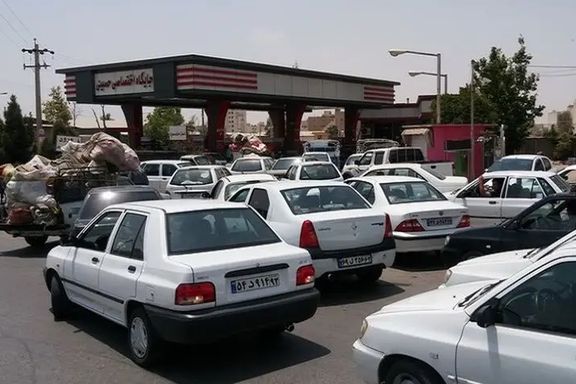
Iran’s worsening gasoline shortage is becoming a test of whether Tehran can still sustain basic economic stability under war conditions.

For years, Tehran portrayed fuel self-sufficiency as proof that sanctions had not crippled the energy sector. But recent comments by officials suggest the country was already facing a daily shortfall of roughly 20 million liters before the latest war.

MP Reza Sepahvand recently said production stands at around 105 million liters a day while consumption is closer to 135 million.

War damage, disrupted imports and pressure on petrochemical units have now pushed a long-running structural problem into public view.

Why a producer runs short of gas

Iran may hold vast oil reserves and operate sizable refineries, but that does not automatically guarantee enough gasoline for domestic use.

Much of the country’s refining system depends on aging infrastructure, limited maintenance and technology constrained by years of sanctions, leaving production increasingly out of step with demand.

Fuel consumption is also on the rise. Expanding cities, heavy reliance on private cars and millions of older, fuel-inefficient vehicles place constant pressure on supply.

Cheap subsidized gasoline also encourages overuse, while large price gaps with neighboring countries fuel widespread smuggling that pulls millions of liters out of Iran each day.

The crisis is tied to politics as much as energy. Subsidies help keep fuel affordable and reduce public frustration, but they also deepen waste, smuggling and financial pressure on the state.

Iranian leaders know reforms are necessary, yet past fuel-price increases have triggered unrest, leaving the government trapped between avoiding social anger and managing a system that is becoming harder to sustain.

How war made things worse

The latest war has turned a chronic imbalance into a more immediate stress test. Strikes on energy infrastructure and disruption around the Strait of Hormuz have affected refining, storage, distribution and imports.

Even when refineries are not completely knocked offline, damage to depots, logistics networks and supporting industrial units can sharply reduce the amount of usable gasoline reaching consumers.

One overlooked issue is Iran’s reliance on petrochemical components for gasoline blending.

When refineries cannot produce enough high-quality gasoline, producers blend in octane-boosting components to improve fuel performance. These can include aromatic-rich streams such as benzene, toluene and xylenes, as well as additives such as MTBE.

Such components are widely used in global fuel production because they raise octane levels. The difference lies in regulation.

Many countries tightly restrict substances such as benzene because of health and environmental risks. Iran’s heavier reliance on petrochemical blending can worsen pollution if quality controls weaken or blending exceeds safer limits.

Higher levels of benzene and aromatics increase harmful emissions, especially in congested cities such as Tehran, where air quality is already poor. MTBE also carries environmental risks, particularly for groundwater contamination.

Damage to petrochemical facilities therefore matters for two reasons: it can reduce the supply of components Iran needs to stretch gasoline production while also increasing pressure to rely on lower-quality blending practices to keep fuel flowing.

Either outcome creates problems: tighter supply or worsening health and environmental costs.

When will it really bite?

Before the war, Iran managed the imbalance through imports, rationing, fuel cards, blending and informal restrictions. Those measures helped prevent a full public breakdown but never solved the underlying problem.

If the reported daily shortfall of 20 to 30 million liters persists, shortages could become more visible within weeks or months, especially during peak summer demand.

Longer queues, tighter quotas, regional outages, rising black-market prices and growing pressure on transport and agriculture are among the most likely consequences.

Recent public comments by lawmakers suggest officials are no longer able to present the issue as a temporary inconvenience.

War damage has made repairs and imports more difficult, while years of overworking refineries, postponing maintenance and relying on imports and petrochemical blending left little room to absorb new shocks.

Partial recovery of refining and distribution capacity may be possible within one or two months if damage is limited and supply routes remain open. Full normalization would likely take far longer because the deeper causes are structural: rising demand, old vehicles, sanctions, smuggling, weak investment and distorted pricing.

Iran’s gasoline shortage is therefore not only an energy problem but also a governance problem.

For ordinary Iranians, the consequences are increasingly visible in longer fuel lines, higher unofficial prices, rising transport costs and worsening air pollution: exposing the widening gap between official claims of resilience and economic reality.


Most Viewed

How Iran’s blackout warps online picture of public opinion
1
INSIGHT

How Iran’s blackout warps online picture of public opinion

2
INSIGHT

Calls for pragmatism grow in Iran but rulers appear unmoved

3

Hardliners attack Pezeshkian over talks and wartime candor

4
INSIGHT

The strange afterlife of Iran’s firebrand president

5

Rights group warns Iranian ex-MMA champion faces imminent execution

Banner
Banner

Spotlight

  • Why oil giant Iran struggles to supply gasoline
    ANALYSIS

    Why oil giant Iran struggles to supply gasoline

  • Iran can build missiles but can't afford chicken
    INSIGHT

    Iran can build missiles but can't afford chicken

  • The strange afterlife of Iran’s firebrand president
    INSIGHT

    The strange afterlife of Iran’s firebrand president

  • State-backed rallies in Iran add matchmaking stalls to push marriage drive

    State-backed rallies in Iran add matchmaking stalls to push marriage drive

  • Families help identify more victims linked to Alghadir hospital
    SPECIAL REPORT

    Families help identify more victims linked to Alghadir hospital

  • Iranian influencer’s ‘40 days of motherhood’ sparks debate on foster care

    Iranian influencer’s ‘40 days of motherhood’ sparks debate on foster care

•
•
•

More Stories

Iran can build missiles but can't afford chicken

May 22, 2026, 01:45 GMT+1
•
Behrouz Turani

As food prices spiral and farms shut down across Iran, even establishment figures are openly questioning how a country capable of producing precision missiles cannot manufacture affordable cars or keep chicken within reach of ordinary families.

Former Industry Minister Mostafa Hashemitaba says the crisis is rooted not only in consumer markets but across the country’s collapsing production chain, from fertilizers to poultry farming.

Writing in Sharq on May 20, Hashemitaba said the price of a 50-kg bag of triple-phosphate fertilizer had jumped within months from three million rials to 70 million rials, a nearly 24-fold increase. Other fertilizers, he added, rose by more than 1,100 percent over the same period.

The result, he argued, has been the shutdown of farms and poultry operations, feeding directly into soaring prices for fruit, vegetables and meat.

A report published by Etemad described growing despair among Iranians struggling with job losses, displacement and rapidly rising living costs after the conflict.

Columnist Nayereh Khademi interviewed a 40-year-old university-educated man who said that after losing his job during the war, he briefly considered living in a cardboard box with his wife.

“What frightened me most was a future in which nothing was certain,” he said.

Another man described the horror of watching missile strikes destroy homes around him. When he realized his own house was still standing, he said he felt guilt rather than relief.

For many who lived through the attacks, the war’s aftermath brought a second shock: rapidly rising prices and shrinking access to basic necessities.

One resident interviewed by Etemad described it as “surreal” to walk past shops selling everyday goods that had suddenly become unaffordable.

Several Tehran newspapers reported last week that a kilogram of poultry meat had reached 1.5 million tomans, roughly one-tenth of an ordinary worker’s monthly salary.

Even some members of parliament, usually focused on rhetoric about national strength and resistance, publicly acknowledged the severity of rising food prices.

Hashemitaba contrasted the economic deterioration with what he described as unrealistic official ambitions elsewhere in the economy.

He recalled that in September 2023, then-President Ebrahim Raisi’s industry minister proudly showed him an electric vehicle and promised that 100,000 units would be produced by March. By spring, he wrote, it became clear that the display model was effectively the factory’s only output.

“How can a country that manufactures precision missiles fail to produce cars?” Hashemitaba wrote.

The worsening economic picture is also reinforcing arguments inside parts of Iran’s political establishment that some form of relief through negotiations with Washington may be unavoidable after months of war and financial turmoil.

While hardliners continue to frame diplomacy as resistance management rather than compromise, even some conservative figures have increasingly acknowledged the scale of economic pressure facing ordinary Iranians.

The strain is now extending beyond households. Cafés and restaurants in Tehran that once offered a temporary escape from political tensions and economic anxiety are also reportedly struggling to survive amid surging supply costs.

Government officials, including President Massoud Pezeshkian, who once tried to downplay the scale of the crisis, have increasingly acknowledged the depth of the country’s economic problems.

But hardline critics on Thursday attacked Pezeshkian simply for publicly recognizing the extent of public hardship—a reaction that underscored how disconnected parts of the political establishment appear from the realities facing many ordinary Iranians.

Why Tehran threatens Trump while pursuing diplomacy

May 20, 2026, 04:56 GMT+1

Even as Tehran engages in hardheaded diplomatic maneuvering with Washington, it is advancing a parliamentary proposal offering a €50 million reward for President Trump’s killing.

The ruling establishment, they argue, is trying to project strength after weeks of military and political pressure while using the prospect of talks not as a concession but as another arena of confrontation.

“The Iranian regime is trying to, in their own mind, basically say that we are on par,” Dr. Shahram Kholdi, a Middle East historian, told Iran International. “Even if you're not on par with Trump, we are actually beating him at all levels.”

The proposed bounty, he said, should be read partly as psychological warfare against Trump.

Read the full article here.

Tehran Stock Exchange reopens under tight controls as key firms stay closed

May 20, 2026, 03:39 GMT+1

After an 80-day shutdown, the Tehran Stock Exchange reopened on Tuesday under heavy state controls, with 42 major firms still suspended and reported curbs on large-scale selling amid uncertainty over war damage and corporate losses.

Trading resumed on the Tehran Stock Exchange (TSE) under strict and highly managed conditions, with parts of the market reopening while 42 major, mostly export-oriented companies remained suspended.

The restart marked a procedural return to activity, but within a framework designed to tightly control selling pressure and limit volatility.

Steel and petrochemical companies — traditionally among the most influential drivers of the TEDPIX index — did not reopen.

Read the full article here.

Why Tehran threatens Trump while pursuing diplomacy

May 20, 2026, 03:37 GMT+1
•
Negar Mojtahedi

Even as Tehran engages in hardheaded diplomatic maneuvering with Washington, it is advancing a parliamentary proposal offering a €50 million reward for President Trump’s killing.

The ruling establishment, they argue, is trying to project strength after weeks of military and political pressure while using the prospect of talks not as a concession but as another arena of confrontation.

“The Iranian regime is trying to, in their own mind, basically say that we are on par,” Dr. Shahram Kholdi, a Middle East historian, told Iran International. “Even if you're not on par with Trump, we are actually beating him at all levels.”

The proposed bounty, he said, should be read partly as psychological warfare against Trump.

“This award to be passed as a piece of legislation by the Islamic Republic Parliament is effectively part of that psychological war that the Islamic Republic thinks it has to unleash upon Trump,” Kholdi said.

But the rhetoric is unfolding alongside more concrete threats. Tehran has also signaled it could disrupt navigation through the Persian Gulf and the Strait of Hormuz, while pro-government voices have floated attacks on satellite infrastructure, including systems such as Starlink.

'Not rational'

That combination of assassination rhetoric, military pressure and possible diplomacy may appear irrational from the outside. Kholdi argues the problem is that Washington is not dealing with a conventional negotiating actor.

“The problem with these people is that they think … if they behave sanely and rationally, that's insane and irrational,” he said. “That’s the kind of actor Trump is dealing with … The art of the deal does not work with an irrational actor.”

Dr. Eric Mandel, founder of the Middle East Political Information Network (MEPIN), framed the issue as a clash of political cultures and timelines. Western governments may look at the damage inflicted on Iran’s military and industrial infrastructure and conclude Tehran should be searching for a way out. The regime may see the same moment very differently.

“This is a perfect opportunity to realize they don't think like us,” Mandel said.

From Tehran’s perspective, he argued, the fact that the regime has survived is itself a form of victory.

“The Iranians think we have survived. We have survived and that means we are victorious,” he said. “We could outlast the Americans and eventually they're going to have to acquiesce to us.”

The time factor

That survival-first mindset helps explain why Tehran may threaten Trump while still leaving room for talks. In Mandel’s view, negotiations, ceasefires and delays all serve a purpose: they buy time.

“The Iranians got a ceasefire. They rebuilt, they rearm, they dug out missiles that were buried because they know that the longer they can either prolong negotiations, the longer they have ceasefires, that they believe that time will eventually make them the winner here,” he said.

This is why the apparent contradiction may not be a contradiction at all. The threats signal defiance. The talks buy time. The survival narrative sustains the regime internally.

Former State Department appointee Shayan Samii said Tehran’s assassination rhetoric may also backfire by strengthening Washington’s case for escalation.

“These numbskulls in Tehran don't understand that by the mere fact of just saying we want to assassinate the President of the United States—mind you, the sitting President of the United States—we're not talking about a national security threat anymore,” Samii said. “We're talking about a government apparatus coming under attack.”

That, he said, could allow the United States to frame any military response not simply as regional intervention, but as self-defense.

“They can tell the world these guys wanted to assassinate our president, we're not going to sit by,” Samii said.

'Military readiness'

Samii also rejected the idea that Trump’s latest delay should be read mainly as a response to pressure from Persian Gulf Arab states. He said the timing was more likely tied to military planning and target selection.

“It has nothing to do with the request of the Arab countries of the Persian Gulf region,” he said. “It has everything to do with machinations and military readiness and coming up with a solution for the targets that they want to hit.”

The danger, analysts say, is that both sides may be using time for very different purposes. Trump may be waiting for better military and economic conditions. Tehran may be trying to stretch the crisis into a war of attrition.

“They think that they are going to run the United States out of the stamina,” Kholdi said.

For Mandel, that gap in thinking is central to the crisis. American politics operates on elections, markets and public pressure. The Islamic Republic, he said, operates with a far longer and harsher sense of time.

“We're dealing with, trying to say from so many different angles, the calculus that they're making is so different than what ours is,” he said.

That difference may be what makes the current moment especially volatile. Tehran appears to believe threats increase leverage. Washington increasingly risks viewing those same threats as proof diplomacy cannot work.

Tehran Stock Exchange reopens under tight controls as key firms stay closed

May 19, 2026, 21:48 GMT+1
•
Mohamad Machine-Chian

After an 80-day shutdown, the Tehran Stock Exchange reopened on Tuesday under heavy state controls, with 42 major firms still suspended and reported curbs on large-scale selling amid uncertainty over war damage and corporate losses.

Trading resumed on the Tehran Stock Exchange (TSE) under strict and highly managed conditions, with parts of the market reopening while 42 major, mostly export-oriented companies remained suspended.

The restart marked a procedural return to activity, but within a framework designed to tightly control selling pressure and limit volatility.

Steel and petrochemical companies — traditionally among the most influential drivers of the TEDPIX index — did not reopen. These firms were reportedly damaged during the war, yet authorities have not disclosed the extent of the damage, the duration of production halts, insurance coverage details, financing arrangements or reconstruction timelines.

No revised earnings projections have been made public. The absence of such disclosures leaves investors without the information needed to reassess valuations in a post-conflict environment.

At the same time, sectors that did resume trading were already structurally fragile before the conflict began. The banking system had been operating with capital constraints and persistent balance-sheet weaknesses.

The automobile industry was loss-making prior to the war, and supply chain disruptions have further intensified those pressures. Capital market intermediaries are functioning in an economy experiencing near-triple-digit inflation, eroding real returns and complicating asset pricing.

The real estate sector is also under strain due to disrupted supply chains and heightened uncertainty over future economic conditions.

Beyond the selective reopening of companies, several administrative measures were reportedly implemented to prevent heavy selling. According to market reports and brokerage channels, institutional investors were restricted from large-scale share sales, and caps were reportedly imposed on major shareholders in certain symbols.

Some leveraged funds also faced selling limits, with reported restrictions such as 100,000-unit ceilings for particular funds. Meanwhile, a number of stocks were reopened without price fluctuation limits due to disclosure requirements, creating a segmented trading environment rather than a uniform restart.

These measures suggest that the reopening was structured not only to resume transactions but also to manage the behavior of the index. In Tehran, TEDPIX functions as a visible signal of economic stability.

A sharp selloff after the prolonged closure would have carried political as well as financial implications. Containing immediate downward pressure appears to have been a central consideration in the design of the reopening.

However, limiting supply and constraining sales does not eliminate underlying uncertainty. Without transparent disclosure of corporate damage, reconstruction capacity and forward earnings expectations, the process of price discovery remains incomplete.

Instead of allowing the market to fully reprice assets based on updated information, authorities have slowed the adjustment through administrative intervention.

The Tehran Stock Exchange is now formally open. Yet with key exporters still suspended, significant trading restrictions in place and unresolved questions about corporate losses, the market’s reopening reflects controlled stabilization rather than a clear restoration of investor confidence.