• العربية
  • فارسی
Brand
  • Iran Insight
  • Politics
  • Economy
  • Analysis
  • Special Report
  • Opinion
  • Podcast
  • Iran Insight
  • Politics
  • Economy
  • Analysis
  • Special Report
  • Opinion
  • Podcast
  • Theme
  • Language
    • العربية
    • فارسی
  • Iran Insight
  • Politics
  • Economy
  • Analysis
  • Special Report
  • Opinion
  • Podcast
All rights reserved for Volant Media UK Limited
volant media logo

Iran executes another political prisoner on spying charges

May 11, 2026, 08:32 GMT+1Updated: 20:48 GMT+1
Political prisoner Erfan Shakourzadeh executed on May 11, 2026.

Iran executed political prisoner Erfan Shakourzadeh after convicting him of cooperating with US intelligence and Israel’s Mossad, the judiciary-linked Mizan news agency reported on Monday, as rights groups warn of a sharp rise in executions tied to political charges.

Shakourzadeh, Mizan said, had been recruited into a major scientific organization active in the satellite sector because of his expertise, but did not identify the institution or provide evidence supporting the espionage allegations.

The judiciary-linked outlet accused the 29-year-old of transferring classified information to “enemy services.”

Shakourzadeh, a master’s holder in aerospace engineering and graduate of Iran University of Science and Technology, was arrested in 2025 by the Revolutionary Guards’ intelligence organization on charges of spying and cooperating with hostile countries.

Rights groups said he spent nine months in solitary confinement before his execution.

Rights groups warned execution was imminent

The Tavana educational initiative reported on May 8 that Shakourzadeh had been transferred from Tehran’s Evin prison to Ghezel Hesar prison in Karaj for the implementation of his death sentence.

The Human Rights Activists News Agency and the Norway-based group Iran Human Rights also warned that his execution could be carried out imminently after the Supreme Court upheld the sentence.

Iran Human Rights called on May 9 for an immediate halt to the execution, saying Shakourzadeh had been moved to Ghezel Hesar prison on May 7.

The judiciary has not released details about his trial proceedings or legal representation.

Executions accelerate after war

Iran International reported on May 7 that at least 28 political prisoners were executed in the 48 days following March 18.

The Abdorrahman Boroumand Center said the Islamic Republic carried out at least 612 executions in the first four months of 2026, averaging at least five executions a day over a 117-day period.

At least 21 protesters and political prisoners have been executed over the past month, according to rights monitors, including several people arrested during the January 2026 protests.

Among the latest cases were Baluch political prisoner Amer Ramesh, protester Erfan Kiani and political prisoner Soltanali Shirzadi Fakhr, who were executed on April 26, 25 and 23 respectively.

Mehdi Farid, identified by Iranian media as a manager in the passive defense committee of a sensitive state organization, was executed on April 22 on charges of spying for Israel.

Aqil Keshavarz, Javad Naeimi, Bahram Choobi Asl, Babak Shahbazi, Rouzbeh Vadi, Majid Mosayebi and Kourosh Keyvani were also among those executed over the past year on espionage-related charges.

Annual report shows surge in executions

Iran Human Rights and the group Together Against the Death Penalty said in a joint annual report released in late April that executions in Iran rose by 68% in 2025.

The groups said at least 1,639 people were executed in Iran in 2025 in cases linked to ordinary criminal and political charges, compared to at least 975 recorded executions in 2024.

Rights organizations say authorities have intensified repression of political and civil activists since the outbreak of the war on February 28 and accelerated executions after the ceasefire in what campaigners describe as an effort to spread fear and deter dissent.

Most Viewed

Netanyahu says Iran regime change ‘possible, not guaranteed’
1

Netanyahu says Iran regime change ‘possible, not guaranteed’

2
ANALYSIS

The strange stability between Tehran and the Taliban

3
TEHRAN INSIDER

Tehran’s youth emerge from war more cynical, not more hopeful

4

Drug prices jump up to 400% as shortages strain Iranian pharmacies

5

Iran steps up crackdown on Baha’is with raids, arrests

Banner
Banner

Spotlight

  • The strange stability between Tehran and the Taliban
    ANALYSIS

    The strange stability between Tehran and the Taliban

  •  Tehran’s youth emerge from war more cynical, not more hopeful
    TEHRAN INSIDER

    Tehran’s youth emerge from war more cynical, not more hopeful

  • Iran-UAE breakdown leaves Iranian expats in limbo
    INSIGHT

    Iran-UAE breakdown leaves Iranian expats in limbo

  • Canada’s Middle East role: From Pearson’s legacy to passive diplomacy
    ANALYSIS

    Canada’s Middle East role: From Pearson’s legacy to passive diplomacy

  • Iran runs dry as Islamic Republic funds ideology and foreign proxies
    ANALYSIS

    Iran runs dry as Islamic Republic funds ideology and foreign proxies

  • Ghalibaf pushes for the role many thought he already had
    INSIGHT

    Ghalibaf pushes for the role many thought he already had

  • Iran executes former atomic agency employee over alleged spying for Israel

    Iran executes former atomic agency employee over alleged spying for Israel

  • Iran executes at least five in week of wartime crackdown

    Iran executes at least five in week of wartime crackdown

  • Iran family says executed nuclear scientist confessed after threats to mother

    Iran family says executed nuclear scientist confessed after threats to mother

•
•
•

More Stories

Alarm grows over health of Iran’s female political prisoners

May 11, 2026, 00:50 GMT+1

Rights activists have raised renewed concerns over the health of prominent female political prisoners after Nobel Prize laureate Narges Mohammadi was transferred to a hospital in Tehran and reports emerged of worsening conditions for jailed activist Fatemeh Sepehri.

Mohammadi was moved to Tehran on Sunday after days of worsening health in prison prompted concern from her family and supporters.

The move came after 10 days of hospitalization in the northwestern city of Zanjan, where Mohammadi had reportedly suffered severe chest, back and arm pain.

According to a statement from her family-run Narges Foundation, authorities temporarily suspended her sentence after setting heavy bail before transferring her to Tehran Pars Hospital.

Mohammadi, one of Iran’s most prominent political prisoners and a longtime critic of the Islamic Republic, won the Nobel Peace Prize in 2023 for her activism in support of women’s rights and democracy. She has spent much of the past two decades in and out of prison on charges linked to her activism.

Her husband, Taghi Rahmani, who lives in France, said the transfer was insufficient given the extent of her medical condition.

“Narges Mohammadi’s life hangs in the balance,” Rahmani posted on X. “While she is currently hospitalized following a catastrophic health failure, a temporary transfer is not enough. Narges must never be returned to the conditions that broke her health.”

Mohammadi has long faced health complications during detention, including multiple heart attacks in prison. In 2022, she underwent emergency surgery after officials delayed treatment despite worsening symptoms.

Attention has also focused on Sepehri, another jailed government critic who rights groups say is suffering serious health problems while serving her sentence in Vakilabad prison in the northeastern city of Mashhad.

The 61-year-old activist, who previously underwent open-heart surgery, has spent more than 1,000 days in prison, according to rights activists, with limited access to specialized medical care during that time.

Human rights sources say she has suffered severe drops in blood pressure, irregular heartbeats and chronic pain in her chest and arms. Reports say Sepehri was returned to prison before completing treatment after several short hospitalizations.

Sepehri was first arrested in 2019 after signing a statement known as the “14-person declaration,” which called on then-Supreme Leader Ali Khamenei to step down. She was arrested again during the nationwide protests of 2022 and later sentenced to 18 years in prison by a Revolutionary Court in Mashhad.

In recent days, social media users have circulated a graphic bearing the slogan “Be the voice of Fatemeh Sepehri,” calling for her immediate access to medical care and release from prison.

Iran steps up crackdown on Baha’is with raids, arrests

May 10, 2026, 19:42 GMT+1

Iran’s security and judicial authorities have stepped up a crackdown on the Baha’i religious minority with arrests, home raids, and property seizures across several cities in the country, people familiar with the matter told Iran International.

Several Baha’i citizens have been arrested to date across Iran since nationwide protests began in late December, sources told Iran International.

Those arrested include Peyvand Naeimi, Borna Naeimi and Shakila Ghasemi in Kerman, southeastern Iran; Behzad Yazdani and his wife Romina Khazali, Mahsa Sotoudeh, Mandana Sotoudeh, Pejman Zare, Sara Sepehri and Anqa Siavoshi in Shiraz, southern Iran; and Flora Samadani in Yazd, central Iran.

Vafa Kashefi, Navid Zarrehbin Irani, Payam Faridian, Rabee Maleki and Sepehr Koushkbaghi were also arrested in Mashhad, northeastern Iran, while Riyaz Behrad was arrested in Karaj, west of Tehran, and Artin Ghazanfari in Tehran.

Many remain in detention and legal limbo, and there has been no new information about the release or continued detention of some of them, including Faridian, Maleki and Koushkbaghi.

Some other Baha’i citizens have also been arrested in recent weeks and temporarily released after posting heavy bail.

Seventy-two days after the internet shutdown in Iran, sources told Iran International that the real scale of arrests and pressure against the Baha’i community is far wider than the cases reported publicly, but disruption to the flow of information, threats against families and the security atmosphere have made access to precise information difficult.

Detainees held in limbo, families pressured

Several Baha’i citizens arrested in recent weeks and months remain in legal limbo, with no clear access to judicial proceedings, sources Iran International.

Families in some cases have been denied information about their relatives’ location, physical condition, charges or possible release dates, and have faced threats and pressure from intelligence agents when seeking answers.

Some detainees have had only brief contact with relatives, at times lasting just a few seconds, leaving families unable to assess their physical or mental condition.

Sources told Iran International that some detainees remain in custody despite families securing heavy bail, while new charges have been added in some cases.

There are also serious concerns about detainees with medical conditions or caregiving responsibilities, who have faced limited contact, shortages of medicine, inadequate medical care and restricted access to their families in detention.

The simultaneous arrest of relatives, prolonged legal limbo and threats against families seeking information have added to the pressure on Baha’i families, sources said.

Homes raided, property confiscated

The homes of all Baha’i citizens arrested in this wave were searched by security forces, according to information obtained by Iran International.

During the raids, security forces confiscated personal belongings, identity documents, mobile phones, laptops, computers, books and, in some cases, valuable property.

Sources said the searches were not limited to inspecting homes and in some cases involved ransacking residences and taking whatever officers wanted, from digital devices and personal documents to gold and jewelry.

On the morning of May 4, security forces raided the Shiraz home of Faramarz Nadafian and his wife, Parivash Nadafian.

Officers presented a handwritten warrant, searched the home and confiscated mobile phones, a computer case, books and even the family’s gold and jewelry.

A day later, on May 5, security forces raided the home of Afsaneh Jazzabi, also known as Rasekhi, a 66-year-old Baha’i citizen in Shiraz.

Sources said officers entered the home with a warrant titled “cooperation with Israel,” threatened and humiliated her and her 85-year-old mother, and confiscated items including books, frames, a mobile phone, a gold pendant and a gold chain without providing a receipt.

They also threatened the family with confiscation of their home and transfer to an unknown location, the sources added.

Prison sentences enforced

Alongside arrests and searches, authorities have continued enforcing prison sentences against Baha’i citizens, sources told Iran International.

Didar Ahmadi, Boshra Mostafavi and Elna Naeimi in Kerman, southeastern Iran, as well as Negin Khademi, Yeganeh Rouhbakhsh, Neda Badakhsh, Mozhgan Shahrezaei, Shana Shoughifar, Arezoo Sobhaniyan, Parastoo Hakim and Neda Emadi in Isfahan, central Iran, have been transferred to prison to serve their sentences, the sources said.

Baha’is face long-running persecution

Iran does not recognize the Baha’i faith as an official religion, unlike Christianity, Judaism or Zoroastrianism, although Baha’is constitute the country’s largest non-Muslim religious minority.

The community has faced systematic harassment and persecution since the 1979 Islamic Revolution, including arrests, confiscations, denial of education and lengthy prison sentences.

Iranian authorities have long accused Baha’is of links to Israel, partly because the faith’s spiritual center is in Haifa, where the shrine of its founder stands. Rights groups say such claims have been used to justify pressure on the community.

Iran’s Intelligence Ministry said in late December that it had identified a 32-member “espionage network” linked to Baha’i citizens, accusing them of “rioting and sabotage” and saying 12 had been arrested and 13 others summoned.

Officials also accused Baha’i citizens of spying for Israel during Iran’s 12-day war with Israel in June and opened cases against several members of the minority.

Nearly three quarters of documented violations against religious minorities in Iran over the past three years have involved Baha’is, according to the US-based Human Rights Activists News Agency (HRANA).

Drug prices jump up to 400% as shortages strain Iranian pharmacies

May 10, 2026, 08:35 GMT+1

Prices for some medicines in Iran have surged by as much as 400% and pharmacies are struggling to supply critical drugs to patients, a pharmacists’ association official said on Sunday.

Mehdi Zahmatkesh, head of the Pharmacists Association in Razavi Khorasan province, told the state news agency IRNA that shortages were affecting medications for cancer, MS, dialysis, transplant, hemophilia, cardiac, respiratory and psychiatric patients.

“We have faced price increases ranging from 20% to 400% for some medicines,” Zahmatkesh said, attributing the worsening crisis to the removal of subsidized foreign currency and damage caused by the recent war.

The remarks add to growing signs of strain in Iran’s healthcare sector, where citizens and pharmacists have increasingly reported difficulties obtaining essential medication.

Pharmacies struggle with unpaid insurance claims

Pharmacies, Zahmatkesh said, were also facing severe liquidity problems because insurance providers had failed to pay outstanding debts worth between 500 billion and four trillion rials (between $283,000 and $2.26 million).

  • Drug shortages, price surge hit patients across Iran

    Drug shortages, price surge hit patients across Iran

“With the sharp increase in medicine prices and delayed payments from insurers, pharmacies are facing difficulties supplying medicine for hard-to-treat patients,” he said.

Zahmatkesh urged insurance organizations to settle pharmacy claims within the legally mandated 45-day period so pharmacies can maintain enough cash flow to purchase medicine.

The official’s comments came days after Etemad newspaper quoted Iranian Pharmacists Association spokesman Hadi Ahmadi as saying medicine prices had increased between 30% and 300%.

Ahmadi linked the surge to shrinking government resources for subsidies and reduced capacity to support medicine production and imports.

Customers wait inside a pharmacy in Iran amid rising medicine prices and shortages of some drugs across the country.
100%
Customers wait inside a pharmacy in Iran amid rising medicine prices and shortages of some drugs across the country.

Citizens report worsening shortages

In recent weeks, citizens have sent messages to Iran International describing worsening shortages, steep price increases and growing financial hardship.

“Medicine is impossible to find,” one citizen told Iran International. “After searching through 100 pharmacies, even if we find the drug we need, we have to buy it at full price because insurers haven’t paid pharmacies. It’s a disaster.”

Reports received by Iran International also point to rising shortages of psychiatric medication, with some patients and pharmacy workers saying people have been forced to stop or alter treatment because drugs are unavailable or unaffordable.

  • Soaring prices push medicine beyond Iranians' reach

    Soaring prices push medicine beyond Iranians' reach

The latest complaints come as Iran continues to face high inflation, a weakening currency and deepening economic stagnation that have sharply increased living costs for many households.

Healthcare costs weigh on low-income families

Zahmatkesh called for broader insurance coverage to reduce the burden of healthcare costs on patients, particularly low-income families already struggling with inflation and declining purchasing power.

Despite a 45% increase in the minimum wage this year, according to Etemad, the sharp fall in the value of the rial has made treatment costs increasingly unaffordable for poorer households.

Iran International wins four WAN-IFRA Middle East digital media awards

May 9, 2026, 20:49 GMT+1

Iran International won four top prizes at the 2026 WAN-IFRA Digital Media Awards Middle East, with projects recognized for innovation, audience engagement, data visualization and participatory storytelling under repression.

The network’s winning projects included its Telegram bot, the interactive map of Israeli targets in the 12-Day War, and the Woman, Life, Freedom campaign. The Telegram bot also advanced to the global stage of the WAN-IFRA awards.

The Telegram bot, entered by Volant Media in the United Kingdom, won Best in Audience Engagement and Most Innovative Digital Product. WAN-IFRA described it as a secure, AI-assisted channel that allowed users to submit footage and reports from inside Iran, with all material verified by Iran International journalists.

Launched during mass protests, the bot became a major news-gathering tool, receiving thousands of messages a day from inside Iran.

After a nationwide internet shutdown, it also became a communication bridge, allowing Iranians abroad to send messages to relatives cut off from the internet. The messages were broadcast on satellite TV, with one message displayed every 20 seconds during live programming.

The WAN-IFRA jury said the project showed “exceptionally innovative” editorial use of a familiar technology, adding that its transformation during internet shutdowns into a bridge between diaspora families and people inside Iran showed “significant real-world user impact beyond news gathering.”

The jury said the bot’s verification workflows, security protections and cross-platform integration made it “a strong reference model for participatory journalism in restricted environments.”

Iran International’s interactive map of Israeli targets in the 12-Day War, a project by Amirhadi Anvari, won Best Data Visualization in the Middle East.

The project mapped strike locations across Iran during the 12-day war, combining citizen-reported information with verified data from multiple sources, including international reporting.

WAN-IFRA said the map provided a comprehensive and accessible view of the conflict at a time when location-specific information was scarce and fragmented.

The project’s main editorial challenge was verifying, locating and explaining events across competing information environments. It drew on citizen videos, domestic reporting and open-source geospatial data, with each location cross-checked and mapped with coordinates, classification and explanatory context.

Designed for clarity and usability, the map uses custom markers, layered views and filters to help audiences navigate complex information. Most locations link to visual evidence or related reporting, while additional layers provide context, including the proximity of military and sensitive sites to civilian infrastructure.

The jury called it a “thorough geolocation of categorized information” and praised its link to Google Maps, adding: “The simple and brief narrative allows the user to freely explore the content.”

Iran International also won Best Marketing Campaign for a News Brand for its Woman, Life, Freedom campaign, marking the third anniversary of Mahsa Amini’s death in police custody in 2022.

The campaign centered on an installation of 1,000 hand-folded origami birds, each carrying the name of a victim and arranged to form “Woman, Life, Freedom” in Persian. The installation was filmed and amplified across broadcast and digital platforms, inviting audiences to fold and share their own origami birds using the hashtag #MahsaBird.

WAN-IFRA said the campaign turned remembrance into collective action in a context where open dissent carries major risks. It offered audiences inside Iran and across the diaspora a simple and safe act of remembrance, using paper, light and human hands to turn individual grief into visible solidarity.

The jury called it “a powerful uplift,” saying it translated Iran International’s mission into “a safe, participatory act of remembrance under repression.”

“Deeply inspiring,” the jury said.

The Iran International Telegram bot has also advanced to the global stage of the WAN-IFRA awards. The global winners are due to be announced in June during the WAN-IFRA World News Media Congress in Marseille, France.

WAN-IFRA, the World Association of News Publishers, is one of the largest international organizations in media and journalism, representing thousands of publishers and news organizations worldwide. Its Digital Media Awards honor leading work in digital journalism, data visualization, media products, marketing and audience engagement.

Can Tehran weaponize the Strait of Hormuz for years to come?

May 9, 2026, 09:55 GMT+1

The shadow of a closed Strait of Hormuz no longer looms as a mere threat; it is a reality that has shattered the traditional foundations of the global energy market.

In the latest episode of the Eye for Iran podcast, host Mohamad Machine-Chian sat down with two experts to dissect the fallout: Bozorgmehr Sharafedin, Head of Digital News Services at Iran International and former Reuters Energy Correspondent, and Dr. Iman Nasseri, Managing Director for the Middle East Research at FGE Nexant consultancy, in Dubai.

Together, they painted a picture of a region at a point where a "broken" waterway might be forcing the world to permanently look elsewhere.

Tehran’s unexpected leverage

For decades, the Islamic Republic used the threat of closing the Strait as a rhetorical deterrent. However, according to Bozorgmehr Sharafedin, the actual closure in early 2026 was as much a surprise to Tehran as it was to the world. Having seen their primary deterrents – missile programs and regional proxies like Hezbollah – fail to prevent direct conflict with the US and Israel, the establishment stumbled upon a different kind of power.

"Iranians are also surprised," Sharafedin noted. "The deterrence they didn’t count on that much – the closure of the Strait of Hormuz – became their most valuable card. Now, they are tying the future security of Iran to the management of Hormuz. We had the deputy speaker of the parliament saying that the Strait of Hormuz is our nuclear weapon."

This shift in doctrine has led to a dangerous sense of triumphalism in Tehran. State-controlled media has floated the idea of imposing "transit fees" or "security taxes" on ships, much like the Suez Canal.

But Sharafedin warns that this strategy is fatally short-sighted. Unlike the Suez, which is governed by an international treaty and relative predictability, the Islamic Republic’s logic defies stability. "They will try to impose their political views and preferences on this transit route," he explained. "Many shipping lines simply won't risk it."

The 'broken vase' of global energy

The economic consequences of this closure are already being felt, even if they aren't always visible in the "Brent Crude" price tag seen on news tickers. Dr. Iman Nasseri pointed out that while the public looks at futures prices, the physical market has been in agony.

Dr. Iman Nasseri, Managing Director of FGE-Nexant Dubai (undated)
100%
Dr. Iman Nasseri, Managing Director for the Middle East Research at FGE-Nexant, in Dubai

"The price of jet fuel was over $200 for a prolonged period," Nasseri revealed. "The market is furious and frustrated. We have 12 to 14 million barrels per day of unsupplied demand. In India, many people do not have gas for cooking. The demand destruction has already happened."

This disruption has permanently changed how global powers view the Persian Gulf. Sharafedin cited comments by International Energy Agency (IEA) chief Fatih Birol, saying: "The Strait of Hormuz is like a broken vase. It's broken. The damage is done. It's almost impossible to put it back together." The world is no longer waiting for the Strait to reopen; it is actively building a future without it.

The exodus to alternative routes

The most immediate reaction to the blockade has been a massive surge in investment toward alternative infrastructure. Pipelines that were once considered "economically unfeasible" are now receiving emergency funding. Sharafedin noted that since the start of the conflict in February, the volume of oil transferred via alternative routes has nearly doubled, jumping from 4.2 million to 7 million barrels per day.

"Iraq recently allocated $1.5 billion for a pipeline connecting Basra to Jordan, Syria, and Turkey," Sharafedin said. This diversification isn't limited to the Middle East. Buyers like Pakistan, which relied on Kuwaiti oil for 50 years, are now sourcing crude from Nigeria, Libya, and the United States. Even China, the region's biggest customer, is accelerating its trillion-dollar pivot toward nuclear and solar energy to escape its reliance on the Hormuz bottleneck.

Regional prosperity held hostage

While the global economy may eventually adjust by finding new suppliers, the outlook for the Middle East itself is much grimmer. For the last decade, countries like the UAE, Qatar, and Saudi Arabia have tied their future prosperity to a logic of stability and foreign investment. That dream is now under direct attack.

"The Islamic Republic is single-handedly holding the region down," Sharafedin argued. He pointed out that every time the region moves toward a better future – whether through the Arab Uprisings or attracting tech giants like Amazon AWS – Tehran intervenes to sabotage the stability required for such progress. By attacking infrastructure in Fujairah and targeting tankers in the Red Sea, the regime has signaled that no alternative route is safe.

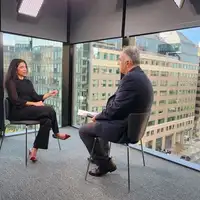
Eye for Iran host Mohamad Machine-Chian (right) and Bozorgmehr Sharafedin, Head of Digital News at Iran International, May 2026.
100%
Eye for Iran host Mohamad Machine-Chian (right) and Bozorgmehr Sharafedin, Head of Digital News at Iran International, May 2026.

"I don't think many of those countries can now justify the investment of huge data centers," Sharafedin lamented. "Both short-term and long-term, the regional countries will pay a heavy price."

Scenarios for 2027: A prolonged limbo

As the US shifts from "Operation Epic Fury" to "Project Freedom," a new diplomatic phase is emerging, but Dr. Nasseri remains skeptical of a quick fix. He outlined a base-case scenario where the market sees only a "gradual recovery" to about 60% of pre-war levels by late 2026, with the situation remaining largely flat well into 2027.

The fundamental issue, Nasseri argues, is the massive gap between Washington and Tehran’s expectations. "The same regime that has not agreed to terms over the last couple of years will not suddenly do so now," he said. While a potential Memorandum of Understanding (MOU) might provide temporary "happy headlines" to calm traders, the structural reality remains one of severe disruption.