IRGC calls general 'commander's advisor', Iran’s military says he has no role


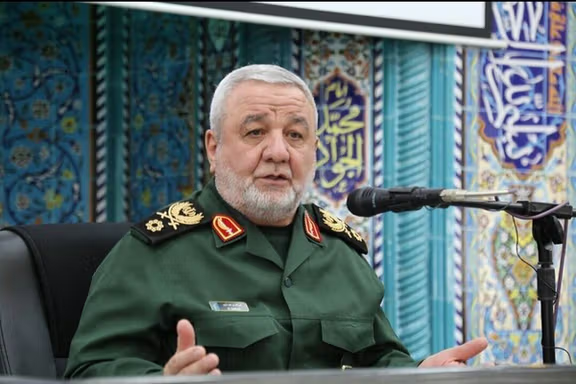
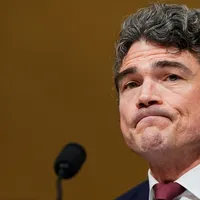
Iran’s Armed Forces General Staff said General Ebrahim Jabbari “has no responsibility in the IRGC,” contradicting an earlier report by IRGC-affiliated Fars News that described him as an adviser to the force’s chief commander.
In a statement, the military rejected comments attributed to Jabbari especially in a recent interview with Al Jazeera, saying, “The statements made by Ebrahim Jabbari lack credibility due to insufficient access to information and are denied."
"He currently holds no position in the IRGC and has been retired for some time.”
"The United States cannot gain control over the Strait of Hormuz," Jabbari told Al Jazeera, adding that "the warehouses are full of missiles, drones, and military equipment."
Jabbari has been appearing on Iran's state TV over the past few weeks, threatening the United States and Israel as well as Iran's Arab neighbors.


Iran’s Foreign Ministry spokesperson on Thursday described remarks by Saudi Arabia’s foreign minister at an Arab-Islamic meeting as “unfair, one-sided and contrary to a responsible approach” to regional developments.
Saudi Foreign Minister Faisal bin Farhan warned Thursday that Riyadh's restraint in the face of escalating Iranian attacks “is not unlimited,” adding that military action remains on the table.
He said the “little trust” rebuilt with Iran after the 2023 restoration of diplomatic ties “has been completely shattered,” warning that further attacks could leave “almost nothing” to salvage in the relationship.
Esmail Baghaei said in response that countries hosting US military infrastructure could bear responsibility for the ongoing attacks on Iran, warning that states that assist or facilitate such operations would be regarded as “accomplices” in actions against Iran.
A Reuters/Ipsos poll found strong backing for US President Donald Trump’s military campaign on Iran among Republicans, with 77% approving of the strikes, compared with 28% of independents and 6% of Democrats.
At the same time, 37% of Americans overall support the war while 59% oppose it, the survey showed.
The poll also found 65% believe Trump will order a large-scale ground war in Iran, but just 7% support that move, and 55% oppose deploying any ground troops.
Israeli Prime Minister Benjamin Netanyahu said there are “many signs” of the Iranian regime’s potential collapse, but stopped short of guaranteeing it.
Netanyahu said Israel is working to create conditions that could lead to such an outcome while acknowledging the regime may still survive.
“There are many indications of the collapse of the Iranian regime. Many,” Netanyahu said at a Thursday press conference. “I wish I could reveal all of them, but I can see they exist.”
“Can I promise right now that the regime will collapse? I cannot,” he added. “I can say that we are trying to create conditions for that to happen, but it may survive and it may not.”
“If it survives, it will be much weaker; there is no comparison,” he said, adding the regime would lose “the death industries it has built over decades” and many of its other capabilities.
He also warned that Iran would face harsher consequences if it attempted to rebuild.
A US F-35 fighter jet flying a combat mission over Iran made an emergency landing at a US airbase in the Middle East, the Pentagon said, with sources telling CNN they suspect the aircraft may have been hit by Iranian fire.
A US Central Command spokesperson confirmed the jet landed safely and the pilot was in “stable condition,” adding the incident remains under investigation.
CNN, citing two sources, reported the aircraft was potentially struck by Iranian fire, which could mark the first such incident since the war began on Feb. 28.
Iran’s Revolutionary Guard later claimed responsibility for downing an F-35, according to Reuters, but said “the fate of this fighter jet is unknown and is under investigation, and there is a high probability that it crashed.”
Iranian state media released a video that purportedly shows the targeting of the US aircraft.
Nowruz and the turning of the year have always carried, even in the happiest times, a blend of celebration and sorrow. Remembering the departed is part of welcoming the new year.
Among Iranians, Nowruz has long been tied to renewal and to the idea of the “triumph of good over evil.” Yet Iran’s turbulent history has often cast a shadow over the holiday, turning it into a moment marked by loss, war and unresolved grief.
This year carries all three.
Since 2022, a continuous national mourning has taken hold. The dead of the Woman, Life, Freedom movement—some known, many unnamed—have left their mark on the country’s rituals.
At Nowruz tables across Iran, mothers sit with clenched throats and tearful eyes, or stand beside the graves of their children.
Iran has seen such Nowruzes before. During the war with Iraq, the new year arrived under the sound of missiles falling on cities, as young men were sent to the front in waves. Celebration persisted, but it did so alongside fear and loss—often shaped by what many would later call the “ignorance and irresponsibility” that drove a generation to war.
The death of the young has long been among the deepest sorrows in Iranian culture.
The story of Siyâvash, the innocent prince killed unjustly, still carries the grief of mourning mothers. In the Shahnameh, his death comes on the eve of Nowruz. The holiday marks renewal, yet in Ferdowsi’s telling it is shadowed by war and sacrifice.
That grief echoes in one of the epic’s most enduring lines: “If death is justice, then what is injustice?”
Over time, mourning became ritual. The death of Siyâvash gave rise to Suvâshun ceremonies, observed for centuries in parts of greater Iran. The convergence of death and renewal came to symbolize a belief that justice, however delayed, would prevail.
Today, the Siyâvashes are many. Their images appear on walls, in homes and in the hands of protesters, carried like the banner of Kaveh the Blacksmith.
One custom, known as now‘id, marks the first Nowruz after a loss, when families visit the bereaved. Last year, at one such table, a young woman sat silently, her hair turned white by grief for her slain son. Then she broke the silence: “Was it not enough to kill him? What did you do to my child’s head?”
Her question lingers. So do many others like it.
Nowruz has long been intertwined with remembrance. In ancient belief, the days before the new year—Farvardegân—were a time when the spirits of the dead returned. Homes were cleaned and tables set not only for the living but for those who had passed. The bond between the two was renewed.
In recent years, many of the dead have been buried in unmarked graves, or in cemeteries where tombstones are repeatedly destroyed and rebuilt by grieving families. Flowers return, even when they are torn away.
And yet Nowruz endures.
Neither war nor repression, nor the hostility of those who reject Iran’s pre-Islamic traditions, has erased it. Each year, after the fires of Chaharshanbeh Suri are lit and the dead are honored, the new year arrives again.
As one line often recited at gravesides has it: “If we feared the sword, we would not dance in the gathering of lovers.”
Iranians celebrate Nowruz as they always have: with hope that the coming year may bring a more just life—one in which rights are equal, dignity is preserved and the state serves its people rather than stands above them.