Among Iranians, Nowruz has long been tied to renewal and to the idea of the “triumph of good over evil.” Yet Iran’s turbulent history has often cast a shadow over the holiday, turning it into a moment marked by loss, war and unresolved grief.
This year carries all three.
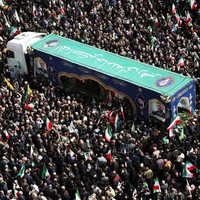
Since 2022, a continuous national mourning has taken hold. The dead of the Woman, Life, Freedom movement—some known, many unnamed—have left their mark on the country’s rituals.
At Nowruz tables across Iran, mothers sit with clenched throats and tearful eyes, or stand beside the graves of their children.
Iran has seen such Nowruzes before. During the war with Iraq, the new year arrived under the sound of missiles falling on cities, as young men were sent to the front in waves. Celebration persisted, but it did so alongside fear and loss—often shaped by what many would later call the “ignorance and irresponsibility” that drove a generation to war.
The death of the young has long been among the deepest sorrows in Iranian culture.
The story of Siyâvash, the innocent prince killed unjustly, still carries the grief of mourning mothers. In the Shahnameh, his death comes on the eve of Nowruz. The holiday marks renewal, yet in Ferdowsi’s telling it is shadowed by war and sacrifice.
That grief echoes in one of the epic’s most enduring lines: “If death is justice, then what is injustice?”
Over time, mourning became ritual. The death of Siyâvash gave rise to Suvâshun ceremonies, observed for centuries in parts of greater Iran. The convergence of death and renewal came to symbolize a belief that justice, however delayed, would prevail.
Today, the Siyâvashes are many. Their images appear on walls, in homes and in the hands of protesters, carried like the banner of Kaveh the Blacksmith.
One custom, known as now‘id, marks the first Nowruz after a loss, when families visit the bereaved. Last year, at one such table, a young woman sat silently, her hair turned white by grief for her slain son. Then she broke the silence: “Was it not enough to kill him? What did you do to my child’s head?”
Her question lingers. So do many others like it.
Nowruz has long been intertwined with remembrance. In ancient belief, the days before the new year—Farvardegân—were a time when the spirits of the dead returned. Homes were cleaned and tables set not only for the living but for those who had passed. The bond between the two was renewed.
In recent years, many of the dead have been buried in unmarked graves, or in cemeteries where tombstones are repeatedly destroyed and rebuilt by grieving families. Flowers return, even when they are torn away.
And yet Nowruz endures.
Neither war nor repression, nor the hostility of those who reject Iran’s pre-Islamic traditions, has erased it. Each year, after the fires of Chaharshanbeh Suri are lit and the dead are honored, the new year arrives again.
As one line often recited at gravesides has it: “If we feared the sword, we would not dance in the gathering of lovers.”
Iranians celebrate Nowruz as they always have: with hope that the coming year may bring a more just life—one in which rights are equal, dignity is preserved and the state serves its people rather than stands above them.