Trump was warned Iran could strike US allies - Reuters
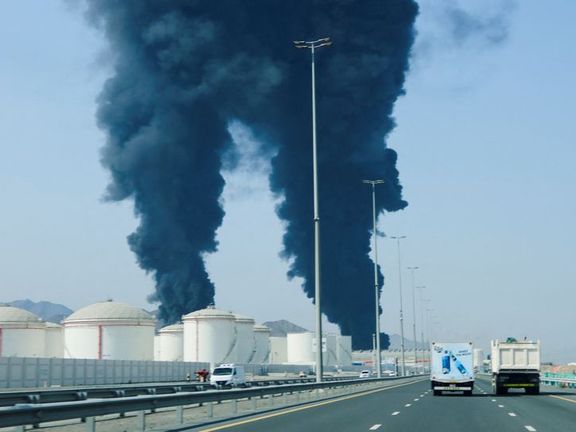
President Donald Trump was warned before launching strikes on Iran that Tehran could retaliate against US allies in the Persian Gulf, despite his claims that such attacks came as a surprise, Reuters reported citing one US official and two sources familiar with intelligence reports.
Pre-war intelligence assessments did not say retaliation was certain, but it was “on the list of potential outcomes,” one of the sources said, speaking on condition of anonymity.
Trump said twice on Monday that Iran’s strikes on Qatar, Saudi Arabia, the United Arab Emirates, Bahrain and Kuwait had been unexpected.
“They weren’t supposed to go after all these other countries in the Middle East,” he said. “Nobody expected that. We were shocked.”
The remarks appeared to contradict intelligence briefings received ahead of the operation, according to the sources.
Iran has imposed new restrictions on internet access, further limiting VPN connections and reportedly targeting Starlink users, leaving even fewer people able to access global networks.
Seventeen days after the outbreak of war, connectivity in the country has fallen to about one percent of normal levels, leaving most people unable to reach the global internet.
Some users initially managed limited access using specialized VPN configurations, but many say those options have largely stopped working since Sunday.
Asked in a CBS interview why he was able to conduct a Zoom call while ordinary citizens could not access the internet, Foreign Minister Abbas Araghchi said he had access because he is “the voice of Iranians” and must defend their rights.
The comment drew criticism from Iranians still able to briefly connect.
“People of Iran are not voiceless themselves, and this man is not their voice,” one user wrote. “Open the internet so you can hear the real voice of the people from inside the country.”
‘No picture, no voice’
Even among the few who can still connect, the internet is barely usable. Users say images and videos on social media often fail to load, and in many cases, core features of platforms have stopped functioning.
“Direct messages practically don’t open, and mentions disappear quickly if I try to answer them,” one user said. “Videos and voice messages are basically inaccessible because they consume too much data.”
Another described the experience in stark terms: “The internet feels more like a dying breath than a means of communication these days,” adding that data-limited connections have become extremely slow and prices have sharply increased.
The internet monitoring group NetBlocks said Monday that disruptions to telecommunications infrastructure were further reducing VPN availability and sending some whitelisted users and services offline, it said.
The restrictions appear to be affecting domestic networks as well. Some users say even Iranian websites are difficult to access, while customers of certain banks have temporarily lost access to their accounts.
Reports of disruptions have also surfaced in mobile banking apps, payment cards and Iranian messaging platforms such as Bale, suggesting that parts of Iran’s internal network are also experiencing instability.
Experts say the cause of the broader disruptions remains unclear.
Starlink crackdown
At the same time, warnings have spread widely online urging owners of Starlink satellite internet devices to turn them off.
According to posts circulating on social media, Iranian security forces may be actively searching for Starlink kits and detaining users, with some claims of arrests in cities including Tehran and Kermanshah.
The warnings say patrol vehicles equipped with signal scanners are being used to detect radio emissions from Starlink equipment and pinpoint their location.
A Starlink user told Iran International he has taken multiple precautions to avoid detection but said the risk remains constant.
“I’m afraid all the time that a neighbor might report it,” he said. “They might accuse Starlink users of espionage and sentence them to heavy punishment as a warning to others.”
He added that the restrictions have forced ordinary users to learn complex technical workarounds simply to stay connected.
Not everyone believes the warnings about Starlink detection are accurate.
Some users say the reports may be part of a psychological campaign to frighten people into turning off their devices, noting that locating satellite terminals at scale would require capabilities authorities may not widely possess.
But amid the uncertainty, many say they are preparing for the possibility that their last remaining connection to the outside world could disappear entirely.
Iran’s navy commander Shahram Irani warned that Tehran’s enemies would face retaliation for the killing of dozens of sailors after the IRIS Dena was sunk in the Indian Ocean off Sri Lanka.
“We will not forget the enemy’s crime, and we will exact retribution for the blood of our martyrs,” Irani was quoted as saying by Iran’s English-language broadcaster Press TV.
“The enemy should know that we will punish it with deadly strikes from where it least expects,” he said.
The IRIS Dena was sunk on March 4 by a US submarine torpedo off the coast of Galle while sailing in international waters after a joint naval exercise with India, killing at least 87 sailors.
Thirty-two were rescued and several others remain missing.
US intelligence assessments indicate Iran’s leadership is consolidating power and is likely to remain intact despite the US-Israeli military campaign, according to people familiar with the findings cited by The Washington Post.
The report said analysts have seen no evidence of large-scale defections or popular uprisings since the war began.
Iran’s leadership may even emerge emboldened, believing it has withstood the campaign and maintained control at home, according to the assessments.
The report comes as US officials continue to review the trajectory of the war and its consequences, amid broader skepticism within intelligence circles that military pressure alone would lead to regime collapse.
An investigation by Amnesty International has concluded that a deadly strike on a school in southern Iran last month may have violated international humanitarian law, adding to mounting scrutiny of one of the war’s deadliest incidents.
The rights group said the February 28 attack on a girls’ elementary school in Minab killed scores of civilians, including many children, and raised concerns that US forces failed to take adequate precautions to avoid civilian harm.
“This harrowing attack on a school… is a sickening illustration of the catastrophic… price civilians are paying,” a senior Amnesty official said, adding that the strike appeared to be “strictly prohibited under international humanitarian law.”
Read the full story here.
An investigation by Amnesty International has concluded that a deadly strike on a school in southern Iran last month may have violated international humanitarian law, adding to mounting scrutiny of one of the war’s deadliest incidents.
The rights group said the February 28 attack on a girls’ elementary school in Minab killed scores of civilians, including many children, and raised concerns that US forces failed to take adequate precautions to avoid civilian harm.
“This harrowing attack on a school… is a sickening illustration of the catastrophic… price civilians are paying,” a senior Amnesty official said, adding that the strike appeared to be “strictly prohibited under international humanitarian law.”
The attack took place on the first day of the US-Israeli campaign against Iran, when a missile struck the Shajareh Tayyebeh school in the southern city of Minab. The blast destroyed much of the building and killed scores inside, in what has become the deadliest single civilian incident of the war.
Amnesty called for an independent and transparent investigation into the strike.
Analyses by multiple media organizations, including the The New York Times, have pointed to evidence suggesting the strike was likely carried out by US forces, though a final determination has not been publicly confirmed.
US officials have said they are investigating the incident. Defense Secretary Pete Hegseth said the military was reviewing the strike and insisted that “we… never target civilian targets.”
President Donald Trump has denied that the United States was responsible, suggesting instead that Iran may have been behind the attack.
A report by Reuters cited officials as saying the United States was examining the circumstances of the strike as part of a broader review of civilian harm during the campaign, amid growing international pressure for accountability.
Human rights groups and United Nations officials have warned that the attack underscores the widening civilian toll of the conflict and have called for a prompt, impartial investigation into whether the laws of war were violated.