According to senior executives at Chinese state-owned gas firms briefed by government officials, Beijing had urged Iranian counterparts not to target oil and liquefied natural gas tankers transiting the narrow waterway and to refrain from striking key export hubs such as Qatar.
China buys the vast majority of Iran’s oil, providing Tehran with a crucial economic lifeline. But the world’s largest energy importer depends more broadly on Persian Gulf supplies, with both crude and LNG cargoes passing through Hormuz.
Qatar accounts for roughly a fifth of global LNG supply and provides about 30% of China’s LNG imports, the executives said. The country is the world’s second-largest LNG producer after the United States.
Asian buyers take more than 80% of Qatar’s LNG shipments, according to data from analytics firm Kpler.
Reuters reported on Tuesday that India began rationing natural gas as countries across Asia moved to secure alternative supplies after conflict in the Middle East disrupted shipping and halted Qatari output.
Officials and executives in Japan, Taiwan, Bangladesh and Pakistan said they did not expect an immediate impact because some cargoes due this month had already arrived, but would diversify imports and buy spot LNG if the war drags on.
The Turkish government also plans to implement a fuel scheme to reduce the impact of rising global oil prices on inflation, according to Reuters on Tuesday.
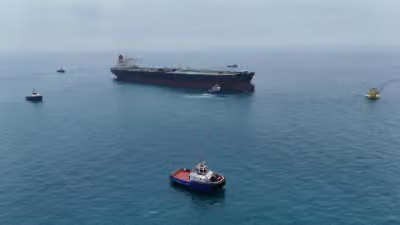
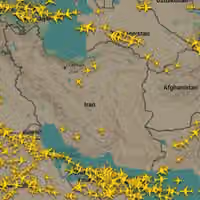
Tanker traffic through the strait has largely stalled since US and Israeli strikes over the weekend and Iran’s subsequent missile attacks across the region.
According to US Central Command, the Strait of Hormuz is not closed despite statements by Iranian officials.
On Monday, Qatar halted production at Ras Laffan, the world’s largest LNG export facility, after an Iranian drone attack, marking the first full shutdown in nearly three decades of operations.
Chinese energy importers have been told Beijing is seeking to ensure vessels continue moving through Hormuz, the executives told Bloomberg.
Publicly, China has made limited comment. Foreign Minister Wang Yi told his Iranian counterpart Abbas Araghchi on Monday that while Beijing supports efforts to safeguard national security, Tehran should heed the “reasonable concerns” of its neighbors, according to a Chinese Foreign Ministry statement.
At a regular briefing, a ministry spokesperson said China was “deeply concerned” about the widening conflict.
Analysts say the immediate economic impact on China may be manageable, though higher oil prices could add to inflationary pressures.