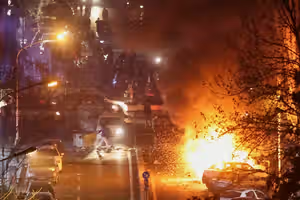
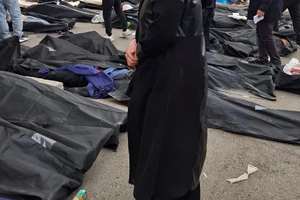
The report, based on information from a network of medical professionals across Iran, said the injuries included widespread gunshot wounds and severe eye trauma, with hundreds to thousands suffering permanent blindness.
Iran’s Supreme Leader Ali Khamenei acknowledged for the first time on Saturday that “several thousands” had been killed since protests began three weeks ago, blaming the violence on protesters and foreign enemies.
The doctors’ report said most deaths occurred over two days during what it described as the most violent phase of the crackdown in the Islamic Republic’s 47-year history, with most victims believed to be under 30.
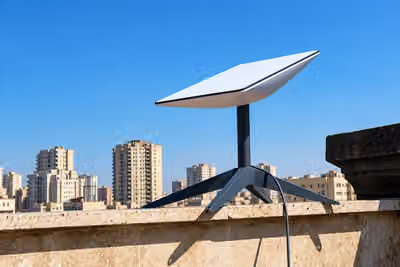
Professor Amir Parasta, an Iranian-German eye surgeon and medical director of Munich MED, told The Sunday Times the data was gathered through doctors communicating via smuggled Starlink satellite terminals after internet access was cut on January 8.
“This time they are using military-grade weapons,” Parasta was quoted as saying, adding that doctors were seeing gunshot and shrapnel wounds to the head, neck and chest. He said at least 700 to 1,000 people had lost an eye.
Figures compiled from eight major eye hospitals and 16 emergency departments cited in the report put the number of injured between 330,000 and 360,000. One Tehran eye hospital, Noor Clinic, documented around 7,000 eye injuries alone, according to the report.
An ophthalmologist quoted by The Sunday Times said the volume of pellet-related eye injuries had overwhelmed hospitals. Another witness cited said more than 800 eye removals were performed in a single night in Tehran.
Medical sources said some patients died due to blood shortages, with one surgeon quoted as saying security forces had at times prevented blood transfusions.
Witnesses who spoke to The Sunday Times described security forces firing live ammunition at protesters, including shots aimed at heads, and deploying snipers on rooftops. Accounts also described the use of Kalashnikov rifles and machineguns mounted on vehicles.
The report said many wounded protesters avoided hospitals out of fear of arrest, while some injured patients were allegedly taken from operating theatres by security forces.
Several witnesses said bodies were removed from streets by security forces and transferred to other cities, while families were pressured to pay large sums to retrieve remains.
Iranian authorities have repeatedly blamed the unrest on foreign powers, including the United States and Israel. In his address, Khamenei described protesters as “foot-soldiers of the United States” and claimed they were armed with weapons imported from abroad.
The protests began in late December over economic grievances and rapidly spread nationwide, intensifying after January 8 following a call to demonstrate by Reza Pahlavi, son of Iran’s late shah.
Despite the scale of reported casualties, the full extent of the violence remains unclear due to the ongoing communications blackout, now in its tenth day, and restrictions on independent reporting.
Human rights activists and medical professionals cited in the report warned that the true toll could be higher, saying many deaths and injuries have gone unrecorded amid fear, secrecy and the continued presence of security forces across Iranian cities.