• العربية
  • فارسی
Brand
  • Iran Insight
  • Politics
  • Economy
  • Analysis
  • Special Report
  • Opinion
  • Podcast
  • Iran Insight
  • Politics
  • Economy
  • Analysis
  • Special Report
  • Opinion
  • Podcast
  • Theme
  • Language
    • العربية
    • فارسی
  • Iran Insight
  • Politics
  • Economy
  • Analysis
  • Special Report
  • Opinion
  • Podcast
All rights reserved for Volant Media UK Limited
volant media logo

Israel rigged centrifuge technology with explosives, Iran alleges

Jan 14, 2025, 21:16 GMT+0Updated: 11:52 GMT+0
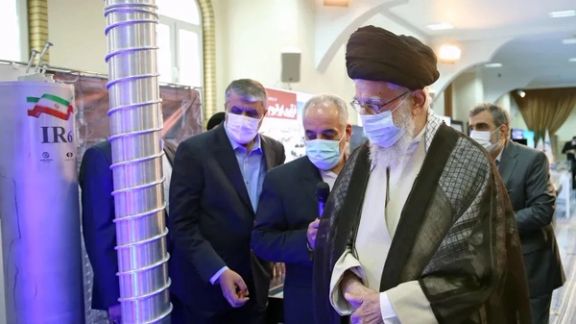
Iran's Supreme Leader Ali Khamenei visiting Iran's advanced centrifuges

Israel planted explosives in centrifuge technology Iran bought for its nuclear program, veteran diplomat and vice president Mohammad Javad Zarif said, alleging an apparently unknown attempted attack by the Islamic Republic's arch-enemy.

Providing few details, Iran's vice president for strategic affairs said in a preview of an online interview that sanctions on Iran and its allies deepened security challenges and made them vulnerable to Israeli booby traps.

“Our colleagues had purchased a centrifuge platform for the Atomic Energy Organization, and it was discovered that explosives had been embedded inside it, which they managed to detect," he told the Hozour (Presence) online program.

It was not clear when the alleged incident occurred.

A power failure at Iran’s Natanz uranium enrichment site in April 2021 apparently caused by an explosion was decried by Iran as an act of "nuclear terrorism".

The murky incident was neither fully explained by Iran nor claimed by Israel, which has repeatedly carried out cyberattacks and assassinations aiming at Tehran's nuclear program.

Iran says it is pursuing peaceful nuclear technology, while Israel and the United States believe Iran may ultimately seek a bomb.

Zarif detailed how sanctions compel Iran and its allies to rely on intermediaries, creating vulnerabilities that have allegedly been exploited by Israel.

“Instead of being able to order equipment directly from the manufacturer, sanctions force you to rely on multiple intermediaries for such purchases," Zarif said.

"If the Zionist regime infiltrates even one of the intermediaries, they can do anything and embed anything they want, which is exactly what happened.”

A series of coordinated explosions in Hezbollah's communication devices in September 2024 arose from Israel's diligent infiltration of those suppliers, he added.

“The issue with the pagers in Lebanon turned out to be a multi-year process, meticulously orchestrated by the Zionists."

The September incidents in Lebanon involved the detonation of around 5,000 pagers and 1,000 walkie-talkies, resulting in at least 32 deaths and more than 3,000 injuries.

Though Israel has not taken credit for the attacks, Israeli intelligence operatives appear to have covertly modified the devices, embedding explosives during a decade-long operation involving fake companies and deceptive distribution tactics.

Iran's President Masoud Pezeshkian visits one of the victims injured by pager explosions across Lebanon, in a hospital in Tehran, Iran, September 20, 2024.
100%
Iran's President Masoud Pezeshkian visits one of the victims injured by pager explosions across Lebanon, in a hospital in Tehran, Iran, September 20, 2024.

In response, Iran's Islamic Revolutionary Guard Corps (IRGC) suspended communication devices, conducting inspections to prevent recurrence. The Iranian Civil Aviation Organization also banned electronic communication devices, barring mobile phones, on commercial flights.

"These are, in fact, some of the damages caused by sanctions, which have made circumventing them a necessity for us," Zarif said. "In addition to financial losses, there have also been significant security risks.”

Most Viewed

Iran negotiators ordered to return after internal rift over Islamabad talks
1
EXCLUSIVE

Iran negotiators ordered to return after internal rift over Islamabad talks

2
INSIGHT

What the US naval blockade would mean for Iran’s economy

3
EXCLUSIVE

Iran’s central bank warns economy may take 12 years to rebuild after war

4
INSIGHT

Iran's digital economy battered by prolonged blackout

5
PODCAST

Iran-US ceasefire nudges sidelined Arab states toward Israel, expert says

Banner
Banner

Spotlight

  • War damage amounts to $3,000 per Iranian, with blockade set to add to losses
    INSIGHT

    War damage amounts to $3,000 per Iranian, with blockade set to add to losses

  • Why the $100 billion Hormuz toll revenue is a myth
    ANALYSIS

    Why the $100 billion Hormuz toll revenue is a myth

  • US blockade targets Iran oil boom amid regional disruption
    ANALYSIS

    US blockade targets Iran oil boom amid regional disruption

  • Iran's digital economy battered by prolonged blackout
    INSIGHT

    Iran's digital economy battered by prolonged blackout

  • Iran-US ceasefire nudges sidelined Arab states toward Israel, expert says
    PODCAST

    Iran-US ceasefire nudges sidelined Arab states toward Israel, expert says

  • What the US naval blockade would mean for Iran’s economy
    INSIGHT

    What the US naval blockade would mean for Iran’s economy

•
•
•

More Stories

UN experts, US urge Iran to overturn activist's death sentence

Jan 14, 2025, 18:39 GMT+0

Independent human rights experts working with the United Nations and a senior American official on Tuesday urged Iranian authorities to revoke a death sentence issued against Kurdish women's rights activist and social worker Pakhshan Azizi.

The UN experts said Iran should void Azizi's death sentence and investigate allegations of torture and unfair trial practices in her case, adding that they are in contact with the government on their concerns.

“Ms. Azizi’s prosecution reflects the heightened persecution that minority women activists face in Iran and the continued intention to punish and silence them by creating a climate of fear,” they added.

Azizi, who was arrested by the Iranian intelligence service in August 2023 in Tehran, was held in solitary confinement for five months at Evin Prison.

In July 2024, Azizi was sentenced to death on charges of "armed rebellion against the state" and "membership in opposition groups," alongside a four-year prison sentence for alleged membership in the Kurdistan Free Life Party (PJAK) - charges she denies.

Her lawyer announced last week that the Supreme Court upheld the death sentence, dismissing an appeal that highlighted multiple investigative flaws and the absence of credible evidence.

"Accusing Pakhshan Azizi of criminal actions such as belonging to an insurgent group not only lacks any legal or evidentiary basis in her case, but even if she had belonged to such a group, she was arrested unarmed, had never used weapons, and even when she was in the Kurdish region of Syria, she was at risk of ISIS attacks," Azizi's lawyer, Amir Raisian, told Tehran-based Shargh newspaper in an interview.

"She had no conflict with Iranian forces in Syria, Iraq or Iran, which demonstrates that this sentence contradicts the judicial policies claimed to be followed."

The experts also said that Azizi's arrest and subsequent sentencing appeared to be directly linked to her legitimate work as a social worker, including her support for refugees in Iraq and Syria.

In a letter from prison in July last year, Azizi described instances of torture during her interrogations. The UN experts expressed alarm over these reports, saying she faced psychological and physical abuse amounting to torture during her solitary confinement as part of authorities' attempt to force a confession.

Additionally, several members of her family were temporarily detained and faced national security charges, moves the experts said aimed to force a confession.

“The use of torture to extract confessions and the denial of fair trial rights render the death sentence against Ms. Azizi arbitrary in nature,” they said.

The acting US Special Envoy for Iran Abram Paley also weighed in, calling for the immediate overturning of Azizi's death sentence.

"The regime must stop targeting Iran’s Kurdish minorities and using capital punishment to silence peaceful opposition," Paley said in a post on X.

Oil shipping rates surge after US blacklisted Russia, Iran ‘dark fleet’

Jan 14, 2025, 18:00 GMT+0
•
Dalga Khatinoglu

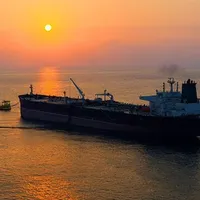
The cost of shipping oil from the Middle East to China surged by over a third in the wake of new US sanctions targeting 183 tankers carrying Russian and Iranian oil on Friday, according to a Reuters report.

Freight rates for very large crude carrier (VLCC) tankers capable of carrying 2 million barrels of oil on the route hit $37,800, marking a 39% rise compared to last Friday.

The increase reflects a determination by China, the world's top oil importer, to avoid sanctioned tankers and buy up oil from Arab exporters unburdened by sanctions.

The US Treasury Department on Jan. 10 sanctioned 183 tankers transporting Russian oil to China and India.

At least eight were also involved in carrying sanctioned Iranian oil.

Last year, the US sanctioned 139 tankers carrying Iranian oil and more than 100 tankers were also blacklisted in the previous years. However, nearly 500 tankers in total are involved in smuggling Iranian oil, according to advocacy group United Against Nuclear Iran.

Around half of the "dark fleet" carrying Iranian oil has been added to the US blacklist in recent months, senior analyst at commodity intelligence firm Kpler Homayoun Falakshahi told Iran International, presenting Iran with logistical challenges in transporting oil to its top customer by far, China.

The new sanctions targeting tankers are likely more problematic for Iran than for Russia. Russia is permitted under US and EU sanctions to export oil below the $60 price cap and can even insure these exports through Western companies and use European tankers to deliver oil to China and India.

US sanctions allow no such exception for Iran, which is prohibited from selling oil at any price.

Still, the Shandong Port Group - operator of the largest oil terminals receiving Iranian, Russian and Venezuelan oil - banned the entry of US-sanctioned tankers last week.

Iran's daily oil exports to China have fallen by about half a million barrels over the past three months compared to previous months, reaching 1.3 million barrels, Kpler’s data shows.

Just over a third of around 669 tankers transporting Russian, Venezuelan and Iranian oil are subject to some form of Western sanctions, Lloyd’s List Intelligence reported.

Most of these aging tankers, managed by non-Western companies, operate clandestinely by turning off their automatic identification systems (AIS) to smuggle oil to markets in India and China. Many of these vessels are linked to Iranian oil smuggling operations.

During last year, Shandong ports received 1.74 million barrels per day of oil from Iran, Russia, and Venezuela, accounting for nearly a fifth of China’s total oil imports, according to Kpler.

The total volume of Iranian oil unloaded at all Chinese ports last year was around 1.46 million barrels per day, it added.

Chinese refineries have resorted to more buying from Europe, Africa and Arab states in response to the sanctions, Reuters reported citing oil trade sources.

The price of the OPEC oil basket, which largely reflects oil from Persian Gulf’s Arabic states, has surged by $4 in recent days to about $82, signaling rising demand for their oil in Asian markets.
Iran is at its weakest in decades, Biden says

Jan 14, 2025, 15:16 GMT+0

Iran has been reduced to its weakest point in decades, President Joe Biden said in a valedictory foreign policy speech on Monday, citing Tehran's dire economy, knocked-out air defenses and loss of Syria as an ally.

"Iran's air defenses are in shambles. Their main proxy, Hezbollah, is badly wounded, and as we tested Iran's willingness to revive the nuclear deal, we kept the pressure with sanctions. Now Iran's economy is in desperate straits," Biden said in a White House speech to applause.

"All told, Iran is weaker than it's been in decades," he added, also citing Washington's and other allies' assistance of Israel in shooting down drones and ballistic missiles the Islamic Republic launched in two direct attacks last year.

Biden has been repeatedly criticized by President-elect Trump, who is due to return to the White House next week, as being too soft on Iran.

In 2023, the Biden administration unfroze $6 billion in Iranian funds to bank accounts in Qatar in exchange for the release of five US-Iranian prisoners held by Tehran. That move was lambasted by Republican critics as indulging Iranian hostage diplomacy.

Amid bipartisan pressure following the Oct. 7 attack by Iran-backed Hamas against Israel, the Biden administration told lawmakers it would effectively refreeze those funds for the foreseeable future.

"You want more evidence we seriously weakened Iran and Russia? Let's take a look at Syria. President Assad was both countries' closest ally in the Middle East. Neither could keep him in power. Quite frankly, neither really tried very hard," Biden added.

"Now I cannot claim credit for every factor that led to Iran and Russia growing weaker in the past four years," Biden added. "They did plenty of damage all by themselves, (and) Israel did plenty of damage to Iran and its proxies, but there's no question our actions contributed significantly," he said without elaborating.

Hawkish Israeli Prime Minister Benjamin Netanyahu has said not heeding US warnings to ease up attacks on Iran's armed allies help put them on the backfoot.

Biden had counseled Netanyahu not to retaliate strongly after the Islamic Republic's first ever direct attack on Israel in April - advice he largely heeded. But the White House blessed a sharp response to another salvo in October in which Israel pounded military targets and destroyed Tehran's Russian-provided anti-aircraft missiles.

"Now major authoritarian states are aligning more closely - Iran, Russia, China, North Korea - but that's more out of weakness than out of strength," Biden said.

Data from oil tanker tracking firms shows that during Biden's presidency, Iran exported approximately 2 billion barrels of oil—a significant increase compared to the volumes recorded between 2019 and 2021.

Trump has pledged to crack down on the trade to deprive Iran of revenue for foreign military activities, saying he will pressure China - Iran's top customer - to stop buying.

Strategic pact with Russia to define relations for next 20 years - Iranian envoy

Jan 14, 2025, 13:37 GMT+0

A comprehensive strategic partnership treaty will guide the relationship between Russia and Iran for the next two decades, according to a TASS news agency report on Tuesday, citing Iran's ambassador to Moscow.

Russian Foreign Minister Sergei Lavrov said the partnership deal with Iran will not be directed against any third country.

"This agreement, like our agreement with the DPRK, is not directed against any country and is constructive in nature, aimed at strengthening the capabilities of Russia and Iran in various parts of the world, the ability to better develop the economy, resolve social issues and ensure reliable defense capability," Russia's RIA Novosti quoted Lavrov as saying at a press conference on Tuesday.

Earlier, the Kremlin announced that Russian President Vladimir Putin is scheduled to meet with Iranian President Masoud Pezeshkian in Russia on January 17.

The signing of the long-anticipated agreement is expected to take place following their discussions.

Pezeshkian tells NBC Iran is ready for US, EU talks

Jan 14, 2025, 13:13 GMT+0

Iran's president told NBC News that Tehran is ready for talks with the United States and European Union, emphasizing that Iran is committed to peace in a dovish message likely aimed at the incoming US administration.

"We are ready for dialogue; we accept an equal conversation that considers our dignity and wisdom, and we will not submit to force in any way," Masoud Pezeshkian told NBC in an interview in Tehran.

His official website framed the remarks as referring to the United States and European Union.

"The Islamic Republic of Iran is committed to peace and de-escalation in the region and globally, condemns the Zionist regime's war-mongering, aggression, and genocide, and stands ready for honorable and equal negotiations," he added.

The interview was broadcast on the American television network on Wednesday in spite of the fact the two nations have no diplomatic ties and Iran's Supreme Leader has spoken out against negotiating with the US.

Pezeshkian has consistently advocated for regional and global peace, as the nation's armed allies across the region face increasing challenges.

“We desire friendly relations with the countries of the region and the world, and we are striving to establish peace and security both inside and outside the country,” he said last month during a visit to North Khorasan province.

Pezeshkian made similar remarks in September, accusing Israel of provoking an all-out war as the Jewish state was in the midst of a series of airstrikes targeting Iran's largest military ally, Hezbollah in Lebanon, alongside the war in Gaza against Iran-backed Hamas.

"We want to live in peace; we don't want war," Pezeshkian told Reuters. "It is Israel that seeks to create this all-out conflict."

Iran's Supreme Leader Ali Khamenei said in a speech last week that advocates of negotiating with the United States are "intimidated by the enemy", the two countries not having diplomatic ties since 1980.

He urged officials of the Islamic Republic to disregard "the unreasonable demands of Americans" when addressing key issues, including the hijab, inflation, and currency.

Responding to the question, "Why do we negotiate with Europeans but not engage with the United States?" Khamenei said, "America's enmity toward Iran and the Revolution is deeply rooted and relentless."

US President-elect Donald Trump is set to officially assume office as President of the United States in less than a week, on January 20.

During his first term, Trump implemented a series of measures aimed at weakening Iran’s economy and curbing its regional influence, notably its nuclear program. He withdrew the United States from the nuclear deal with Tehran but did not pursue negotiations that could lead to a new agreement.

In a clear signal of the incoming administration’s intentions, Trump’s newly appointed senior adviser on the Middle East, Massad Boulos, said that President-elect Donald Trump plans to revive his maximum pressure strategy against Iran, further emphasizing the goal of enforcing Iran’s isolation.

On Monday, The Economist described Iran as "vulnerable to a Trumpian all-out economic assault." Similarly, The Spectator wrote, "Trump’s presidency could spell the end of Iran’s regime."