• العربية
  • فارسی
Brand
  • Iran Insight
  • Politics
  • Economy
  • Analysis
  • Special Report
  • Opinion
  • Podcast
  • Iran Insight
  • Politics
  • Economy
  • Analysis
  • Special Report
  • Opinion
  • Podcast
  • Theme
  • Language
    • العربية
    • فارسی
  • Iran Insight
  • Politics
  • Economy
  • Analysis
  • Special Report
  • Opinion
  • Podcast
All rights reserved for Volant Media UK Limited
volant media logo
ANALYSIS

Iran signals preparation for potential unrest

Mardo Soghom
Mardo Soghom

Iran International

Dec 24, 2024, 10:17 GMT+0Updated: 12:00 GMT+0
A scene of protests against gasoline price hikes in Tehran in 2019

Iran's energy-rich government is bracing for potential unrest amid rolling blackouts and rising gasoline prices, with judicial, security and intelligence services briefed to be ready for a response.
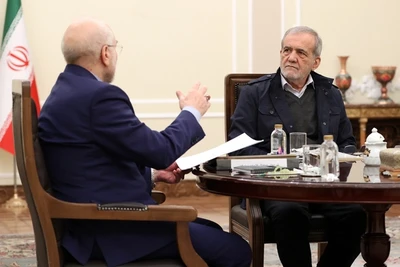

On Monday, the head of Iran’s judiciary instructed the Attorney General and provincial prosecutors to coordinate with intelligence, security, and law enforcement agencies to prevent unrest, sensing widespread public dissatisfaction over power and gas outages.

Speaking during a meeting of the Supreme Judicial Council, Gholam-Hossein Mohseni Ejei stated, “The Attorney General and prosecutors across the country, in direct cooperation with the intelligence, security, and law enforcement agencies, should take all appropriate measures and arrangements to stabilize and strengthen the security of the people and citizens, and, as in the past, and even with greater firmness, take the relevant measures so that the enemy's conspiracy to create insecurity…is neutralized."

Ejei, widely recognized as one of Iran’s most prominent human rights violators, warned President Masoud Pezeshkian's administration that the recent wave of nationwide shutdowns caused by air pollution and the government’s failure to meet energy demands could spell unrest. People are struggling to heat their homes in the bitter cold while the cost of living is soaring amid the worst economic recession in the Islamic Republic's history.

The government is bracing itself for action reminiscent of the 2019 and 2022 protests in which hundreds of Iranians were killed by security forces and tens of thousands were arrested.

Facing a 30% shortfall in natural gas supplies from its Persian Gulf fields, the Iranian government has turned to burning the highly polluting heavy oil mazut, shrouding Tehran and other cities in dense smog.

Years of under-investment in the energy sector, exasperated by technology sanctions by the West, has pushed Iran into a downward spiral in natural gas production.

Gas pressure is falling in its main production field in the Persian Gulf that it shares with Qatar. Only the largest Western oil companies have the technological capability to remedy the situation.

The Pezeshkian government has limited options to address the crisis, apart from a complete overhaul of the country’s foreign policy and opening its economy to global engagement.

The latest wave of economic and public sector shutdowns, which began on December 9, has led to widespread closures of schools, universities, and government offices across many provinces.

The electricity and fuel crisis, combined with a sharp decline in the national currency’s value since September, has fueled an increasingly volatile public mood.

Iranians are facing daily price hikes while also witnessing a series of regional setbacks for the government. The most unexpected blow was the rapid overthrow of President Bashar al-Assad, which forced Iranian forces to retreat from Syria, reportedly with Russian assistance.

Recent statements saying that the government is in touch with Syria's new ruling parties reflects possible concern about the perception of its diminishing authority and credibility among the population, both following the debacle in Syria and the deteriorating economic conditions at home.

On Sunday, Supreme Leader Ali Khamenei delivered a speech warning that those within Iran who align themselves with foreign powers, particularly the United States, would face severe consequences.

During the 2022 protests, triggered by the death in police custody of Mahsa Amini, arrested for not wearing her hijab properly, Khamenei blamed the US and foreign powers of having stoked the fires of protests.

"The fools smell the scent of kebab," Khamenei said on Sunday, using a metaphor to describe what he sees as misguided ambitions from those seeking to overthrow the Islamic Republic. "Anyone inside the country who chooses to serve the Americans, the Iranian people will trample them underfoot."

Most Viewed

Ideology may be fading in Iran, but not in Kashmir's ‘Mini Iran'
1
INSIGHT

Ideology may be fading in Iran, but not in Kashmir's ‘Mini Iran'

2
INSIGHT

Hardliners push Hormuz ‘red line’ as US blockade tests Iran’s leverage

3
VOICES FROM IRAN

Hope and anger in Iran as fragile ceasefire persists

4

Iran International says it won’t be silenced after London arson attack

5

US sanctions oil network tied to Iranian tycoon Shamkhani

Banner
Banner

Spotlight

  • Hardliners push Hormuz ‘red line’ as US blockade tests Iran’s leverage
    INSIGHT

    Hardliners push Hormuz ‘red line’ as US blockade tests Iran’s leverage

  • Ideology may be fading in Iran, but not in Kashmir's ‘Mini Iran'
    INSIGHT

    Ideology may be fading in Iran, but not in Kashmir's ‘Mini Iran'

  • War damage amounts to $3,000 per Iranian, with blockade set to add to losses
    INSIGHT

    War damage amounts to $3,000 per Iranian, with blockade set to add to losses

  • Why the $100 billion Hormuz toll revenue is a myth
    ANALYSIS

    Why the $100 billion Hormuz toll revenue is a myth

  • US blockade targets Iran oil boom amid regional disruption
    ANALYSIS

    US blockade targets Iran oil boom amid regional disruption

  • Iran's digital economy battered by prolonged blackout
    INSIGHT

    Iran's digital economy battered by prolonged blackout

•
•
•

More Stories

Q&A: Who are Iran's ‘eulogists’ and what is their role in the Islamic Republic?

Dec 24, 2024, 09:51 GMT+0
•
Maryam Sinaiee

Iran has witnessed the rapid growth of a group known as ‘eulogists’ during the Supreme Leader Ali Khamenei’s three decades of leadership, playing a very prominent role not only in religious ceremonies, but also in the country's political sphere.

Khamenei has become a huge patron of the country's eulogists, inviting them to perform at ceremonies he holds at his residence for religious occasions such as commemoration ceremonies to mark the deaths of Shia saints. His predecessor, Ruhollah Khomeini who founded the Islamic Republic only used the services of clerics at such events.

Khamenei received a large group of eulogists who performed at his residence on Sunday. In his speech to the group, he spoke of the fall of Syrian President Bashar al-Assad and denied that Iran has proxy forces in the region, and said the eulogists were artists who “make jihad with words”.

"Eulogy is a real media tool ... for elucidation [of the truth],” he said.

Q. Are ‘eulogists’ clergymen?

Most ‘eulogists of the Prophet’s household’ (maddah-e ahl-e beyt) are laymen with no seminary training or place in the clerical hierarchy.

Q. What role do eulogists play in religious ceremonies?

Eulogists recite and sing verses in praise of the Prophet Muhammed and his household, particularly at ceremonies such as Ashura to mourn Shia Imams on the anniversary of their death. Professional eulogists have found a much more prominent role than clerics in these ceremonies in the past three decades.

Q. How many eulogists are there in Iran now?

Over 100,000 professional and amateur eulogists perform in Ashura and other religious ceremonies across Iran. However, there are no official figures on the number of professional eulogists who are members of large and small professional associations such as Khaneh-ye Maddahan (Eulogists' House).

Q. How do eulogists earn their living?

Professional eulogists earn their living mainly by performing at ceremonies for fixed fees alongside businesses they may run. Many others who may be considered amateurs have ordinary jobs or businesses and perform for free or a small ‘gift’ from the organizers of such events.

Some eulogists such as Mansour Arzi and Mahmoud Karimi, two of Khamenei’s favorites, have gained celebrity status in the past three decades. Iranian media have on many occasions alleged that ‘celebrity eulogists’ only attend ceremonies in return for very hefty fees.

In a recent online interview, Hamidreza Alimi, a eulogist who says earns his living by selling household appliances, claimed that some of his peers demand as much as two billion rials for a few hours of performance. He also alleged that these eulogists ask for cash payments to avoid paying taxes on their incomes.

Q. What benefits do eulogists receive from the government?

In 2015, Supreme Leader Ali Khamenei ordered the establishment of a foundation to provide government welfare services including health insurance to professional eulogists.

The foundation, named after Dibil bin Ali al-Khuzai, a seventh-century Shia poet, does not have a separate budget. However, it receives huge donations from various government and state bodies such as the Islamic Propaganda Organization and municipalities for “cultural activities”.

Professional eulogists also enjoy numerous perks from government and state bodies including priority in the allocation of housing and loans.

Q. What is the relationship between eulogists and political groups?

Most ‘celebrity eulogists’ have strong ties with ultra-hardline political parties and groups and often use religious ceremonies to campaign for them during parliamentary and presidential elections.

In their speeches and performances, these eulogists freely attack political rivals. Some are known for slandering top officials of the rival camp with immunity.

Mansour Arzi, a veteran eulogist known for his notorious attacks on several presidents including Mohammad Khatami, Mahmoud Ahmadinejad when he fell from Khamenei’s favor, and Hassan Rouhani, published his own list of candidates in the parliamentary elections of February 2024.

Arzi officially supported Saeed Jalili in the snap presidential elections of July and on several occasions publicly attacked Masoud Pezeshkian for criticizing the harsh enforcement of hijab.

Eulogists are also often invited as pre-sermon speakers at state-sponsored Friday prayer gatherings.

Q. Are all eulogists aligned with the ruling political establishment?

Some eulogists only perform at the behest of religious groups organized by ordinary citizens and refuse to get involved in politics. Some others support reformists or dissident clerics such as the Qom-based Ayatollah Sayyid Sadiq Shirazi who is highly critical of Khamenei's religious views and rule.

Since the disputed elections of 2009 that brought Mahmoud Ahmadinejad to power, some eulogists have used the story of the martyrdom of the Prophet’s grandson, Imam Hussain, to express their opposition to an interpretation of Islam that the Islamic Republic has been promoting for four decades during the Ashura ceremonies held in Imam Hussain’s memory.

In July 2023, during an Ashura ceremony in Dezful, the eulogists leading the ceremony fearlessly sang lyrics that openly criticized the political establishment and its insistence on enforcement of hijab, an issue which has seen the country thrown into revolutionary fervor since 2022's Women, Life, Freedom uprising.

Iran's rial hits new low after minister acknowledges slide

Dec 23, 2024, 19:24 GMT+0

The Iranian currency hit yet another all-time low of 780,250 rials to the US dollar on Monday after the country’s economy minister acknowledged the significant devaluation of the currency.

In a statement during a session of the Iranian parliament's economic commission, Abdolnasser Hemmati said that under normal political and economic circumstances the rial should be trading somewhere close to 73,000 per dollar—a figure significantly higher than Iran’s official exchange rate.

"Of course, this calculation assumes normal economic conditions and stable political and security situations," Hemmati said.

Upheaval in Syria and tensions with Israel along with threats to the economy as US President-elect Donald Trump prepares to take office were among the causes, Hemmati said.

“Given 30% inflation, it is impossible to maintain a stable exchange rate,” Hemmati said.

While Iran has multiple exchange rates, including the open market rate and the official rate, the open market rate most accurately reflects the true value of transactions.

Hemmati further noted that while the government’s official exchange rate is 400,000 rials to the dollar, many goods are traded in the market within the 700,000 to 800,000 rials range.

The reaction to Hemmati’s remarks in Tehran’s currency market was swift and severe. Within hours, the dollar climbed by over 20,000 rials. According to data from Tehran exchange offices, the dollar traded at 780,250 rials, while the exchange rate for dollar remittances rose to 790,800 rials.

The minister later retracted his remarks and said his comments were misinterpreted and that a video of the session had been edited. However, his commentary was widely covered in local media, and currency traders interpreted his comments as a potential sign of further devaluation of the rial.

Hemmati is scheduled to appear before parliament on Tuesday, alongside other officials including the Central Bank’s governor, Iranian media reported. Lawmakers are set to discuss measures to address exchange rate fluctuations and improve economic stability.

The rial has depreciated by over 25% since September, driven by regional conflicts and Iran’s setbacks in Syria and Lebanon.

Since the establishment of the Islamic government in 1979, the Iranian currency has undergone an 11,000-fold decline in value.

Khamenei hints at desire to overthrow Syria's new government

Dec 23, 2024, 17:20 GMT+0
•
Morad Vaisi

Iran's Supreme Leader on Sunday openly opposed Syria's new government, spoke of the need to overthrow it, and announced plans to form a group to combat the Damascus administration.

Since Khamenei explicitly said that he was speaking as the leader of the Islamic Republic and not offering an analysis, his words could signal that hostility toward Syria’s new government is now official policy for the Islamic Republic. This may serve as a directive for the Quds Force, the IRGC’s foreign operations branch.

This speech, Khamenei’s 1,936th during his 35-year tenure, delivered a clear message about the Islamic Republic’s position on Syria's new administration. While many regional nations have expressed hope for peace and stability in Syria, Khamenei underscored the need to oppose the new government, essentially advocating for its overthrow.

"The young Syrian has nothing to lose. His university is unsafe, his school is unsafe, his home is unsafe, his street is unsafe, his life is unsafe. What should he do? He must stand strong and determined against those who designed this insecurity and those who implemented it, and God willing, he will triumph over them," Khamenei said.

Ali Khamenei speaking after losing his close regional ally, Hafez al-Assad
100%
Ali Khamenei speaking after losing his close regional ally, Hafez al-Assad

Khamenei also denied the existence of proxy groups tied to the Islamic Republic, even though such groups are widely recognized globally as Iran’s proxies. Organizations like Hezbollah, Hamas, Islamic Jihad, the Houthis, and Hashd al-Shaabi have openly acknowledged their dependence on and allegiance to Iran.

Hassan Nasrallah, Hezbollah’s leader, who was recently killed in an Israeli strike, repeatedly affirmed that Hezbollah relies entirely on Iran for its financial, military, and logistical support. This dependency is not unique to Hezbollah. Both the Houthis and Hamas have frequently acknowledged receiving financial and military assistance from Iran. Mahmoud al-Zahar, a senior Hamas leader, once disclosed that during a visit to Tehran, Qasem Soleimani personally handed him $22 million in cash, which Hamas representatives transported back to Gaza in suitcases. These statements from the leaders of these groups directly challenge Khamenei’s assertions that these forces operate independently and are not proxies of Iran.

Khamenei further claimed that the Islamic Republic does not need proxies and is capable of acting directly against the US and Israel if necessary. This assertion contradicts his admission just ten days earlier in another speech, where he acknowledged that Iran’s efforts to support Bashar al-Assad were thwarted by Israeli and US air forces.

Yahya Sinwar, at the moment of his demise at the hands of Israeli forces.
100%
Yahya Sinwar, at the moment of his demise at the hands of Israeli forces.

Not only did Khamenei deny the existence of Iran's proxy forces, but he also refused to acknowledge the evident setbacks faced by Iran and its allied groups in the region. While Israel has destroyed Hamas infrastructure in Gaza, eliminated many of its leaders, including Ismail Haniyeh and Yahya Sinwar, and targeted Hezbollah’s command network, Khamenei continues to claim victory. These statements starkly contrast with the on-the-ground realities. Regional and international analysts widely agree that Iran's regional policies have failed. Israel's military strategy has successfully pushed Hezbollah away from the border, limiting its access to Israeli territory. Despite these setbacks, Khamenei persists in his analyses, insisting that Hezbollah has not been defeated.

Khamenei’s refusal to accept the realities in the region and his continued reliance on flawed analyses stem more from obstinacy than from genuine miscalculation. Rather than acknowledging his mistakes, he attempts to reshape facts to align with his vision. This stubbornness has wasted Iran’s financial and human resources while deepening animosity among regional nations and governments toward Iran.

Moreover, Khamenei not only dismisses external realities but also attempts to silence domestic critics. In his recent speech, he targeted opponents of the Islamic Republic's regional policies, branding them as mercenaries. This follows earlier threats in which he accused dissenting analysts of treason and demanded punitive measures against them. This repressive approach highlights Khamenei's growing concern over the potential domestic fallout from his regional policy failures and their impact on the Islamic Republic’s stability.

Denying failures and silencing critics will not resolve any issues; rather, they will exacerbate internal dissatisfaction and further isolate the Islamic Republic both regionally and globally. This persistent denial and obstinacy have already inflicted significant costs on the Iranian people. Khamenei's insistence on opposing Syria's new government and risks not only deepening regional instability but also fueling anti-Iran sentiment among the Syrian population and neighboring countries.

Iran's parliament calls to annul Zarif's vice presidency appointment

Dec 23, 2024, 12:07 GMT+0

The Iranian parliament's security committee has requested the annulment of Mohammad Javad Zarif’s appointment as Masoud Pezeshkian’s vice president for strategic affairs on the grounds of his family holding dual citizenship.

On Monday, the committee’s spokesman cited a law that bans individuals with dual citizenship or close relatives with dual citizenship from holding sensitive positions as the basis for the action.

Zarif's children automatically received US citizenship after being born in New York while he served a large part of his career with the Iranian delegation at the United Nations.

Although his children now reside in Iran, the Law on the Appointment of Individuals to Sensitive Positions, enacted in October 2022, bans Zarif from holding his position as vice president for strategic affairs.

The law was not passed when he was chosen as foreign minister under former President Hassan Rouhani from 2013-2021.

Iran says it had longstanding dialogue with Syrian opposition

Dec 23, 2024, 11:52 GMT+0

Iran’s Foreign Ministry said it had maintained a sustained dialogue with Syrian opposition movements, adding, however, that Tehran is not currently in contact with the forces governing Syria.

Ministry spokesperson Esmail Baghaei said that while Iran has actively engaged with opposition groups, it does not maintain direct ties with Syria’s ruling faction, responsible for the overthrow of the decades-long Assad dynasty.

“Our involvement has always been about preventing ISIS's advance and the spread of terrorism to regional countries,” Baghaei said during a press briefing in Tehran on Monday.

He added that Iran’s focus included advancing Syria’s political processes and preventing the country from becoming a haven for extremist groups.

“The issue of various terrorist groups operating in Syria has been a major concern since the beginning of developments in Syria 13 years ago,” he said.

Iran has long had a military presence in Syria, as has its armed allies such as Lebanese Hezbollah, designated as a terrorist group by nations such as the UK and US.

Responding to speculation about a message from Syria’s leadership via Turkey, Baghaei said that regional concerns, including Syria, are often addressed during multilateral discussions.

“Our stance is to preserve Syria’s sovereignty and territorial integrity while ensuring that the Syrian people determine their fate without foreign interference,” he added.

After the storming of the embassy

Baghaei described a coordinated effort involving Iran’s embassies in Damascus and Beirut to evacuate nationals.

“At present, no non-resident Iranian nationals remain in Syria,” he said, adding that Iranians, including military advisors and diplomatic staff, were successfully evacuated during the recent unrest which saw the Iranian embassy ransacked.

Prospects for nuclear negotiations

Turning to nuclear negotiations, Baghaei said Iran is committed to dialogue. “The Islamic Republic of Iran has never shut the door on negotiations. We have always participated in good faith, despite many concerns being unfounded,” he said.

Referencing the Joint Comprehensive Plan of Action (JCPOA), Baghaei said that Iran’s cooperation had yielded agreements in the past but criticized the lack of follow-through by other parties.

The Joint Comprehensive Plan of Action (JCPOA), commonly known as the Iran nuclear deal, was signed in 2015 between Iran and the P5+1 group of countries (the United States, United Kingdom, France, Russia, China, and Germany).

The agreement aimed to ensure the peaceful nature of Iran's nuclear program by imposing strict limits on its uranium enrichment activities and granting extensive access to international inspectors in exchange for the lifting of economic sanctions.

Despite its initial success in curbing Iran's nuclear advancements, the deal faced challenges, particularly after the United States unilaterally withdrew in 2018 under the Trump administration and re-imposed sanctions on Iran.

This withdrawal led to a gradual erosion of the agreement, with Iran scaling back its commitments in response and since, escalating its nuclear program beyond international limits.

Efforts to revive the JCPOA have been ongoing, reflecting its significance in promoting regional stability and preventing nuclear proliferation. However, negotiations remain complex, with both sides expressing concerns over compliance and mutual trust.

Baghaei denied reports of a message being sent from US President-elect Donald Trump.

Reporters ask questions during foreign ministry briefing on December 23, 2024 in Tehran.
100%
Reporters ask questions during foreign ministry briefing on December 23, 2024 in Tehran.

Iran-Turkey relations and broader goals

Baghaei also highlighted the importance of maintaining strong ties with Turkey, describing it as a significant regional neighbor.

“We are committed to good-neighborly relations with Turkey, which benefit both nations,” he said. While acknowledging occasional differences, Baghaei expressed confidence in ongoing dialogue to resolve disputes.

Recent tensions between Iran and Turkey over Syria have highlighted the complexities of their regional relationship. While both nations have historically cooperated on various issues, their conflicting interests in Syria have created friction as each vies for power.

Iran, a staunch supporter of Syria's government under Bashar al-Assad, has expressed concerns over Turkey's help to the ruling group in Syria which ousted Assad after 13 years.

Turkey, on the other hand, justifies its actions as necessary to combat Kurdish militias, which it considers terrorists.

“The region’s security depends on collective adherence to international obligations and the rejection of foreign interference,” Baghaei added, Syria having played a critical role in Iran's regional foreign policy since the outbreak of Syria's civil war, with multiple bases spread out across Syria and forces in place.