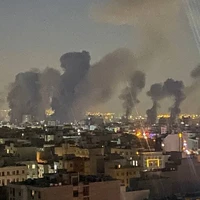
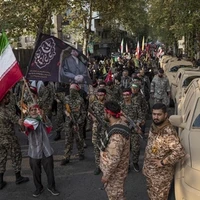
The prospect of an Israeli attack on Iran has sparked new tensions within Iran’s opposition. Over 360 leftists, woke activists, and former Islamist/religious-nationalist figures have issued a statement titled "No to war, no to the Islamic Republic."
They argue that both the Islamic Republic’s policies and Israel's actions in the current Middle East conflict should be rejected. In contrast, constitutional monarchists, who have launched the "Stand by Israel" campaign on social media, believe that Iranians should support Israel in this ongoing conflict. There are also independent voices supporting Israel.
In terms of public attitudes toward Tehran’s foreign policy, approximately 65% of the population opposes the slogan "Death to Israel," while 23% support it. Meanwhile, 64% agree with the slogan "Neither Gaza nor Lebanon, I sacrifice my life for Iran," with 24% opposing it. Additionally, 73% back a common slogan about the Iranian government being the people’s enemy, and not the United States. These figures reflect significant public disagreement with some of the Islamic Republic's key foreign policy tenets.
At least 50% of ordinary Iranians are reportedly dissatisfied with the country's current state, as evidenced by consistently low voter turnout in recent elections. Many have also refrained from demonstrating public support for the government's missile strikes on Israel. Social media images have shown citizens celebrating the deaths of Hamas leader Ismail Haniyeh and Hezbollah’s Hassan Nasrallah by distributing sweets. Due to the lack of independent polling, it’s unclear what drives public opinion on these issues, but well-known figures inside and outside Iran have voiced support for both sides of the debate.
Arguments of opponents of an Israeli attack
The common denominator of the arguments of the opponents of supporting Israel in a possible war can be seen in the statement they issued:
1. "The one-year bombing of the people of Gaza ordered by the Netanyahu administration... is a clear manifestation of genocide."
2. "The claim of Israeli fundamentalists to impose a "new order" in the Middle East is only an invitation to more conflict, killing and destruction in the region."
3. "Israeli bombs will not bring peace, democracy, and freedom to Gaza, Lebanon and Iran."
4. "Both sides of this inhumane war of attrition are fueling the increase in tension and the spread of war in the region, and the result is nothing but death and destruction, displacement, intensification of repression and suffocation, the growth of extremism and insecurity."
They conclude from the above four arguments that it is necessary to "prevent the spread of the war to new fronts and stop the war by increasing the pressure on all sides of the conflict and trying to establish an immediate ceasefire in the region."
Argument of Israel supporters
The common denominator of the points that Israel's supporters make in its current war with the Islamic Republic are as follows:
1. There is a long-standing historical connection between Iranians and Jews dating back to the era of Cyrus the Great, and Iranians have no significant motives or grievances for hostility toward Jews or their government. The current conflict is driven by the Islamic Republic, not the Iranian people. Today, the enmity toward Israel largely reflects the ruling elite's agenda, not the sentiments of the broader population.
2. The tension between Iran and Israel stems largely from Islamist ideology, which seeks to eliminate Israel for reasons unrelated to Iran's national security or interests. This ideological stance, rather than any direct threat to Iran, drives the conflict and animosity toward Israel.
3. The Islamic Republic and its supporters are not only enemies of Israel, but enemies of Iran and Iranians. For this reason, Israel is an ally of the Iranians in people’s fight against the Islamic government and they should stand by it.
4. After the fall of the current government, Israel could become Iran's strongest democratic ally in the region, as there is no geopolitical rivalry or conflict of interest between the two nations. In contrast, Iran faces significant issues with its Arab, Turkish, and Afghan neighbors. A free Iran and Israel could collaborate on key issues like water management, information technology, military strategy, and agriculture, fostering a mutually beneficial relationship.
5. Tehran's nuclear program not only targets Israel but also drains Iran's national resources, costing tens of billions of dollars and causing hundreds of billions in losses from sanctions and missed revenues. Many Iranians opposed to the government see no benefit in continuing this costly program, just as Israel does. For them, the nuclear agenda serves neither Iran's interests nor its future, but instead deepens the nation's economic struggles and global isolation.
6. Instead of Gaza, Lebanon, Yemen, Syria, and Iraq, Iran's resources should be spent on Iranians, 90% of whom live near or at poverty levels. It is in the interest of the Iranian people that Israel weakens or removes the Islamic government from the region.
7. Iranians do not expect Israel to change their government for them. The focus of cooperation between Iranians and Israelis is on confronting common enemies and addressing shared security challenges, rather than promoting democratic reforms or government transitions.