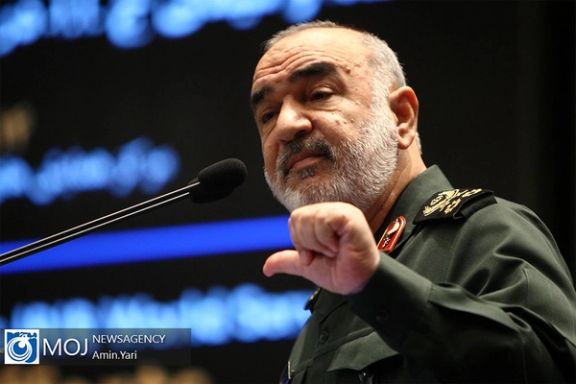
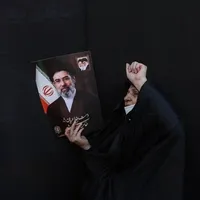
"We hear threats coming from American officials, we tell them that they have already tested us and we now know one another, no threat will be left unanswered," Salami said, according to semi-official Tasnim news agency.
A day earlier, the main Iran-backed group in Iraq blamed for killing 3 American soldiers on Sunday, said it was ceasing operations against the US Tuesday, just as President Joe Biden said he had decided how to respond.
Kataib Hezbollah, sponsored by Iran, claimed in a brief statement that it was doing so “to avoid embarrassment for the Iraqi government,” conveniently leaving out the Iranian regime and the imminent threat of US retaliation it faces.
“Our brothers in the Axis [of Resistance], especially in the Islamic Republic [of Iran], do not know how our jihadist work is conducted,” the statement read, attempting to exonerate Iran from the killing of US troops. “They often objected to pressure and escalation against the American occupation forces in Iraq and Syria.”
The statement seems to toe the official line coming out of Iran following the drone attack on a US base in Jordan last weekend: that Iran has had nothing to do with it.
President Biden confirmed Tuesday that he saw Iran responsible for the fatal attack “in the sense that they’re supplying the weapons” to Kataib Hezbollah. He reiterated his wish, nonetheless, to avoid “a wider war” in the region. “That’s not what I’m looking for,” Biden said.
The US President has vowed a “strong” response, leaving the experts to speculate about its nature and the timing.
“It is very possible that what you’ll see is a tiered approach here, not just a single action, but essentially multiple actions,” the White House national security spokesman John Kirby told reporters Tuesday. He too emphasized that the Biden administration is not looking for a war with Iran.
Iranian officials maintain that the country has had no hand in the killing of US forces. But the regime outlets have been consistently boasting about the Axis of Resistance as a legacy of Qassem Soleimani, the IRGC commander killed by a US drone strike in January 2020.
Iran’s ultra-hardline daily Kayhan –which many believe to reflect the thinking of the Supreme Leader Ali Khamenei– has slammed the notion that the regime would “abandon” its Axis allies in the event of US retaliatory attacks.
“[It is implied] that Iran is indifferent to aggression against its allies and is only sensitive to its own soil,” Keyhan writes. “To the contrary, Iran will not abandon its allies… and warns that any aggression will be met with more painful strikes by the resistance front.”
Many in Washington blame the Biden administration for Iran’s increasingly emboldened stance, even calling his policy “appeasement.”
President Biden seems to have been caught in two minds as he tries to strike a balance between deterring Iran and its proxies and avoiding a wider, full-scale war that would further engage the US military. Still, many experts believe that a consequential strike is inevitable this time. US official statements seem to confirm this.
“We will respond, we will respond strongly, we will respond at a time and place of our choosing,” said secretary of state Antony Blinken, meeting NATO secretary general. “Obviously, I’m not going to telegraph what we might do in this instance or get ahead of the president, but I can, again, tell you … we will respond. And that response could be multi-levelled, come in stages and be sustained over time.”
It’s hard to measure the effects of this “wait and see” approach. On the one hand, it signals doubt and lack of determination –which may be comforting and even encouraging for Iran’s leadership. On the other hand, it could exacerbate their apprehension and make them more cautious as they try to guess the time and manner of the American blow.