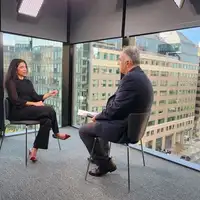
Some of the actors in the film, Why aren't you crying?
Seven actors in Iran have boycotted their own film to be screened at the state-sponsored Fajr Film Festival in protest to the bloody crackdown on protesters.
“We avoided participation in Fajr Film Festival in the past few years but this year we are [even] ashamed our names [mentioned] in the festival. We would stop the film’s screening if we had any option to do so,” Baran Kowsari, Mani Haghighi, Hanieh Tavassoli, Ali Mosaffa, Fereshteh Hosseini, Nahal Dashti, and Amir-Hossein Fathi said in a statement published on Instagram.
Alluding to the name of the film they all played in, 'Why aren’t you crying?', Hanieh Tavassoli said on social media that in the past few months she has “been crying a lot” and that she did not have the mental strength to take part in the festival. “The film’s participation at any event is not and will not be my choice or decision.”
The film’s producer, Reza Mohaghegh, who has submitted the film to the festival, apparently without the consent of others, is the son-in-law of a high-ranking Revolutionary Guards (IRGC) official.
Director Kiumars Pourahmad whose ‘Case Is Open’ has also been submitted to the festival by its producer in an Instagram post said he withdraws from the festival.
A scene form the film, 'Why aren't you crying?'
Presumably referring to the IRGC’s extensive involvement in the film industry, Pourahmad protested that in the past few years the festival has turned from “Iran's film festival” into “a certain entity’s festival”.
Mohammad-Ali Talebi, Slovakia-based writer and film director told Iran International that IRGC-affiliated film companies such as Ofogh and Owj are spending huge sums to make films and driving most independent filmmakers out of the industry. Those who are withdrawing from the festival have taken a remarkable step because this means that they will no more have a chance of working in Iran, he said.
During this time, he explained, the festival meant nothing to him and even less so “in this bloody and grim year”. “What’s the point of celebrating, what’s the point of a festival, with all the sorrow [for the deaths of hundreds of protesters] that sits in our hearts?” he wrote.
The Fajr Film Festival has existed since 1982, highlighting Iranian cinema for 10 days, during a period known as the Ten Days of Dawn (Fajr). The first day of the Ten Days of Dawn marks the anniversary of the return of Ayatollah Khomeini to Iran from Paris and its last day, the victory of the Islamic Revolution in 1979.
The film festival and its sister theater festival have been losing their past aura and popularity over the years. Filmmakers and actors have been periodically boycotting the event, including in 2019, in protest to state violence against protesters.
Meanwhile, the head of the state broadcaster (IRIB), Payman Jebelli in a letter to President Ebrahim Raisi has demanded that Filimo, an online subscription video on-demand service similar to Netflix, be blocked on the internet.
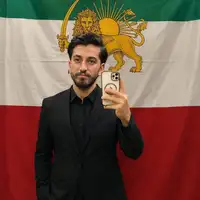
Jebelli has cited the screening of Collapse series because one of its main actors, Hamid Farrokhnezhad, has recently left Iran, joined the opposition, and backed a revolution and the return of the former crown prince, Reza Pahlavi, to Iran.
Hamid Farrokhnejad, in a post on his Instagram compared Ali Khamenei with other dictators such as Francisco Franco, Mao Zedong, Joseph Stalin and Benito Mussolini, saying he is “mentally ill” just like his “colleagues”. “Over time, all dictators have the illusion of imagining themselves as God, and they think they are absolutely right and eternal…but they are all mentally ill,” he said.