• العربية
  • فارسی
BrandBrand
  • Iran Insight
  • Politics
  • Economy
  • Analysis
  • Special Report
  • Opinion
  • Podcast
  • Live TV
  • Iran Insight
  • Politics
  • Economy
  • Analysis
  • Special Report
  • Opinion
  • Podcast
  • Live TV
  • Theme
  • Language
    • العربية
    • فارسی
  • Iran Insight
  • Politics
  • Economy
  • Analysis
  • Special Report
  • Opinion
  • Podcast
  • Live TV
All rights reserved for Volant Media UK Limited
volant media logo

Iran needs nukes for regional balance, says lawmaker

Niloufar Goudarzi
Niloufar Goudarzi

Iran International

Nov 16, 2024, 15:15 GMT+0Updated: 15:21 GMT+0

Tehran must embrace atomic bombs to achieve "regional balance," said an Iranian member of parliament on Saturday, adding fuel to an already heated discourse over the future of Iran’s deterrence policies.

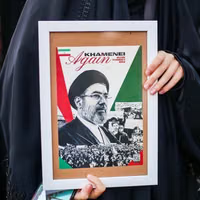
“Our adversaries possess extensive and ready-to-deploy arsenals of nuclear warheads, leaving Iran at a significant strategic disadvantage,” Ahmad Naderi told local media on Saturday for the second time since last week. “Over the years, we have incurred costs equivalent to several times the expense of constructing an atomic bomb through our nuclear program, yet it has yielded no tangible security benefits.”

"I believe we must pursue atomic weapons testing, as no other path remains for us given the lack of regional balance," he added, in an apparent reference to setbacks by Iran's regional proxies.

This stance aligns with a recent call by 39 Iranian lawmakers urging the Supreme National Security Council to reassess the country’s defense strategy. They argued that Iran's current policies might be inadequate in addressing perceived threats, particularly from Israel.

The lawmakers also raised doubts about the long-term viability of Supreme Leader Ali Khamenei’s religious decree banning nuclear weapons, suggesting that evolving circumstances could warrant a shift in approach.

MP Mohammad Reza Sabaghian described nuclear weapons as essential for deterrence, arguing they are necessary for self-defense in light of Israel’s arsenal. Others, such as MP Hassanali Akhlaghi Amiri, suggested that Khamenei’s fatwa could evolve, as Islamic rulings can adapt over time to new circumstances. He explained that secondary rulings can replace primary ones when conditions change, implying the fatwa is not permanent.

Iranian officials have consistently portrayed the country’s nuclear program as peaceful, frequently citing Khamenei’s religious decree against weapons of mass destruction. However, growing calls from lawmakers advocating for nuclear armament highlight the increasing pressure Tehran faces. These debates unfold amid heightened tensions with Israel and global uncertainty as the United States transitions to a new administration.

A more immediate concern, however, is Israel’s recent military actions, which have significantly weakened Tehran’s proxies, Hamas and Hezbollah, and included large-scale airstrikes on military targets inside Iran.

The relatively moderate news website Rouydad24 linked these discussions to Iran’s preparations for the January 20 US presidential transition, highlighting a dual-track strategy: balancing internal demands for a more aggressive defense posture with external diplomatic efforts. The push for a tougher stance comes primarily from hardliners, while the diplomatic initiatives reflect the government’s approach to navigating the shifting geopolitical landscape.

"Some in Iran maintain that hostility and antagonism with the United States are insurmountable, irrespective of whether Trump or another figure is in power. Others, however, argue for recognizing opportunities and responding to positive signals," the publication wrote on Saturday.

Pointing to the current Iranian administration’s strategy, the publication highlighted the government's activation of various diplomatic channels, including public and covert efforts, to navigate the challenges ahead.

Hesamodin Ashna, an advisor in Hassan Rouhani’s former administration, also noted that Iran’s most experienced diplomats are actively working across multiple channels. He cited Ali Larijani’s visits to Syria and Lebanon, where discussions included regional ceasefires, alongside reported international meetings involving Iranian representatives.

The government “is utilizing all its diplomatic capacities to address the situation wisely,” he wrote on X on Saturday.

With tensions rising and the potential for international pressure increasing, Tehran appears to be exploring both hardline measures and broader diplomatic strategies to safeguard its national interests.

Most Viewed

Iran gains from Netanyahu’s exit even without a policy shift - Ghalibaf-linked daily
1

Iran gains from Netanyahu’s exit even without a policy shift - Ghalibaf-linked daily

2

Trump confirms Vance's outreach to Tehran as US weighs strikes after midterms

3

Iran imports at least $2 billion in military supplies despite US blockade - Reuters

4

Iran plans to disrupt US midterm elections - Telegraph

5
OPINION

Behind Khamenei's call for peace, Tehran's unchanged demands

Spotlight

  • Talks or resistance? Iran's factions differ over path out of crisis
    INSIGHT

    Talks or resistance? Iran's factions differ over path out of crisis

  • Tehran refuses to budge as diplomacy races against war

    Tehran refuses to budge as diplomacy races against war

  • Growing old alone: The parents Iran’s emigrants left behind
    VOICES FROM IRAN

    Growing old alone: The parents Iran’s emigrants left behind

  • Behind Khamenei's call for peace, Tehran's unchanged demands
    OPINION

    Behind Khamenei's call for peace, Tehran's unchanged demands

  • Iran's Great Depression? Economists weigh Bessent's dire forecast
    ANALYSIS

    Iran's Great Depression? Economists weigh Bessent's dire forecast

Banner
Banner
Banner
Banner
Banner